
Mongolia
Gorkhi Terelj National Park
Gorkhi Terelj National Park
Location
Gorkhi Terelj National Park
47.9085° / 107.4238°


Experience Gorkhi Terelj National Park, Your Way
Skip the standard itineraries. We'll design a journey around your interests, timeline, and travel style — with exclusive access you won't find elsewhere.

Things to Do in Gorkhi Terelj National Park
Starting points for your perfect trip
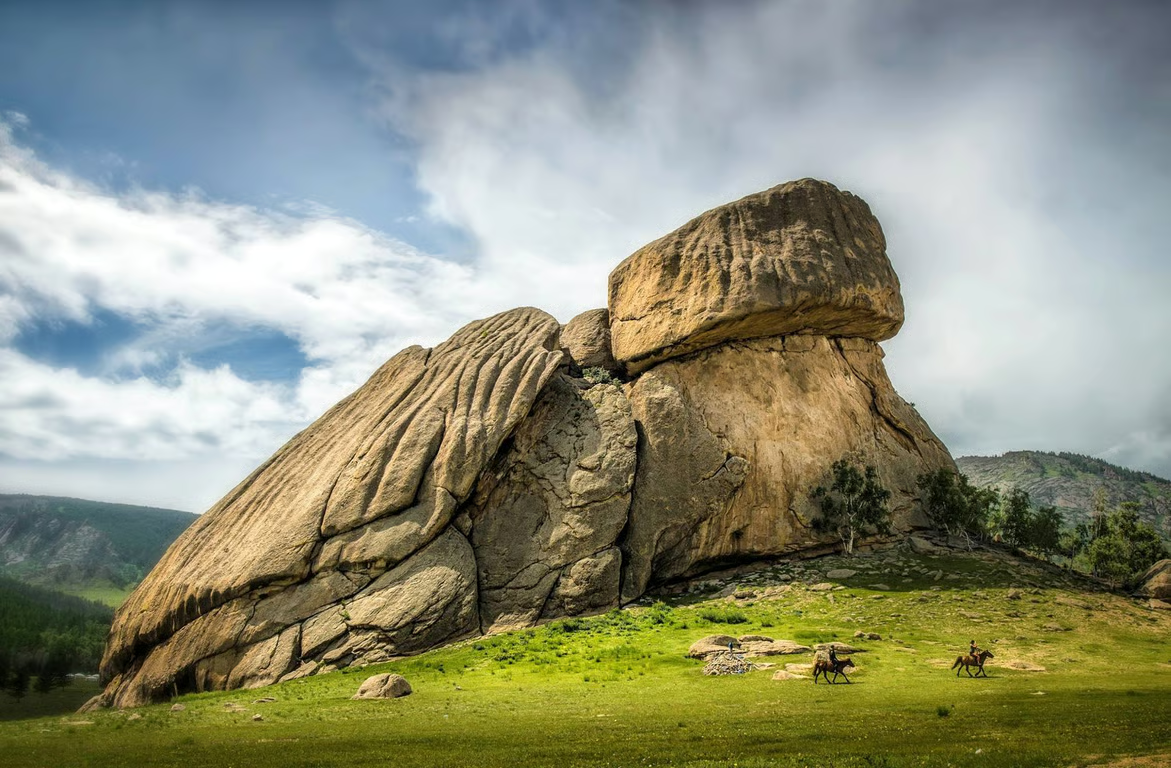
Turtle Rock and Temple Trail
Trek from the iconic 24-meter Turtle Rock to Ariyabal Meditation Temple, climbing 108 sacred steps shaped like an elephant's trunk. Pass wooden placards inscribed with 144 Buddhist teachings in English and Mongolian, reaching panoramic views across granite peaks and forested valleys.
Genghis Khan Statue Complex
Stand at the base of the world's largest equestrian statue—40 meters of stainless steel depicting Genghis Khan with a golden whip. Take the elevator through the horse's chest to the viewing platform on its head, overlooking Tsonjin Boldog where legend says the conqueror found his omen.
Nomadic Life Immersion
Stay with a herding family in their traditional ger, learning to make dairy products like aaruul and airag from fresh mare's milk. Ride sturdy Mongolian horses across wildflower meadows, try your hand at archery, and gather around the stove for stories as the sun sets behind granite peaks.

13th Century Complex
Step back 800 years at the 13th Century Complex, a living museum spread across 212 hectares with six themed camps. Visit the King's Palace with its 108 wooden poles, learn traditional Mongolian script from calligraphers, and witness shamanic rituals in a world without electricity or phones.
Gunjiin Temple Wilderness Trek
Journey deep into the park's forested interior to the ruins of Gunjiin Temple, built in 1740 by a Mongolian noble to honor his Manchurian princess wife who chose to be buried in Mongolia. The remote site along the Baruun Bayan River has been protected since 1961 amid pristine forest.
Granite Formation Discovery Hike
Explore the geological forces that shaped the Khentii Mountains on a guided hike past Turtle Rock, the Praying Lama formation, and lesser-known granite sculptures across the park. Learn how Fersman discovered 22 crystal types here in 1924 and the area was mined for amethyst until 1960.
Stories from Gorkhi Terelj National Park
Granite Wilderness at the Capital's Doorstep
Gorkhi-Terelj National Park takes its name from two features that define this landscape: Gorkhi, meaning “creek,” and Terelj, the Mongolian word for rhododendron, the flowering shrub that blankets hillsides each spring. Established in 1993 to protect the southern Khentii Mountains, the park spans 2,920 square kilometers of terrain ranging from an average elevation of 1,600 meters to the 2,664-meter summit of Avkhan Mountain.
The park’s most striking features are its granite formations—massive boulders sculpted over millions of years by wind, rain, frost, and natural acids into shapes that fire the imagination. Turtle Rock (Melkhii Khad) stands 24 meters tall, its head appearing to crane forward as if crossing an ancient seabed. The Praying Lama Rock resembles a monk bent in meditation. Russian geochemist Fersman discovered 22 types of crystals here in 1924, and until 1960 the area was mined for smokestone, amethyst, and pure crystal before high water pressure forced operations to cease. Today over 250 bird species, brown bears, wolves, red deer, and wild boar roam these forests and meadows.
Getting to Gorkhi Terelj National Park
Private Vehicle or Tour
Public Bus from Ulaanbaatar
Internal Park Transfers
Travel with EcoVoyager
Gorkhi Terelj lies just 60 kilometers northeast of Ulaanbaatar—a 1.5-to-2-hour drive on paved roads through the Tuul River crossing into the park. EcoVoyager arranges comfortable ger camp accommodations with mountain views, guided hikes to Turtle Rock and Ariyabal Temple timed to avoid midday crowds, horseback riding through wildflower meadows with nomadic families, excursions to the remote Gunjiin Temple ruins deep in the park's forested interior, visits to the 40-meter Genghis Khan Statue Complex en route, and expert local guides who illuminate the geological forces behind the granite formations and the Buddhist traditions that make this landscape sacred.

Explore More
Other Mongolia Destinations

Terkhiin Tsagaan Nuur
High in the Khangai Mountains, where ancient lava dammed the Terkh River eight thousand years ago, Terkhiin Tsagaan Nuur mirrors...
Explore
Amarbayasgalant Monastery
In a remote valley at the foot of Mount Büren-Khaan, where the Iven River flows through grasslands scattered with ancient...
Explore
Orkhon Valley
In the green heart of Mongolia, where the Orkhon River carves through volcanic basalt and grasslands stretch to the horizon,...
Explore
Altai Tavan Bogd National Park
At Mongolia's far western edge, where three nations converge beneath the Altai Mountains, lies one of Earth's last wilderness frontiers....
Explore
Ölgii
In Mongolia's far west, where the Altai Mountains rise along the borders of Russia and China, Kazakh eagle hunters still...
Explore
Khuvsgul Lake
Cradled between snow-capped peaks and Siberian taiga lies Khuvsgul—Mongolia's largest freshwater lake and one of the world's oldest and clearest....
Explore
Hustai National Park
Two hours from Ulaanbaatar lies Hustai National Park, sanctuary of the takhi—the world's last truly wild horse. These stocky horses...
Explore
Gobi Desert
Stretching across southern Mongolia lies the Gobi—Asia's largest desert and one of the world's most misunderstood landscapes. This is no...
Explore
Ulaanbaatar Mongolia
In the broad valley of the Tuul River, surrounded by four sacred mountains, lies the world's coldest capital city—a place...
ExploreSwipe to explore more