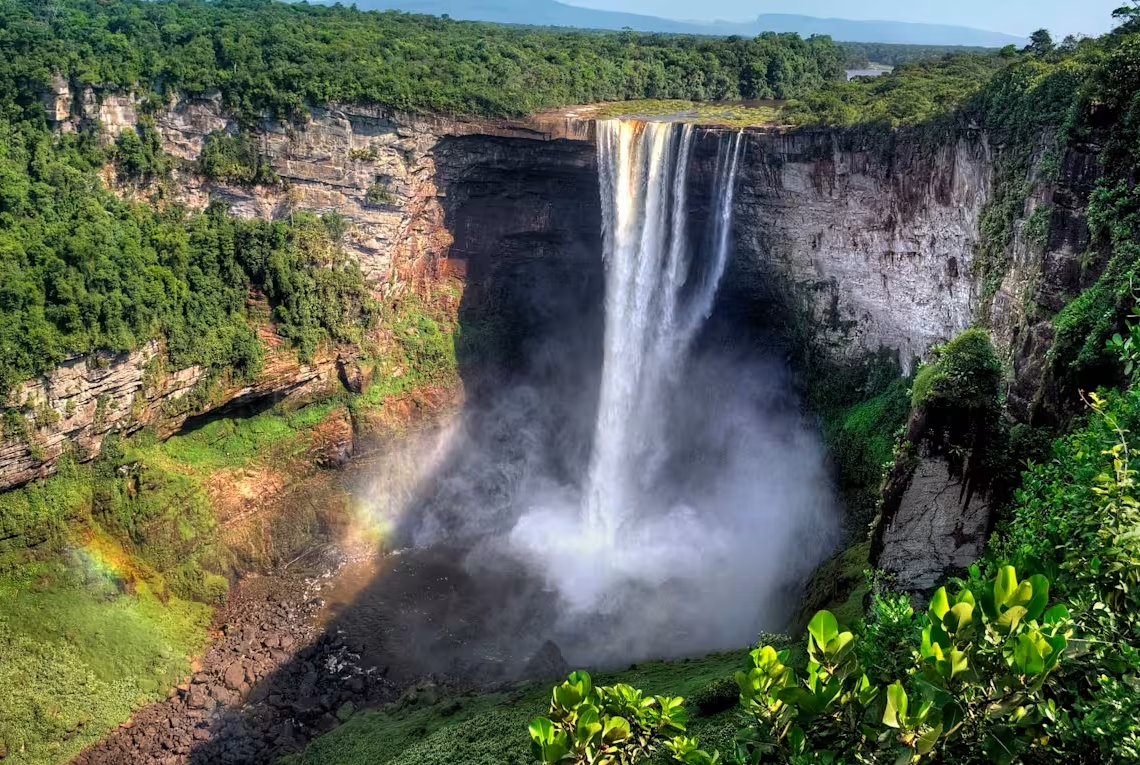
Kaieteur Falls Overland Trek
Duration
5 Days
From
$1,600
Group
Max 10 Guests
Difficulty
Challenging
Country Overview

South America's Last True Wilderness
South America's only English-speaking nation.
Guyana is a hidden gem boasting pristine rainforests covering 80% of the country, spectacular waterfalls including the mighty Kaieteur Falls, and incredible biodiversity. From the coastal plains where most Guyanese live to the vast interior savannas and highlands, this sparsely populated country offers authentic adventures in untouched wilderness. Recent oil discoveries have transformed Guyana into one of the world's fastest-growing economies, yet it remains one of Earth's best-kept secrets for eco-tourism and cultural immersion.
Featured Expeditions
1 / 3


Ecovoyager Experiences
Small group expeditions through Guyana, run with vetted local operators and ground guides.
Guyana
5-Day Guided Trek Through Guyana's Interior to Kaieteur Falls

Guyana
Where Authentic Ranch Life Meets World-Famous Wildlife Encounters

Guyana
Fourteen days through some of Guyana's least-visited wilderness
Bespoke Travel
Skip the standard itineraries. We design journeys around your interests, timeline, and curiosity, with access you will not find on any platform.
Experiences
Starting points for your perfect trip
Ready to create something unique?
Tell us your vision and we will make it happen
Explore Destinations
Guyana
Georgetown sits at the mouth of the Demerara River on Guyana's Atlantic coast, built on land that lies almost a meter below high-tide level and protected by a seawall that runs for kilometers along…

Guyana
In the geographic center of Guyana, the Iwokrama Forest covers 371,000 hectares of tropical rainforest along the Essequibo River where the Guiana Shield meets the northern edge of the Amazon basin. The reserve is…
Guyana
Deep in Guyana's Amazon rainforest, where the Potaro River cuts through billion-year-old Guiana Shield sandstone, Kaieteur Falls drops 741 feet in a single plunge, nearly five times the height of Niagara and twice that…

Guyana
In southwestern Guyana, the Amazon rainforest breaks open into approximately 13,000 square kilometers of tropical grassland rolling toward the Brazilian border, framed by the Iwokrama forest to the north and the Kanuku Mountains bisecting…

The Atlantic Coast's Only Four-Species Sea Turtle Nesting Beach
Along 90 miles of Guyana's Atlantic coast northwest of Georgetown, four species of sea turtles return each year to nest on a remote stretch of sand layered with the crushed shells that give the…
Plan Your Journey
Every season reveals a different face of the country. Here’s how to find yours.
January
Peak5 places to go in January

Dry Season Peak
The main visiting window for Iwokrama. Forest trails dry out, the Linden to Lethem road stays passable, and wildlife concentrates along creeks and the Essequibo River. This is the strongest jaguar spotting season, when big cats are regularly encountered in daylight along the forest road at dawn and dusk. The canopy walkway at Atta operates at full capacity and Iwokrama River Lodge runs night boat trips for black caiman. Rainfall still occurs in most months but is lighter and more predictable. Book both lodges several months ahead for December and January.

Dry Season Peak
The peak wildlife viewing window on the Rupununi. Grasslands turn golden, wetland basins shrink back to scattered pools, and animals concentrate around the remaining water. Giant anteaters are regularly spotted in open savanna during morning and late afternoon, jaguars patrol the Rupununi River banks, and giant river otters fish in smaller family groups. Roads to Karanambu, Wichabai, Dadanawa, and Rewa are passable, lodges run at full capacity, and daytime temperatures climb into the low 90s. Night skies are extraordinarily dark. Book lodges several months ahead for December and January.

Secondary Wet Season
Georgetown's secondary wet season brings heavier afternoon showers but stays viable for city exploration, with mornings generally clear enough for walking tours and market visits. December is the wettest month of this period, averaging around 275mm of rain. Diwali often falls in November, filling neighborhoods with lights and pujas, while December brings Christmas celebrations and January ends with Old Year's Night fireworks. Accommodation prices rise around the holiday period and flights to interior destinations can book out weeks in advance. Book heritage hotels early for the last two weeks of December.

Guiana Shield Dry Season
The long dry season delivers the clearest skies of the year and the most reliable charter flights from Georgetown. Water volume stays moderate but still thunderous, and visitors arriving after dry stretches report the flow as spectacular. February and March overlap with peak Guianan cock-of-the-rock lek season, when males gather at dawn for elaborate courtship displays. Trails are at their driest and safest for hiking the rim circuit. December brings brief cashew rains, shorter than the primary wet season. Guyana's peak tourist season still means fewer than twenty people at any viewpoint.

Off Season
The research camp closes or runs on minimal schedule, and sea turtle nesting stops until March. Visitors can still reach Shell Beach by private boat arrangement but without the nightly turtle patrols or hatchling emergence that define the main season. The secondary wet season brings brief cashew rains in December and January. September through November sees lower rainfall and good conditions for coastal birding, with scarlet ibis, roseate spoonbills, and other waders active in the mangrove channels. Not the time to visit for turtles, but dedicated birders and those seeking absolute solitude may find the trip worthwhile.
February
Peak5 places to go in February
Dry Seasons
Georgetown's two dry windows bracket the main travel seasons for Guyana. September and October are the driest months with around 7 to 8 rainy days each and 8 hours of daily sunshine. February through April is the longer dry window, slightly more humid but still reliable for outdoor walks and heritage tours. Mashramani in February fills the streets with costumed parades and soca music for Republic Day, while September is Amerindian Heritage Month with cultural exhibitions across the city. Both windows are the strongest for exploring colonial architecture, the seawall promenade, and Stabroek Market without sudden showers.
Dry Season Peak
The main visiting window for Iwokrama. Forest trails dry out, the Linden to Lethem road stays passable, and wildlife concentrates along creeks and the Essequibo River. This is the strongest jaguar spotting season, when big cats are regularly encountered in daylight along the forest road at dawn and dusk. The canopy walkway at Atta operates at full capacity and Iwokrama River Lodge runs night boat trips for black caiman. Rainfall still occurs in most months but is lighter and more predictable. Book both lodges several months ahead for December and January.
Dry Season Peak
The peak wildlife viewing window on the Rupununi. Grasslands turn golden, wetland basins shrink back to scattered pools, and animals concentrate around the remaining water. Giant anteaters are regularly spotted in open savanna during morning and late afternoon, jaguars patrol the Rupununi River banks, and giant river otters fish in smaller family groups. Roads to Karanambu, Wichabai, Dadanawa, and Rewa are passable, lodges run at full capacity, and daytime temperatures climb into the low 90s. Night skies are extraordinarily dark. Book lodges several months ahead for December and January.
Guiana Shield Dry Season
The long dry season delivers the clearest skies of the year and the most reliable charter flights from Georgetown. Water volume stays moderate but still thunderous, and visitors arriving after dry stretches report the flow as spectacular. February and March overlap with peak Guianan cock-of-the-rock lek season, when males gather at dawn for elaborate courtship displays. Trails are at their driest and safest for hiking the rim circuit. December brings brief cashew rains, shorter than the primary wet season. Guyana's peak tourist season still means fewer than twenty people at any viewpoint.
Off Season
The research camp closes or runs on minimal schedule, and sea turtle nesting stops until March. Visitors can still reach Shell Beach by private boat arrangement but without the nightly turtle patrols or hatchling emergence that define the main season. The secondary wet season brings brief cashew rains in December and January. September through November sees lower rainfall and good conditions for coastal birding, with scarlet ibis, roseate spoonbills, and other waders active in the mangrove channels. Not the time to visit for turtles, but dedicated birders and those seeking absolute solitude may find the trip worthwhile.
March
Peak5 places to go in March
Dry Seasons
Georgetown's two dry windows bracket the main travel seasons for Guyana. September and October are the driest months with around 7 to 8 rainy days each and 8 hours of daily sunshine. February through April is the longer dry window, slightly more humid but still reliable for outdoor walks and heritage tours. Mashramani in February fills the streets with costumed parades and soca music for Republic Day, while September is Amerindian Heritage Month with cultural exhibitions across the city. Both windows are the strongest for exploring colonial architecture, the seawall promenade, and Stabroek Market without sudden showers.
Dry Season Peak
The main visiting window for Iwokrama. Forest trails dry out, the Linden to Lethem road stays passable, and wildlife concentrates along creeks and the Essequibo River. This is the strongest jaguar spotting season, when big cats are regularly encountered in daylight along the forest road at dawn and dusk. The canopy walkway at Atta operates at full capacity and Iwokrama River Lodge runs night boat trips for black caiman. Rainfall still occurs in most months but is lighter and more predictable. Book both lodges several months ahead for December and January.
Dry Season Peak
The peak wildlife viewing window on the Rupununi. Grasslands turn golden, wetland basins shrink back to scattered pools, and animals concentrate around the remaining water. Giant anteaters are regularly spotted in open savanna during morning and late afternoon, jaguars patrol the Rupununi River banks, and giant river otters fish in smaller family groups. Roads to Karanambu, Wichabai, Dadanawa, and Rewa are passable, lodges run at full capacity, and daytime temperatures climb into the low 90s. Night skies are extraordinarily dark. Book lodges several months ahead for December and January.
Guiana Shield Dry Season
The long dry season delivers the clearest skies of the year and the most reliable charter flights from Georgetown. Water volume stays moderate but still thunderous, and visitors arriving after dry stretches report the flow as spectacular. February and March overlap with peak Guianan cock-of-the-rock lek season, when males gather at dawn for elaborate courtship displays. Trails are at their driest and safest for hiking the rim circuit. December brings brief cashew rains, shorter than the primary wet season. Guyana's peak tourist season still means fewer than twenty people at any viewpoint.
Early and Late Nesting
The shoulder months of turtle nesting season. March welcomes the first leatherbacks arriving after the dry season, while August closes the window as the last nests hatch and the final females return to sea. Turtle counts run lower than peak months, with five to fifteen emerging on an average night, but so do visitor numbers. March skies are clearer as the dry season tails off. August brings decreasing rainfall and increasing hatchling activity from earlier nests. The research camp stays open through both months. A quieter alternative to peak weeks for travelers willing to trade volume for solitude.
April
Peak5 places to go in April
Dry Seasons
Georgetown's two dry windows bracket the main travel seasons for Guyana. September and October are the driest months with around 7 to 8 rainy days each and 8 hours of daily sunshine. February through April is the longer dry window, slightly more humid but still reliable for outdoor walks and heritage tours. Mashramani in February fills the streets with costumed parades and soca music for Republic Day, while September is Amerindian Heritage Month with cultural exhibitions across the city. Both windows are the strongest for exploring colonial architecture, the seawall promenade, and Stabroek Market without sudden showers.
Dry Season Peak
The main visiting window for Iwokrama. Forest trails dry out, the Linden to Lethem road stays passable, and wildlife concentrates along creeks and the Essequibo River. This is the strongest jaguar spotting season, when big cats are regularly encountered in daylight along the forest road at dawn and dusk. The canopy walkway at Atta operates at full capacity and Iwokrama River Lodge runs night boat trips for black caiman. Rainfall still occurs in most months but is lighter and more predictable. Book both lodges several months ahead for December and January.
Dry Season Peak
The peak wildlife viewing window on the Rupununi. Grasslands turn golden, wetland basins shrink back to scattered pools, and animals concentrate around the remaining water. Giant anteaters are regularly spotted in open savanna during morning and late afternoon, jaguars patrol the Rupununi River banks, and giant river otters fish in smaller family groups. Roads to Karanambu, Wichabai, Dadanawa, and Rewa are passable, lodges run at full capacity, and daytime temperatures climb into the low 90s. Night skies are extraordinarily dark. Book lodges several months ahead for December and January.
Peak Turtle Nesting
The peak turtle nesting window on Shell Beach. Leatherbacks up to 2,000 pounds emerge in their greatest numbers, joined by green, hawksbill, and olive ridley turtles. Twenty to thirty turtles can come ashore on a single night during April and May. By June and July the first hatchlings break through the sand and race toward the Atlantic, often in full view of visitors walking with turtle monitors. Heavy rains arrive in May and June but do not stop nesting activity. The research camp operates at full capacity, and bookings fill fast during this window.
Guiana Shield Dry Season
The long dry season delivers the clearest skies of the year and the most reliable charter flights from Georgetown. Water volume stays moderate but still thunderous, and visitors arriving after dry stretches report the flow as spectacular. February and March overlap with peak Guianan cock-of-the-rock lek season, when males gather at dawn for elaborate courtship displays. Trails are at their driest and safest for hiking the rim circuit. December brings brief cashew rains, shorter than the primary wet season. Guyana's peak tourist season still means fewer than twenty people at any viewpoint.
May
Peak5 places to go in May
Peak Turtle Nesting
The peak turtle nesting window on Shell Beach. Leatherbacks up to 2,000 pounds emerge in their greatest numbers, joined by green, hawksbill, and olive ridley turtles. Twenty to thirty turtles can come ashore on a single night during April and May. By June and July the first hatchlings break through the sand and race toward the Atlantic, often in full view of visitors walking with turtle monitors. Heavy rains arrive in May and June but do not stop nesting activity. The research camp operates at full capacity, and bookings fill fast during this window.
Early and Late Wet Season
The shoulder months framing the primary wet season. May brings the first heavy rains of the year to Iwokrama, while August marks the tail end as rainfall begins to ease. Both months see fewer travelers, more mosquitoes, and muddier trails but still offer productive wildlife viewing. Canopy walkway visits remain worthwhile, though timing becomes weather-dependent. The Linden to Lethem trail stays passable in most conditions, though the Kurupukari ferry can be delayed by river levels. A reasonable compromise for travelers seeking fewer visitors and lower occupancy.
Flood Season
The annual floods transform the Rupununi into a mosaic of shallow lakes and flooded grasslands. Caiman, giant otters, arapaima, and enormous concentrations of wading birds follow fish into the newly flooded basins. Jabiru storks, roseate spoonbills, and scarlet ibis gather in the largest numbers of the year, making this the peak birding window. Canoe access expands, and lodges along the Rupununi River remain reachable by boat even when roads become impassable. Rainfall peaks in May and June. Some overland routes close, so most travelers fly to lodge airstrips during this season.
Primary Wet Season
Georgetown's primary rainy season averages 19 to 22 rainy days per month from May through July, with heavy afternoon downpours and frequent street flooding in a city that sits below sea level. Mornings often remain clear enough for indoor visits, food walks, and quick sightseeing, but interior itineraries become harder as overland routes flood and charter flights face weather delays. Hotel rates drop significantly, so budget-conscious travelers can find Georgetown more affordable. Pack waterproof shoes and a packable rain jacket. Plan city activities for early morning before the afternoon rain bands arrive.
Tropical Wet Season
The primary wet season transforms Kaieteur into its most powerful incarnation, with May and June bringing the heaviest rains and the falls reaching their full width of approximately 400 feet. Average flow hits 663 cubic meters per second, creating permanent mist that rises hundreds of meters above the rim. However, low cloud cover causes the highest frequency of flight cancellations, and visibility at the plateau is often obscured. The overland trek becomes treacherous with swollen rivers and muddy trails. Golden rocket frogs reach peak breeding activity, and swift flocks behind the falls may be largest. Build buffer days into any itinerary.
June
Peak5 places to go in June
Peak Turtle Nesting
The peak turtle nesting window on Shell Beach. Leatherbacks up to 2,000 pounds emerge in their greatest numbers, joined by green, hawksbill, and olive ridley turtles. Twenty to thirty turtles can come ashore on a single night during April and May. By June and July the first hatchlings break through the sand and race toward the Atlantic, often in full view of visitors walking with turtle monitors. Heavy rains arrive in May and June but do not stop nesting activity. The research camp operates at full capacity, and bookings fill fast during this window.
Flood Season
The annual floods transform the Rupununi into a mosaic of shallow lakes and flooded grasslands. Caiman, giant otters, arapaima, and enormous concentrations of wading birds follow fish into the newly flooded basins. Jabiru storks, roseate spoonbills, and scarlet ibis gather in the largest numbers of the year, making this the peak birding window. Canoe access expands, and lodges along the Rupununi River remain reachable by boat even when roads become impassable. Rainfall peaks in May and June. Some overland routes close, so most travelers fly to lodge airstrips during this season.
Primary Wet Season
Georgetown's primary rainy season averages 19 to 22 rainy days per month from May through July, with heavy afternoon downpours and frequent street flooding in a city that sits below sea level. Mornings often remain clear enough for indoor visits, food walks, and quick sightseeing, but interior itineraries become harder as overland routes flood and charter flights face weather delays. Hotel rates drop significantly, so budget-conscious travelers can find Georgetown more affordable. Pack waterproof shoes and a packable rain jacket. Plan city activities for early morning before the afternoon rain bands arrive.
Primary Wet Season
The heaviest rains of the year fall across Iwokrama in June and July, with daily thunderstorms saturating the forest and raising river levels. The canopy walkway remains accessible but visits require careful timing between rain bands. The Linden to Lethem trail can become difficult or impassable in places, so most travelers fly to Fair View airstrip or skip Iwokrama entirely during this window. Wildlife remains present but harder to spot through dense vegetation and constant rain. Best reserved for travelers combining Iwokrama with other destinations via private charter.
Tropical Wet Season
The primary wet season transforms Kaieteur into its most powerful incarnation, with May and June bringing the heaviest rains and the falls reaching their full width of approximately 400 feet. Average flow hits 663 cubic meters per second, creating permanent mist that rises hundreds of meters above the rim. However, low cloud cover causes the highest frequency of flight cancellations, and visibility at the plateau is often obscured. The overland trek becomes treacherous with swollen rivers and muddy trails. Golden rocket frogs reach peak breeding activity, and swift flocks behind the falls may be largest. Build buffer days into any itinerary.
July
Peak5 places to go in July
Peak Turtle Nesting
The peak turtle nesting window on Shell Beach. Leatherbacks up to 2,000 pounds emerge in their greatest numbers, joined by green, hawksbill, and olive ridley turtles. Twenty to thirty turtles can come ashore on a single night during April and May. By June and July the first hatchlings break through the sand and race toward the Atlantic, often in full view of visitors walking with turtle monitors. Heavy rains arrive in May and June but do not stop nesting activity. The research camp operates at full capacity, and bookings fill fast during this window.
Flood Season
The annual floods transform the Rupununi into a mosaic of shallow lakes and flooded grasslands. Caiman, giant otters, arapaima, and enormous concentrations of wading birds follow fish into the newly flooded basins. Jabiru storks, roseate spoonbills, and scarlet ibis gather in the largest numbers of the year, making this the peak birding window. Canoe access expands, and lodges along the Rupununi River remain reachable by boat even when roads become impassable. Rainfall peaks in May and June. Some overland routes close, so most travelers fly to lodge airstrips during this season.
Primary Wet Season
Georgetown's primary rainy season averages 19 to 22 rainy days per month from May through July, with heavy afternoon downpours and frequent street flooding in a city that sits below sea level. Mornings often remain clear enough for indoor visits, food walks, and quick sightseeing, but interior itineraries become harder as overland routes flood and charter flights face weather delays. Hotel rates drop significantly, so budget-conscious travelers can find Georgetown more affordable. Pack waterproof shoes and a packable rain jacket. Plan city activities for early morning before the afternoon rain bands arrive.
Primary Wet Season
The heaviest rains of the year fall across Iwokrama in June and July, with daily thunderstorms saturating the forest and raising river levels. The canopy walkway remains accessible but visits require careful timing between rain bands. The Linden to Lethem trail can become difficult or impassable in places, so most travelers fly to Fair View airstrip or skip Iwokrama entirely during this window. Wildlife remains present but harder to spot through dense vegetation and constant rain. Best reserved for travelers combining Iwokrama with other destinations via private charter.
Tropical Wet Season
The primary wet season transforms Kaieteur into its most powerful incarnation, with May and June bringing the heaviest rains and the falls reaching their full width of approximately 400 feet. Average flow hits 663 cubic meters per second, creating permanent mist that rises hundreds of meters above the rim. However, low cloud cover causes the highest frequency of flight cancellations, and visibility at the plateau is often obscured. The overland trek becomes treacherous with swollen rivers and muddy trails. Golden rocket frogs reach peak breeding activity, and swift flocks behind the falls may be largest. Build buffer days into any itinerary.
August
Good5 places to go in August
Early and Late Wet Season
The shoulder months framing the primary wet season. May brings the first heavy rains of the year to Iwokrama, while August marks the tail end as rainfall begins to ease. Both months see fewer travelers, more mosquitoes, and muddier trails but still offer productive wildlife viewing. Canopy walkway visits remain worthwhile, though timing becomes weather-dependent. The Linden to Lethem trail stays passable in most conditions, though the Kurupukari ferry can be delayed by river levels. A reasonable compromise for travelers seeking fewer visitors and lower occupancy.
Flood Season
The annual floods transform the Rupununi into a mosaic of shallow lakes and flooded grasslands. Caiman, giant otters, arapaima, and enormous concentrations of wading birds follow fish into the newly flooded basins. Jabiru storks, roseate spoonbills, and scarlet ibis gather in the largest numbers of the year, making this the peak birding window. Canoe access expands, and lodges along the Rupununi River remain reachable by boat even when roads become impassable. Rainfall peaks in May and June. Some overland routes close, so most travelers fly to lodge airstrips during this season.
Early and Late Nesting
The shoulder months of turtle nesting season. March welcomes the first leatherbacks arriving after the dry season, while August closes the window as the last nests hatch and the final females return to sea. Turtle counts run lower than peak months, with five to fifteen emerging on an average night, but so do visitor numbers. March skies are clearer as the dry season tails off. August brings decreasing rainfall and increasing hatchling activity from earlier nests. The research camp stays open through both months. A quieter alternative to peak weeks for travelers willing to trade volume for solitude.
Primary Wet Season
Georgetown's primary rainy season averages 19 to 22 rainy days per month from May through July, with heavy afternoon downpours and frequent street flooding in a city that sits below sea level. Mornings often remain clear enough for indoor visits, food walks, and quick sightseeing, but interior itineraries become harder as overland routes flood and charter flights face weather delays. Hotel rates drop significantly, so budget-conscious travelers can find Georgetown more affordable. Pack waterproof shoes and a packable rain jacket. Plan city activities for early morning before the afternoon rain bands arrive.
Tropical Wet Season
The primary wet season transforms Kaieteur into its most powerful incarnation, with May and June bringing the heaviest rains and the falls reaching their full width of approximately 400 feet. Average flow hits 663 cubic meters per second, creating permanent mist that rises hundreds of meters above the rim. However, low cloud cover causes the highest frequency of flight cancellations, and visibility at the plateau is often obscured. The overland trek becomes treacherous with swollen rivers and muddy trails. Golden rocket frogs reach peak breeding activity, and swift flocks behind the falls may be largest. Build buffer days into any itinerary.
September
Peak5 places to go in September
Dry Seasons
Georgetown's two dry windows bracket the main travel seasons for Guyana. September and October are the driest months with around 7 to 8 rainy days each and 8 hours of daily sunshine. February through April is the longer dry window, slightly more humid but still reliable for outdoor walks and heritage tours. Mashramani in February fills the streets with costumed parades and soca music for Republic Day, while September is Amerindian Heritage Month with cultural exhibitions across the city. Both windows are the strongest for exploring colonial architecture, the seawall promenade, and Stabroek Market without sudden showers.
Dry Season Peak
The main visiting window for Iwokrama. Forest trails dry out, the Linden to Lethem road stays passable, and wildlife concentrates along creeks and the Essequibo River. This is the strongest jaguar spotting season, when big cats are regularly encountered in daylight along the forest road at dawn and dusk. The canopy walkway at Atta operates at full capacity and Iwokrama River Lodge runs night boat trips for black caiman. Rainfall still occurs in most months but is lighter and more predictable. Book both lodges several months ahead for December and January.
Post-Rain Peak
The best window for Kaieteur Falls. Heavy rains from the wet season keep water volume near peak while skies clear and charter flights become reliable from Ogle Airport. October sees the year's lowest rainfall and warmest temperatures, with humidity dropping to comfortable levels. Rainbows form at Rainbow View when afternoon sun strikes the mist rising from the gorge. Flora blooms after the long rains, insect levels drop, and the overland trek route becomes viable again. Visitor numbers stay low since few travelers know about this window. Book flights one to two weeks ahead.
Late Flood Transition
The transition month between flood and dry season. Water levels fall rapidly, exposing mudflats and stranding fish in shrinking pools that attract caiman and wading birds in dense concentrations. Some lodges reopen as road access becomes possible again, though travel conditions remain variable depending on the intensity of the preceding wet season. Wildlife viewing is productive but unpredictable, and availability at ranches and river lodges tends to be good as the peak season has not yet begun. Rainfall drops to moderate levels and daytime temperatures climb through the upper 80s.
Off Season
The research camp closes or runs on minimal schedule, and sea turtle nesting stops until March. Visitors can still reach Shell Beach by private boat arrangement but without the nightly turtle patrols or hatchling emergence that define the main season. The secondary wet season brings brief cashew rains in December and January. September through November sees lower rainfall and good conditions for coastal birding, with scarlet ibis, roseate spoonbills, and other waders active in the mangrove channels. Not the time to visit for turtles, but dedicated birders and those seeking absolute solitude may find the trip worthwhile.
October
Peak5 places to go in October
Dry Seasons
Georgetown's two dry windows bracket the main travel seasons for Guyana. September and October are the driest months with around 7 to 8 rainy days each and 8 hours of daily sunshine. February through April is the longer dry window, slightly more humid but still reliable for outdoor walks and heritage tours. Mashramani in February fills the streets with costumed parades and soca music for Republic Day, while September is Amerindian Heritage Month with cultural exhibitions across the city. Both windows are the strongest for exploring colonial architecture, the seawall promenade, and Stabroek Market without sudden showers.
Dry Season Peak
The main visiting window for Iwokrama. Forest trails dry out, the Linden to Lethem road stays passable, and wildlife concentrates along creeks and the Essequibo River. This is the strongest jaguar spotting season, when big cats are regularly encountered in daylight along the forest road at dawn and dusk. The canopy walkway at Atta operates at full capacity and Iwokrama River Lodge runs night boat trips for black caiman. Rainfall still occurs in most months but is lighter and more predictable. Book both lodges several months ahead for December and January.
Post-Rain Peak
The best window for Kaieteur Falls. Heavy rains from the wet season keep water volume near peak while skies clear and charter flights become reliable from Ogle Airport. October sees the year's lowest rainfall and warmest temperatures, with humidity dropping to comfortable levels. Rainbows form at Rainbow View when afternoon sun strikes the mist rising from the gorge. Flora blooms after the long rains, insect levels drop, and the overland trek route becomes viable again. Visitor numbers stay low since few travelers know about this window. Book flights one to two weeks ahead.
Dry Season Peak
The peak wildlife viewing window on the Rupununi. Grasslands turn golden, wetland basins shrink back to scattered pools, and animals concentrate around the remaining water. Giant anteaters are regularly spotted in open savanna during morning and late afternoon, jaguars patrol the Rupununi River banks, and giant river otters fish in smaller family groups. Roads to Karanambu, Wichabai, Dadanawa, and Rewa are passable, lodges run at full capacity, and daytime temperatures climb into the low 90s. Night skies are extraordinarily dark. Book lodges several months ahead for December and January.
Off Season
The research camp closes or runs on minimal schedule, and sea turtle nesting stops until March. Visitors can still reach Shell Beach by private boat arrangement but without the nightly turtle patrols or hatchling emergence that define the main season. The secondary wet season brings brief cashew rains in December and January. September through November sees lower rainfall and good conditions for coastal birding, with scarlet ibis, roseate spoonbills, and other waders active in the mangrove channels. Not the time to visit for turtles, but dedicated birders and those seeking absolute solitude may find the trip worthwhile.
November
Peak5 places to go in November
Dry Season Peak
The main visiting window for Iwokrama. Forest trails dry out, the Linden to Lethem road stays passable, and wildlife concentrates along creeks and the Essequibo River. This is the strongest jaguar spotting season, when big cats are regularly encountered in daylight along the forest road at dawn and dusk. The canopy walkway at Atta operates at full capacity and Iwokrama River Lodge runs night boat trips for black caiman. Rainfall still occurs in most months but is lighter and more predictable. Book both lodges several months ahead for December and January.
Post-Rain Peak
The best window for Kaieteur Falls. Heavy rains from the wet season keep water volume near peak while skies clear and charter flights become reliable from Ogle Airport. October sees the year's lowest rainfall and warmest temperatures, with humidity dropping to comfortable levels. Rainbows form at Rainbow View when afternoon sun strikes the mist rising from the gorge. Flora blooms after the long rains, insect levels drop, and the overland trek route becomes viable again. Visitor numbers stay low since few travelers know about this window. Book flights one to two weeks ahead.
Dry Season Peak
The peak wildlife viewing window on the Rupununi. Grasslands turn golden, wetland basins shrink back to scattered pools, and animals concentrate around the remaining water. Giant anteaters are regularly spotted in open savanna during morning and late afternoon, jaguars patrol the Rupununi River banks, and giant river otters fish in smaller family groups. Roads to Karanambu, Wichabai, Dadanawa, and Rewa are passable, lodges run at full capacity, and daytime temperatures climb into the low 90s. Night skies are extraordinarily dark. Book lodges several months ahead for December and January.
Secondary Wet Season
Georgetown's secondary wet season brings heavier afternoon showers but stays viable for city exploration, with mornings generally clear enough for walking tours and market visits. December is the wettest month of this period, averaging around 275mm of rain. Diwali often falls in November, filling neighborhoods with lights and pujas, while December brings Christmas celebrations and January ends with Old Year's Night fireworks. Accommodation prices rise around the holiday period and flights to interior destinations can book out weeks in advance. Book heritage hotels early for the last two weeks of December.
Off Season
The research camp closes or runs on minimal schedule, and sea turtle nesting stops until March. Visitors can still reach Shell Beach by private boat arrangement but without the nightly turtle patrols or hatchling emergence that define the main season. The secondary wet season brings brief cashew rains in December and January. September through November sees lower rainfall and good conditions for coastal birding, with scarlet ibis, roseate spoonbills, and other waders active in the mangrove channels. Not the time to visit for turtles, but dedicated birders and those seeking absolute solitude may find the trip worthwhile.
December
Peak5 places to go in December
Dry Season Peak
The main visiting window for Iwokrama. Forest trails dry out, the Linden to Lethem road stays passable, and wildlife concentrates along creeks and the Essequibo River. This is the strongest jaguar spotting season, when big cats are regularly encountered in daylight along the forest road at dawn and dusk. The canopy walkway at Atta operates at full capacity and Iwokrama River Lodge runs night boat trips for black caiman. Rainfall still occurs in most months but is lighter and more predictable. Book both lodges several months ahead for December and January.
Dry Season Peak
The peak wildlife viewing window on the Rupununi. Grasslands turn golden, wetland basins shrink back to scattered pools, and animals concentrate around the remaining water. Giant anteaters are regularly spotted in open savanna during morning and late afternoon, jaguars patrol the Rupununi River banks, and giant river otters fish in smaller family groups. Roads to Karanambu, Wichabai, Dadanawa, and Rewa are passable, lodges run at full capacity, and daytime temperatures climb into the low 90s. Night skies are extraordinarily dark. Book lodges several months ahead for December and January.
Secondary Wet Season
Georgetown's secondary wet season brings heavier afternoon showers but stays viable for city exploration, with mornings generally clear enough for walking tours and market visits. December is the wettest month of this period, averaging around 275mm of rain. Diwali often falls in November, filling neighborhoods with lights and pujas, while December brings Christmas celebrations and January ends with Old Year's Night fireworks. Accommodation prices rise around the holiday period and flights to interior destinations can book out weeks in advance. Book heritage hotels early for the last two weeks of December.
Guiana Shield Dry Season
The long dry season delivers the clearest skies of the year and the most reliable charter flights from Georgetown. Water volume stays moderate but still thunderous, and visitors arriving after dry stretches report the flow as spectacular. February and March overlap with peak Guianan cock-of-the-rock lek season, when males gather at dawn for elaborate courtship displays. Trails are at their driest and safest for hiking the rim circuit. December brings brief cashew rains, shorter than the primary wet season. Guyana's peak tourist season still means fewer than twenty people at any viewpoint.
Off Season
The research camp closes or runs on minimal schedule, and sea turtle nesting stops until March. Visitors can still reach Shell Beach by private boat arrangement but without the nightly turtle patrols or hatchling emergence that define the main season. The secondary wet season brings brief cashew rains in December and January. September through November sees lower rainfall and good conditions for coastal birding, with scarlet ibis, roseate spoonbills, and other waders active in the mangrove channels. Not the time to visit for turtles, but dedicated birders and those seeking absolute solitude may find the trip worthwhile.
From the Journal
836 species. Five potoos on one trip. Harpy Eagles at monitored nests. The world’s last reliable site for the critically endangered Red Siskin. Guyana’s rainforest is 80 percent intact, and almost no one is here.
Read ArticleFlora & Fauna
 Near Threatened
Panthera onca
The largest cat in the Americas and third-largest in the world, distinguished by its powerful build, distinctive rosette-spotted coat, and the strongest bite force of any big cat.
 Endangered
Pteronura brasiliensis
The largest otter species in the world and South America's top aquatic predator, distinguished by its massive size, distinctive white throat patches, and highly social behavior.

Harpia harpyja
One of the most powerful raptors in the world and the largest eagle in the Americas, distinguished by its distinctive facial disc, impressive feather crest, and massive talons capable of crushing bones.
 Least Concern
Hydrochoerus hydrochaeris
The world's largest rodent, a semi-aquatic mammal known for its calm demeanor, barrel-shaped body, and exceptional swimming abilities in South American wetlands.
 Vulnerable
Myrmecophaga tridactyla
A prehistoric-looking mammal with an elongated snout and powerful claws, perfectly adapted for feeding on ants and termites.
 Least Concern
Rupicola rupicola
Guyana's national bird, males display brilliant orange plumage and perform elaborate courtship dances at traditional display grounds called leks.
 Least Concern
Leopardus pardalis
A medium-sized wild cat with a distinctive golden coat covered in black rosettes and stripes, resembling a small leopard but with longer legs and a more elongated body.
 Least Concern
Ara chloropterus
A large, vibrant parrot with predominantly red plumage, green wings, and blue flight feathers, known for its impressive size and striking appearance.
 Vulnerable
Dermochelys coriacea
The world's largest sea turtle, distinguished by its unique leathery shell without hard plates and its remarkable ability to dive to extreme depths while feeding primarily on jellyfish.
 Vulnerable
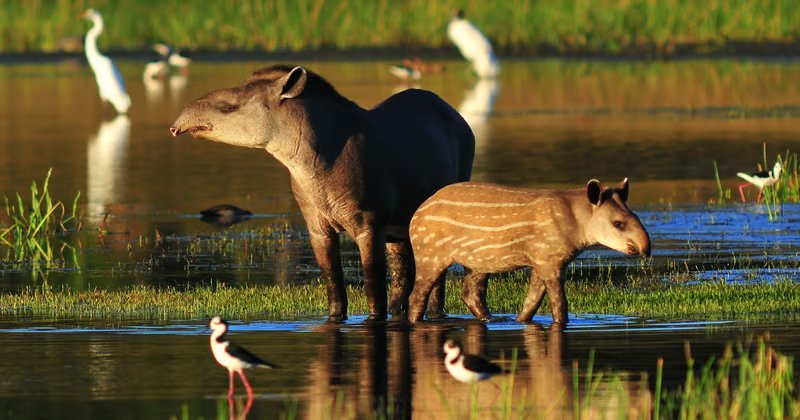
Tapirus terrestris
South America's largest land mammal, an ancient herbivore with a distinctive prehensile trunk-like snout and barrel-shaped body, often called a 'living fossil' due to its prehistoric appearance.
 Least Concern
Alouatta seniculus
A large, robust primate with reddish-brown fur and an enlarged hyoid bone that produces the loudest call of any land animal, echoing through the rainforest canopy.

Melanosuchus niger
The largest predator in the Amazon basin, this massive crocodilian with dark, almost black skin is an apex predator capable of taking prey as large as tapirs and jaguars.
 Least Concern
Saguinus midas
A small, agile primate with distinctive golden-yellow hands and feet contrasting with its dark brownish-black body, known for its acrobatic abilities and social group dynamics.
Traveler Stories
"Watching the northern lights from that coastal overlook was one of those moments you carry with you. EcoVoyager's team knew exactly where to take us and when."
"They made my trip to Chile super smooth. I had nothing to worry about, they connected me with local guides and took me to some super cool places."
"My kids are still talking about the lemurs months later. EcoVoyager handled every detail so we could actually be present together."
"Absolutely loved our Mongolia trip in July 2025! Ecovoyager put together the best itinerary possible that combined adventure and comfort. We would 100% recommend Ecovoyager to our friends and family!"
"The Rupununi was fabulous. Even if there weren't any animals, it would've been a great experience. The only negative was leaving."
"The trip was thoughtfully curated for a REAL Cuban cultural experience, juxtaposing between the island's insolvency and the faux luxuries propped up by foreign investment."
"The salt flats at sunrise were even more stunning than I'd imagined. Our guide positioned us perfectly for the reflections."
"EcoVoyager put my mind at ease with expert guidance on how to stay safe and enjoy the vibes. If I were to plan another solo trip to an unfamiliar country, I'd trust EcoVoyager to help me through it all."
"I had a wonderful time. Organization was superb and our experiences were maximized due to great planning and enthusiasm."
"Staying with nomadic families, riding through valleys with no other tourists in sight. This is the kind of travel I didn't know I was missing."