
Ecovoyager Adventures

Discover Lake Atitlán

Sololá, Guatemala

Scroll
Location Overview

Lake Atitlán

Sololá, Guatemala

Lake Atitlán fills a volcanic caldera formed by the Los Chocoyos supervolcano eruption ~85,000 years ago. At 340 meters deep and 1,562 meters above sea level, it is the deepest lake in Central America. Twelve Tz'utujil and Kaqchikel Maya villages ring the shoreline—each with its own language, textile tradition, and ceremonial calendar—connected by lanchas across waters Aldous Huxley described as "Lake Como with additional embellishments of several immense volcanoes."

Tours coming soon

Plan a Custom Trip

Ecovoyager Experiences

Lake Atitlán Tours

Handcrafted expeditions into the remote corners of Lake Atitlán — led by local experts, designed for the curious traveller.

Bespoke Travel

Experience Lake Atitlán, Your Way

Skip the standard itineraries. We design journeys around your interests, timeline, and curiosity with exclusive access you won't find on any platform.

100%
Customizable
24hr
Response Time
1:1
Expert Planning
Custom Experience
Bespoke Adventure
Personalised Journey
Experiences

Things to Do in Lake Atitlán

Starting points for your perfect trip

Ready to create something unique?
Tell us your vision and we'll make it happen
Bespoke Experience

Design Your Custom Trip

Tell us about your dream adventure. Our travel specialists respond within 24 hours with a personalised itinerary.

Lake Atitlán, Guatemala

Stories from Lake Atitlán

Explore Chapters
Climate Overview
Highland lake at 1,562m—mild year-round. Dry season Nov–Apr: clear mornings, calm lake, 15–24°C. Wet season May–Oct: afternoon rains, vivid green hillsides. Xocomil afternoon wind rises most days.
Plan Your Journey

Best Time to Visit Lake Atitlán

When to Visit Lake Atitlán

Dry Season
November – February
13–24°C / 55–75°F Very low
Peak
The optimal window for Lake Atitlán. Mornings are crisp and glassy—calmest before 9 a.m., ideal for kayaking and lancha travel. Days warm to 20–24°C with consistent sun. Volcán San Pedro and Indian's Nose offer the clearest panoramic views. Village markets and weaving cooperatives operate at full capacity. December brings the most tourists; January and February offer the same conditions with fewer visitors.
Hot Dry Season
March – April
14–26°C / 57–79°F Low
Good
The warmest and driest months on the lake, reaching 26°C in the afternoon. Holy Week (Semana Santa) brings major festival activity across the lake—Maximón's annual relocation in Santiago Atitlán is a key ceremonial event. The xocomil afternoon wind is particularly strong; all water activities are best in the morning. Book accommodation well in advance for Holy Week.
Wet Season
May – October
15–23°C / 59–73°F High (afternoon)
Shoulder
Afternoon rains arrive after noon and last 2–4 hours before clearing. Mornings are almost always clear and the lake turns deep blue-green against lush hillsides. Visitor numbers drop substantially, prices fall, and the traditional communities feel genuinely quiet. The xocomil is more frequent—afternoon lancha travel should be planned carefully.
Transition
November
14–24°C / 57–75°F Decreasing
Good
The best of both seasons: rains mostly stopped, hillsides still green, crowds not yet built ahead of December. The light in November is particularly clear and the lake reflects the three volcanoes with unusual precision in calm morning hours. Día de los Muertos on November 1st is celebrated distinctively around the lake. EcoVoyager's preferred month for small-group programs here.
Annual Overview
Jan
22°
Feb
23°
Mar
25°
Apr
26°
May
24°
Jun
22°
Jul
22°
Aug
22°
Sep
22°
Oct
21°
Nov
21°
Dec
21°
Peak
Great
Good
Shoulder
Off-Season
Travel Logistics

Getting to Lake Atitlán

Choose your route. Every option arrives at the same destination.

Shuttle from Antigua or Guatemala City

2–3 hours from Antigua; 3–4 hours from Guatemala City
Journey Time
$15–30 USD shared shuttle
Approximate Cost
Panajachel is the primary gateway to Lake Atitlán, reached by tourist shuttle from Antigua (140 km, 2–3 hours) or from Guatemala City's La Aurora Airport (3–4 hours). Tourist shuttles depart Antigua multiple times daily. EcoVoyager uses private vehicles for arrivals, allowing direct transfer to whichever village the program begins in rather than routing through Panajachel's commercial center.
Insider Tip
Book shuttles in advance for peak season (December–February) and for Semana Santa. The mountain road between Antigua and Panajachel is narrow and winding—morning departures typically have faster journey times with less truck traffic.

Lanchas: Inter-Village Boat Transport

5–45 minutes between villages
Journey Time
10–50 GTQ ($1.25–6.50 USD) per trip
Approximate Cost
Lanchas are the defining transport experience and the only way to reach all 12 villages. Public lanchas from Panajachel run 6:30 a.m.–5:30 p.m. along two main routes: the northern shore (Panajachel → Santa Cruz → San Marcos → San Juan → San Pedro) and direct service to Santiago Atitlán (~25 minutes). EcoVoyager uses private lanchas with vetted captains, scheduling all crossings before noon.
Insider Tip
Ask the fare before boarding any lancha—prices vary by route and operator. Morning crossings are always calmer than afternoon. Always check the last departure time from smaller villages before settling in for the afternoon, especially from Santiago Atitlán and the western shore.

Tuk-Tuks and Pickup Trucks Within and Between Villages

Varies—5–20 minutes within most villages
Journey Time
5–15 GTQ ($0.65–2 USD)
Approximate Cost
Within villages, tuk-tuks are standard for moving between the dock and upper village. The eastern shore (Panajachel–Santa Catarina Palopó–San Antonio Palopó) is connected by road with shared pickup trucks. The trail between San Pedro and San Juan (3 km) is flat and well-marked.
Insider Tip
Always agree a tuk-tuk fare before boarding. On the western shore road between San Marcos, San Juan, and San Pedro conditions are reliable year-round. For less-traveled walking trails, always confirm route safety with a local—some paths have had security issues.
2–3 hours from Antigua; 3–4 hours from Guatemala City

Shuttle from Antigua or Guatemala City

Shuttle from Antigua or Guatemala City

Panajachel is the primary gateway to Lake Atitlán, reached by tourist shuttle from Antigua (140 km, 2–3 hours) or from Guatemala City's La Aurora Airport (3–4 hours). Tourist shuttles depart Antigua multiple times daily. EcoVoyager uses private vehicles for arrivals, allowing direct transfer to whichever village the program begins in rather than routing through Panajachel's commercial center.

Journey Time
2–3 hours from Antigua; 3–4 hours from Guatemala City
Approx. Cost
$15–30 USD shared shuttle
Insider Tip
Book shuttles in advance for peak season (December–February) and for Semana Santa. The mountain road between Antigua and Panajachel is narrow and winding—morning departures typically have faster journey times with less truck traffic.
5–45 minutes between villages

Lanchas: Inter-Village Boat Transport

Lanchas: Inter-Village Boat Transport

Lanchas are the defining transport experience and the only way to reach all 12 villages. Public lanchas from Panajachel run 6:30 a.m.–5:30 p.m. along two main routes: the northern shore (Panajachel → Santa Cruz → San Marcos → San Juan → San Pedro) and direct service to Santiago Atitlán (~25 minutes). EcoVoyager uses private lanchas with vetted captains, scheduling all crossings before noon.

Journey Time
5–45 minutes between villages
Approx. Cost
10–50 GTQ ($1.25–6.50 USD) per trip
Insider Tip
Ask the fare before boarding any lancha—prices vary by route and operator. Morning crossings are always calmer than afternoon. Always check the last departure time from smaller villages before settling in for the afternoon, especially from Santiago Atitlán and the western shore.
Varies—5–20 minutes within most villages

Tuk-Tuks and Pickup Trucks Within and Between Villages

Tuk-Tuks and Pickup Trucks Within and Between Villages

Within villages, tuk-tuks are standard for moving between the dock and upper village. The eastern shore (Panajachel–Santa Catarina Palopó–San Antonio Palopó) is connected by road with shared pickup trucks. The trail between San Pedro and San Juan (3 km) is flat and well-marked.

Journey Time
Varies—5–20 minutes within most villages
Approx. Cost
5–15 GTQ ($0.65–2 USD)
Insider Tip
Always agree a tuk-tuk fare before boarding. On the western shore road between San Marcos, San Juan, and San Pedro conditions are reliable year-round. For less-traveled walking trails, always confirm route safety with a local—some paths have had security issues.
Why Travel with Us

Travel with EcoVoyager

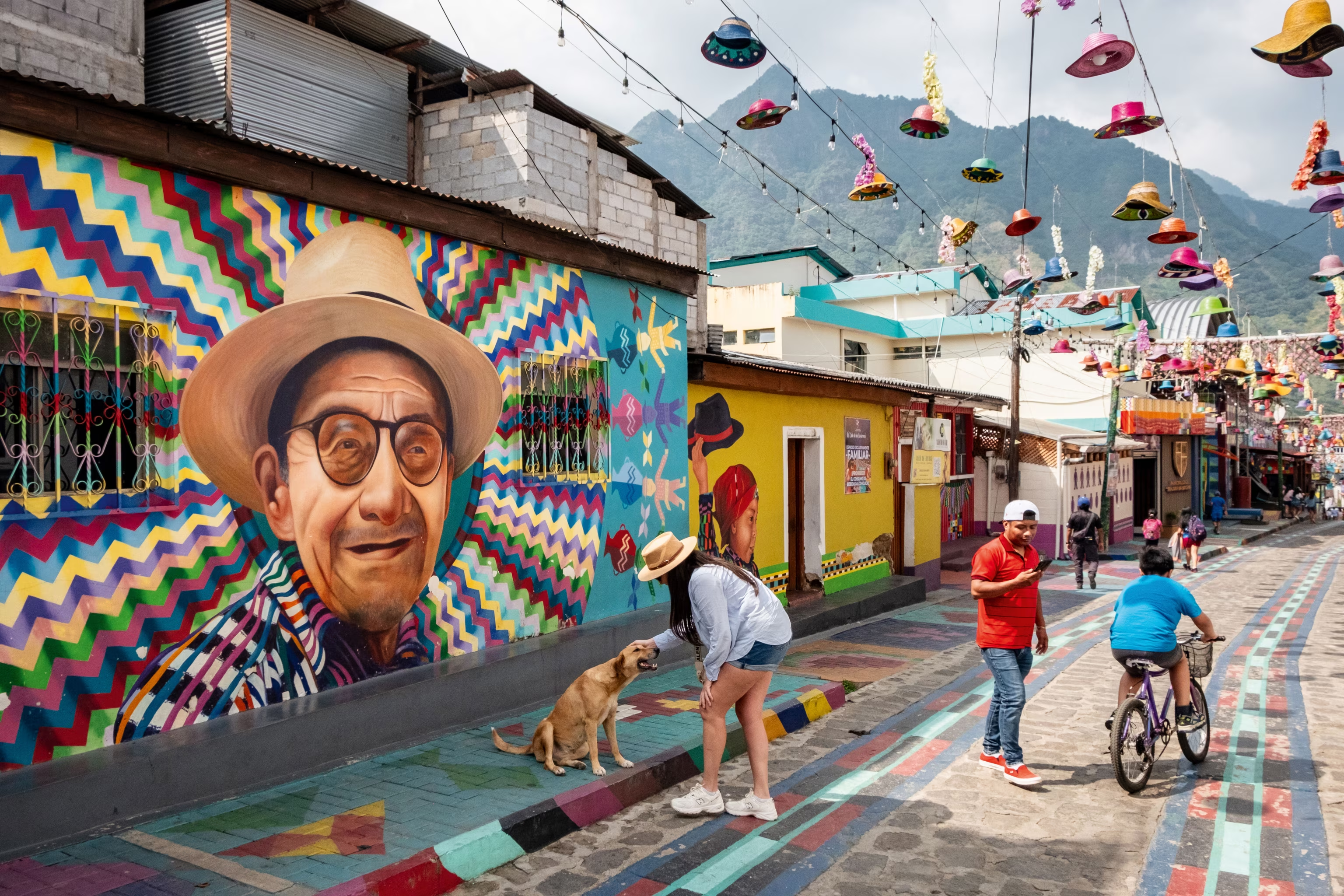
EcoVoyager structures its Lake Atitlán programs around the villages rather than a single base—using lanchas to move between communities with local guides from the lake itself. We prioritize the villages less traveled: San Juan for its natural-dye cooperatives, Santiago Atitlán for Maximón and Tz'utujil traditions, Santa Catarina Palopó for its mural-painted streets. Volcano hikes and Samabaj scuba dives are built in where the group's interests align.

Village programs led by guides from the communities themselves—not from Panajachel's tourism industry—covering Santiago Atitlán, San Juan, and the eastern shore villages that most visitors skip
Natural-dye weaving cooperative visits in San Juan La Laguna, arranged directly with the producers and outside of standard tourist market hours
Private lancha hire with captains who know the lake's xocomil wind patterns, scheduling all water crossings for morning calm
Volcano hikes on San Pedro and Indian's Nose with guides from the trail communities; scuba dive access to the submerged pre-Classic Maya site of Samabaj for certified divers

Plan Your Lake Atitlán Trip

Custom Travel Inquiry

Tell us about your plans and our specialists will craft a personalised itinerary within 24 hours.

Explore More

Other Guatemala Destinations

Explore more destinations across Guatemala.

Monterrico & Pacific Coast

Monterrico is a fishing village on Guatemala's Pacific coast, on black volcanic sand separated from the mainland by the Canal...

Explore

Laguna Lachua National Park

Laguna Lachuá is a nearly perfectly circular karstic lake at the center of a 14,500-hectare tropical rainforest park in Alta...

Explore

Quetzaltenango

Quetzaltenango—Xela—sits at 2,330 m (7,640 ft) in western Guatemala's highland valley, ringed by volcanic peaks. Guatemala's second largest city, 61%...

Explore

Rio Dulce & Livingston

Río Dulce is a 43 km river flowing east from Lake Izabal—Guatemala's largest lake—through the Boquerón Canyon to the Caribbean...

Explore

Sierra de las Minas Biosphere Reserve

Sierra de las Minas is a 130 km mountain range in central-eastern Guatemala, designated a UNESCO Biosphere Reserve in 1990...

Explore

Chichicastenango

Chichicastenango—Chichi to everyone who visits—is a K'iche' Maya highland town at 6,447 feet in the El Quiché department of Guatemala....

Explore

El Mirador

El Mirador is a Preclassic Maya city buried in the jungle of northern Petén, near the Mexican border. Occupied from...

Explore

Semuc Champey

Semuc Champey is a 300-meter natural limestone bridge in the Alta Verapaz jungle, over which the Cahabón River deposits a...

Explore

Acatenango & Fuego Volcanoes

Acatenango (3,976m) and Fuego (3,763m) form La Horqueta—a twin-volcano massif in the Sierra Madre, 29 km west of Antigua. Acatenango...

Explore

Antigua Guatemala

Founded in 1543 as Santiago de los Caballeros, Antigua served as capital of the Captaincy-General of Guatemala—governing all of Central...

Explore

Tikal National Park

Rising above the largest tropical forest north of the Amazon, Tikal's temple-pyramids—the tallest at 65 meters—broke through the jungle canopy...

Explore
Scroll to Top