

Kyrgyzstan
Ala-Kul Lake
Ala-Kul Lake
Location
Ala-Kul Lake
42.3177° / 78.5354°


Ala-Kul Lake Tours
Ala-Kul & Altyn Arashan Trek
Experience Ala-Kul Lake, Your Way
Skip the standard itineraries. We'll design a journey around your interests, timeline, and travel style — with exclusive access you won't find elsewhere.

Things to Do in Ala-Kul Lake
Starting points for your perfect trip
Ala-Kul Circuit Trek
Complete the legendary 55-kilometer trek from Karakol to Altyn Arashan via Ala-Kul Lake, crossing the dramatic 3,860-meter pass with panoramic views of Karakol Peak and Djigit Peak. Stay in traditional yurt camps at Sirota and soak in hot springs at journey’s end.
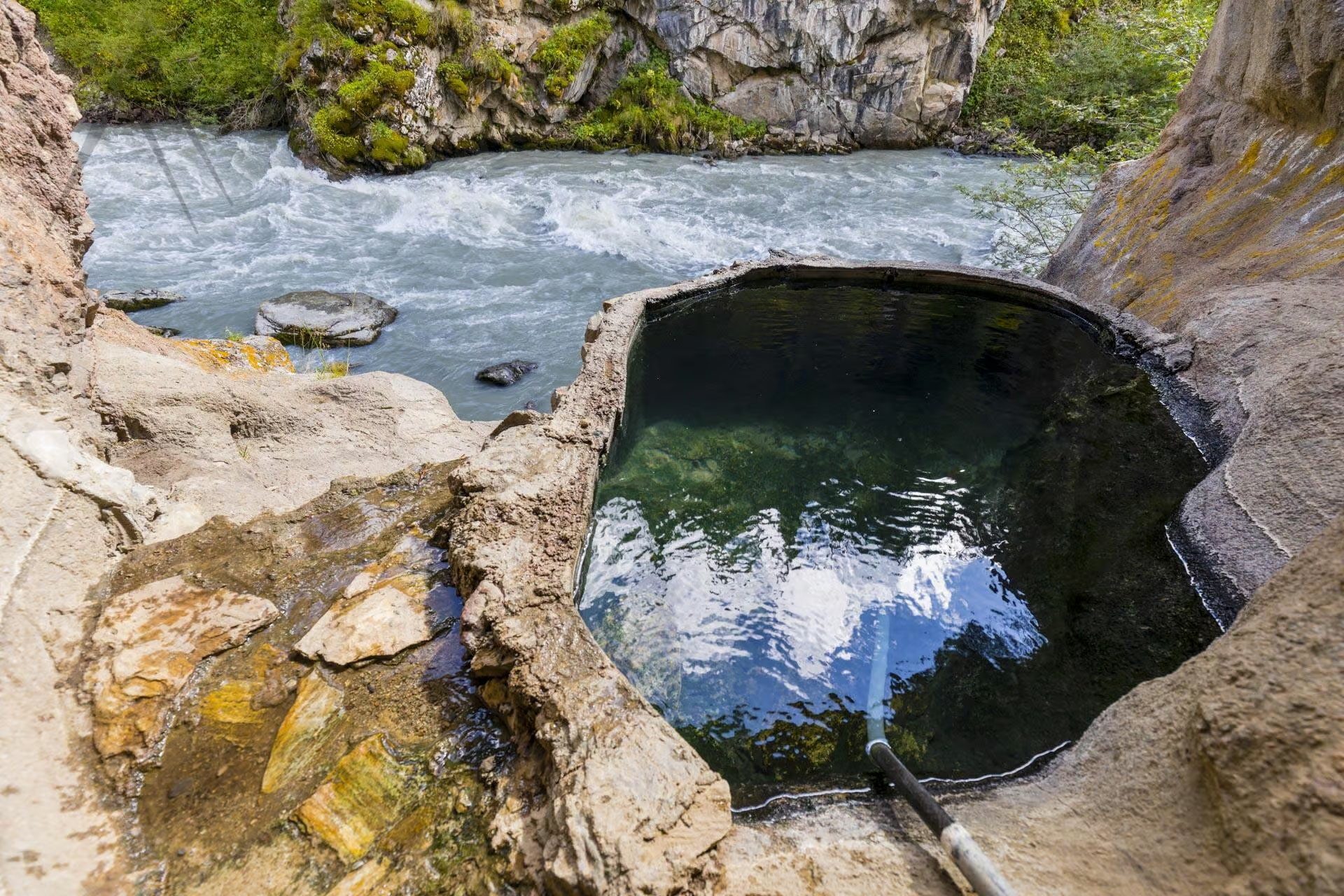
Altyn Arashan Hot Springs
Descend from Ala-Kul Pass to the “Golden Spa” valley at 3,000 meters, where sulfurous thermal springs heated to 50°C await in rustic wooden bathhouses. Soak weary muscles beneath the snow-capped silhouette of Peak Palatka while glacial rivers rush past.
Sunrise Camp at Ala-Kul’s Shore
Camp at 3,532 meters beside Ala-Kul for sunrise when glacial sediments shift the surface from turquoise to purple to gold. Night temperatures drop below freezing even in July, and the Milky Way arcs unobstructed above peaks exceeding 5,000 meters.
Terskey Ala-Too Wildlife Trek
Trek through habitat of Siberian ibex, golden eagles, and snow leopards—fewer than 500 remain in Kyrgyzstan. Lammergeiers with 2.5-meter wingspans soar above boulder fields where marmots whistle warnings, and Schrenk’s spruce forests shelter species first catalogued in the 1840s.

Karakol’s Silk Road Heritage
Built 1907–1910 by Beijing architect Zhou Si without nails, Karakol’s Dungan Mosque blends Chinese pagoda style with Islamic worship. Dragons, phoenixes, and a wheel of fire decorate its eaves. The Dungans fled China in the 1870s, creating one of Central Asia’s most striking architectural hybrids.

Przhevalsky Memorial & Explorer’s Legacy
The 1957 museum honors Russian explorer Nikolai Przhevalsky, who mapped 31,500 km of Central Asia before dying of typhoid in Karakol in 1888. He documented Przewalski’s horse, and his eagle-topped tomb on Lake Issyk-Kul faces Lhasa—the city he never reached.

Stories from Ala-Kul Lake
A Lake of Many Colors
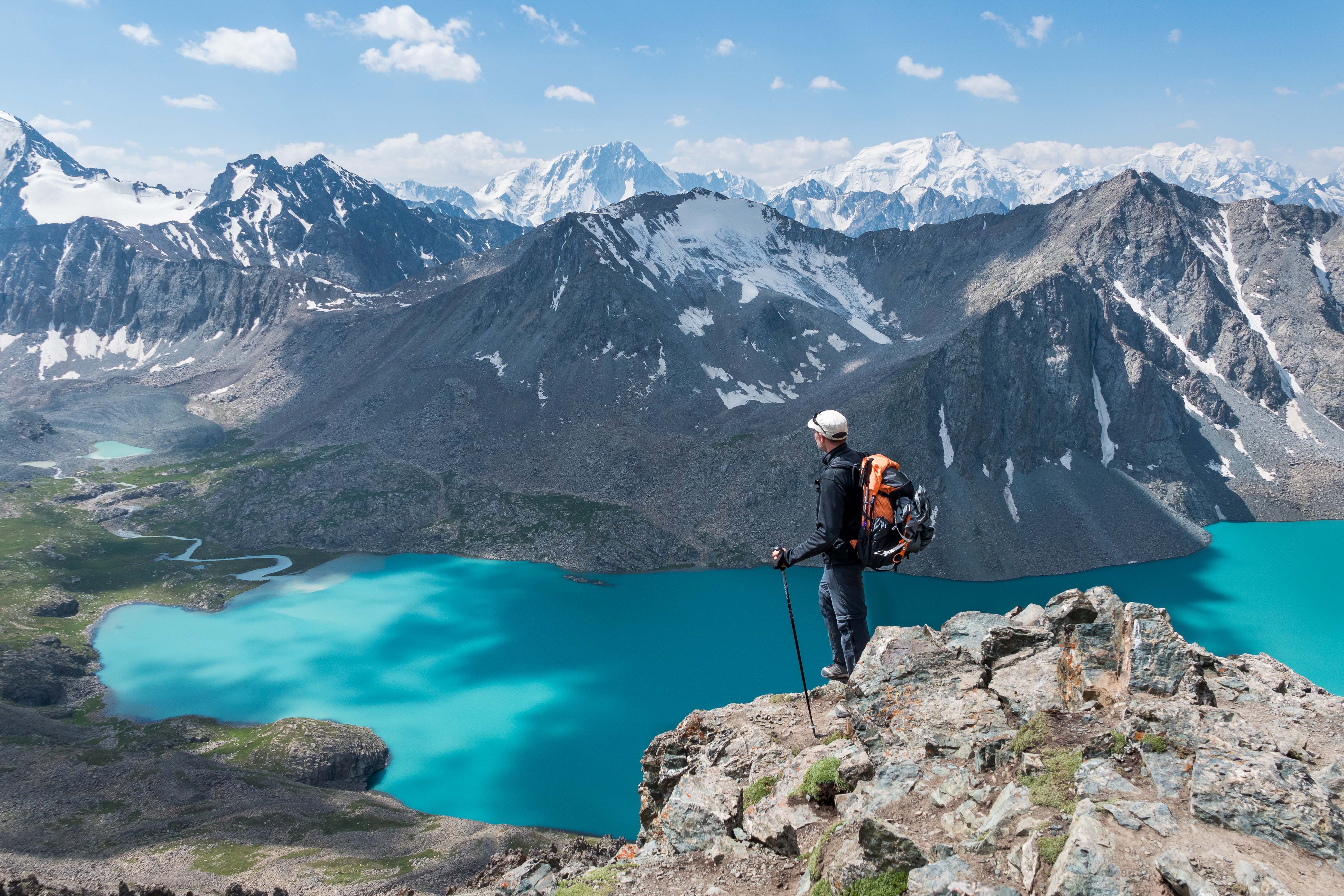
The Kyrgyz name Ala-Kul translates as “Motley Lake” or “Colorful Lake”—a name earned through the water’s remarkable ability to shift through an entire spectrum of colors depending on weather, season, and time of day. Visitors have reported seeing the surface transform from brilliant turquoise to deep purple, dark blue, and even pink-gold within a single afternoon. This chromatic phenomenon results from suspended glacial sediments in water fed directly by a small glacier clinging to the ridgeline above. The concentrations of fine rock flour—particles of quartz, feldspar, and mica ground by glacial movement—scatter sunlight at different wavelengths as cloud cover and sun angle change. No two visits to Ala-Kul produce the same palette, which is precisely why Kyrgyz travelers named it centuries ago.
Situated at 3,532 meters in a narrow gorge of the Terskey Ala-Too range, Ala-Kul measures approximately 2.8 kilometers long by 600 to 700 meters wide, covering an area of 1.5 square kilometers. Scientists estimate its depth exceeds 70 meters, though the full basin has never been completely mapped. The lake is rock-dammed—a glacial moraine deposited by retreating ice blocks the natural drainage, forcing water to seep beneath the barrier and emerge far below to feed the Karakol River. From October through May, the entire surface freezes solid beneath meters of snow and ice. The surrounding peaks, including Karakol Peak at 5,216 meters and Djigit Peak at 5,170 meters, create a dramatic amphitheater that channels fierce winds through the gorge.
Stories from Ala-Kul Lake
 Destinations
Why Kygyzstan's Tian Shan Should Be on Every Trekker's Bucket List
Seven-thousand-meter peaks, turquoise glacial lakes, and nomads who offer you fermented mare’s milk at 3,500 meters. Kyrgyzstan’s Celestial Mountains deliver Himalaya-grade scenery with almost no one on the trail.
Read Full StoryGetting to Ala-Kul Lake
Trek from Karakol Valley
Day Trip from Altyn Arashan
Getting to Karakol
Travel with EcoVoyager
Ala-Kul sits 20 kilometers south of Karakol in the heart of the Terskey Ala-Too, where the classic 55-kilometer trekking circuit crosses a 3,860-meter pass between valleys flanked by 5,000-meter peaks. EcoVoyager partners with certified mountain guides who manage altitude logistics, route-finding through variable snow conditions, and yurt camp reservations at Sirota and Altyn Arashan. Our naturalist-led treks identify Siberian ibex, golden eagles, and alpine wildflowers along the route, while our local partners arrange 4x4 transfers, equipment rental, and post-trek hot spring access. Whether you take the full circuit or a guided day trip from Altyn Arashan, every detail is managed.

Explore More
Other Kyrgyzstan Destinations

Jyrgalan Valley
At 2,200 meters in the eastern Tien Shan, Jyrgalan has transformed from a dying Soviet coal town into Kyrgyzstan's most...
Explore
Sary-Chelek Biosphere Reserve
At 1,880 meters in Kyrgyzstan's western Tien Shan, Sary-Chelek Lake lies cradled by ancient walnut forests in one of Central...
Explore
Peak Lenin Base Camp
At 3,600 meters in the Achik-Tash Valley, Base Camp sits beneath 7,134-meter Peak Lenin, the most frequently summited 7,000-meter peak...
Explore
Arslanbob
Named for a revered 11th-century Sufi leader who reportedly founded the settlement around 1120 CE, Arslanbob sits at 1,500 meters...
Explore
Tash Rabat
At 3,200 meters in the remote Kara-Koyun gorge of Kyrgyzstan’s Inner Tien Shan, Tash Rabat emerges from a mountainside like...
Explore
Jeti-Oguz
Protected as a geological monument in 1975, the Jeti-Oguz formation takes its Kyrgyz name from seven blood-red sandstone cliffs that...
Explore
Skazka Canyon
On the southern shore of Issyk-Kul, Central Asia’s largest alpine lake, wind and water have sculpted Neogene-era sediments into a...
Explore
Burana Tower
Rising from the Chuy Valley 80 kilometers east of Bishkek, the 11th-century Burana Tower is the sole surviving monument of...
Explore
Osh
At 1,000 meters where the Fergana Valley meets the Pamir-Alay foothills, Osh has anchored Silk Road trade for over 3,000...
Explore
Karakol
At 1,770 meters near Issyk-Kul’s eastern tip, Karakol has evolved from an 1869 Russian military outpost into Kyrgyzstan’s adventure capital...
Explore
Song-Kul Lake
At 3,016 meters in the Inner Tian Shan, Song-Kul is Kyrgyzstan's second-largest lake and its largest freshwater body, a 270-square-kilometer...
Explore
Ala Archa National Park
Rising from 1,500 to 4,895 meters just 40 kilometers south of Bishkek, Ala Archa National Park compresses the full drama...
Explore
Bishkek
Sprawling at 800 meters across the Chuy Valley beneath the snow-capped Kyrgyz Ala-Too range, Bishkek is Central Asia's greenest capital—a...
Explore
Issyk-Kul Lake
Mentioned by Chinese envoy Zhang Qian in 138 BCE and crossed by Buddhist monk Xuanzang in 629 CE, Issyk-Kul has...
ExploreSwipe to explore more