




Travel to Karakol
Kyrgyzstan's Adventure Capital
Karakol
Kyrgyzstan's Adventure Capital


Ecovoyager Experiences
Karakol Tours
Handcrafted expeditions into the remote corners of Karakol, led by local experts, designed for the curious traveller.
 Featured
KARAKOL
Issyk Kul Circuit Expedition
Silk Road Ruins, Red Rock Canyons & Eagle Hunters on the World's Second-Largest Alpine Lake
 Featured
KARAKOL
Wild Kyrgyzstan: Eagles, Nomads & the Ancient Silk Road
Kyrgyzstan from South to North Across Walnut Forests, Silk Road Ruins, Nomadic Camps & Alpine Lakes
 Featured
KARAKOL
Ala-Kul & Son Kul Trek
Trek to Kyrgyzstan’s famous glacial lake at 3,532 meters, cross a 3,860-meter pass, then ride horses with nomads at Son Kul.
 Featured
KARAKOL
Kyrgyzstan Horse Riding Expedition
A 12-day all-inclusive expedition spanning 3 horseback treks across Kyrgyzstan’s Tien Shan: three mountain treks on horseback, nomadic yurt camps at Son-Kul, and alpine passes above 3,500 meters
 Featured
KARAKOL
Ala Kul Pass Trek
Glacial lakes, 3,860-meter passes, eagle hunters, and hot springs — 8 all-inclusive days in the Tian Shan
 Featured
KARAKOL
Jyrgalan to Altyn Arashan Horseback Trek
A 3-day horseback circuit of eastern Kyrgyzstan: ride from Jyrgalan Valley over five passes above 3,300 meters to Altyn Arashan’s geothermal springs, traversing the Boz-Uchuk and Ailanysh plateau lakes, with the northern and southern shores of Issyk-Kul completing the circuit
Experience Karakol, Your Way
Skip the standard itineraries. We design journeys around your interests, timeline, and curiosity with exclusive access you won't find on any platform.

Things to Do in Karakol
Starting points for your perfect trip
Ala-Kul Lake Trek
Trek 3–4 days from Karakol Valley to turquoise Ala-Kul Lake at 3,560 meters, crossing the dramatic 3,860-meter pass with panoramic Terskey Ala-Too views. Descend through Altyn-Arashan and soak in natural hot springs before returning to Karakol.
Dungan Culinary Immersion
Discover Dungan cuisine from Chinese Muslims who fled to Kyrgyzstan in the 1870s. Visit Yrdyk village, explore the Dungan Museum, then prepare your own ashlan-fu—spicy cold noodle soup—in a family home before an eight-course traditional dinner with your hosts.
Jeti-Oguz & Valley of Flowers
Explore Jeti-Oguz’s Seven Bulls red rock formations and Broken Heart cliff, then continue to the Valley of Flowers where wildflowers carpet alpine meadows in spring. Options include horseback riding, waterfall hikes, and soaking in radon hot springs at a Soviet-era sanatorium.
Winter Skiing at Central Asia's Highest Resort
Ski Karakol Resort, where 20 kilometers of slopes reach 3,040 meters—Central Asia’s highest lift-served terrain. Where Soviet Olympic teams trained, enjoy uncrowded runs through Tian Shan forests with Issyk-Kul views, plus snowcat access to pristine powder above 3,400 meters.

Przhevalsky Museum & Explorers' Legacy
Visit the memorial museum of Nikolai Przhevalsky, the Russian explorer who mapped vast stretches of Central Asia and died in Karakol in 1888. The museum overlooking Issyk-Kul houses expedition artifacts, maps, and taxidermy specimens from his four major expeditions into the Tien Shan and Tibet.

Altyn-Arashan Hot Springs
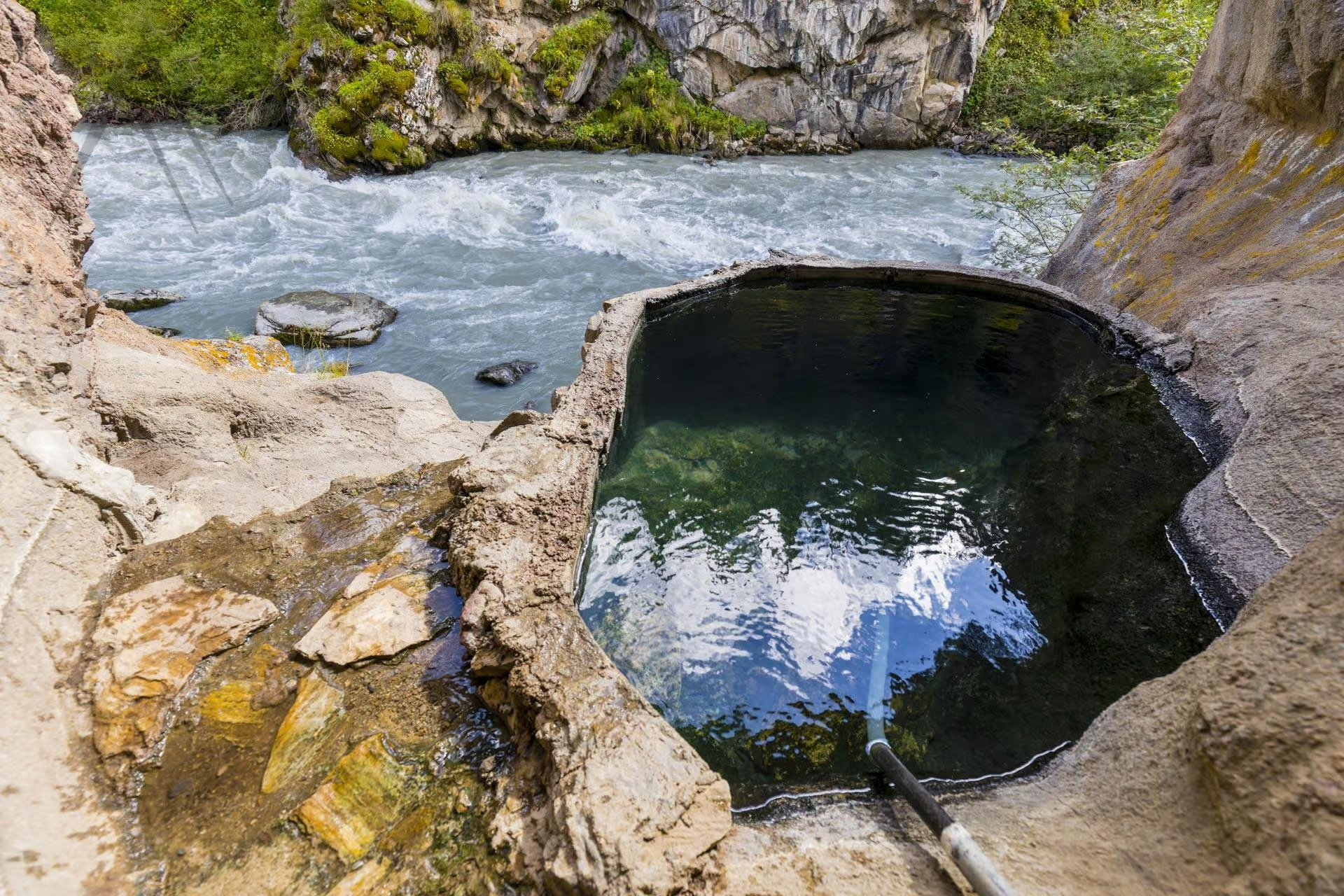
Hike or ride 4WD vehicles 30 kilometers up the Arashan Valley to natural hot springs at 2,600 meters, surrounded by Tien Shan spruce forest and glaciated peaks. Overnight in rustic guesthouses, soaking in mineral pools ranging from 30°C to 50°C under a canopy of stars.
Design Your Custom Trip
Tell us about your dream adventure. Our travel specialists respond within 24 hours with a personalised itinerary.
Adventure Capital of Central Asia
A Closer Look at Karakol

Crossroads of Cultures
Founded on July 1, 1869, as a Russian military outpost mapping the peaks separating Russian Turkestan from Qing China, Karakol became a base for famed explorers including Nikolai Przhevalsky, whose name the city bore until Kyrgyz independence in 1991. But the city’s character was truly shaped in the 1870s and 1880s, when waves of Dungan refugees—Chinese Muslims fleeing persecution after a failed revolt—crossed the Tian Shan mountains seeking sanctuary. Thousands died of cold and starvation on the treacherous journey; those who survived settled in Karakol and nearby villages like Yrdyk, bringing their farming expertise and culinary traditions to a region of nomads.
Today, Karakol is Kyrgyzstan’s fourth-largest city and one of its most ethnically diverse. Walk its leafy streets and you’ll encounter Russian wooden architecture with carved shutters, a Chinese-style mosque built by Dungan craftsmen, Uyghur restaurants serving hand-pulled laghman noodles, and Kyrgyz families heading to the Sunday animal market. This cultural layering makes Karakol uniquely rewarding for travelers seeking more than mountain scenery—though at 1,770 meters elevation, with peaks above 5,000 meters visible from town, the scenery is spectacular too.
Architectural Heritage
The Dungan Mosque stands as Karakol’s most extraordinary architectural achievement—a wooden structure built between 1907 and 1910 entirely without nails. Commissioned by Ibrahim Aji and designed by Beijing architect Chou Seu with 20 master carvers, the mosque resembles a Chinese Buddhist temple more than a typical Central Asian masjid. Its vivid colors carry symbolic meaning in Dungan culture: red protects against evil spirits, yellow brings prosperity, green represents happiness. Dragons and phoenixes adorn the beams—pre-Islamic symbols retained from the Dungans’ Chinese Buddhist past. The pagoda-style minaret beside it could be transplanted from Suzhou.
A few blocks away, the Holy Trinity Russian Orthodox Cathedral tells a different story. The original 1872 stone church was destroyed by an earthquake in 1889; the current wooden structure, completed in 1895 by the Maslikov merchant family, has survived over a century of upheaval. At 26 meters, it was Karakol’s tallest building. After the 1917 Revolution, it served variously as a school, sports hall, theater, dance hall, and coal store before being returned to the Orthodox community in 1991. Inside, the Tikhvin Icon of the Mother of God, painted in Athens in 1897, was hidden by believers who protected it through decades of Soviet atheism.
Gateway to the High Mountains
Karakol’s alpine backyard offers some of Central Asia’s most accessible high-mountain experiences. The classic Ala-Kul Lake trek—typically completed in 3-4 days—climbs through the Karakol Valley’s fir forests to reach a glacial lake of impossible turquoise at 3,560 meters, crosses the 3,860-meter Ala-Kul Pass with 360-degree views of the Terskey Ala-Too range, then descends through the Altyn-Arashan Valley where natural hot springs (including radon pools with supposed healing properties) await sore muscles. The 55-kilometer route requires no technical climbing but demands good fitness and weather awareness—conditions can shift from sunshine to snowstorm within hours at altitude.
In winter, Karakol Ski Resort transforms the region into Central Asia’s premier snow sports destination. Located just 7 kilometers from town at 2,300 meters base elevation, the resort offers 20 kilometers of marked trails reaching 3,040 meters—the highest lift-served skiing in Central Asia. Where Soviet Olympic teams once trained, modern chairlifts now carry skiers through Tian Shan fir forests to panoramic views of Issyk-Kul Lake. For powder seekers, snowcats access virgin terrain above 3,400 meters. The season runs November through April, with January and February offering the most reliable conditions.
From the Journal
Stories from Karakol
Field notes, cultural encounters, and trail dispatches from our guides and travellers in Karakol.

Explore More
Other Kyrgyzstan Destinations
Explore more destinations across Kyrgyzstan.
Kel Suu Lake
Kel Suu is a canyon lake at 3,514 m (11,529 ft) in the Kok-Kiya Valley, At-Bashi district, Naryn Oblast—formed when...
ExploreJyrgalan Valley
At 2,200 meters in the eastern Tien Shan, Jyrgalan has transformed from a dying Soviet coal town into Kyrgyzstan's most...
ExploreSary-Chelek Biosphere Reserve
At 1,880 meters in Kyrgyzstan's western Tien Shan, Sary-Chelek Lake lies cradled by ancient walnut forests in one of Central...
ExplorePeak Lenin Base Camp
At 3,600 meters in the Achik-Tash Valley, Base Camp sits beneath 7,134-meter Peak Lenin, the most frequently summited 7,000-meter peak...
ExploreAla-Kul Lake
First documented by Russian explorer Putimtsoff in 1811, Ala-Kul earned its Kyrgyz name — "Motley Lake" — from surface waters...
ExploreArslanbob
Named for a revered 11th-century Sufi leader, Arslanbob sits at 1,500 meters in the Babash-Ata Mountains, sheltering the largest natural...
ExploreTash Rabat
At 3,200 meters in the remote Kara-Koyun gorge, Tash Rabat emerges from a mountainside like a vision from another age....
ExploreJeti-Oguz
Protected as a geological monument in 1975, the Jeti-Oguz formation takes its Kyrgyz name from seven blood-red sandstone cliffs that...
ExploreSkazka Canyon
On the southern shore of Issyk-Kul, Central Asia’s largest alpine lake, wind and water have sculpted Neogene-era sediments into a...
ExploreBurana Tower
Rising from the Chuy Valley 80 kilometers east of Bishkek, the 11th-century Burana Tower is the sole surviving monument of...
ExploreOsh
At 1,000 meters where the Fergana Valley meets the Pamir-Alay foothills, Osh has anchored Silk Road trade for over 3,000...
ExploreSong-Kul Lake
At 3,016 meters in the Inner Tian Shan, Song-Kul is Kyrgyzstan's second-largest lake and its largest freshwater body, a 270-square-kilometer...
ExploreAla Archa National Park
Rising from 1,500 to 4,895 meters just 40 kilometers south of Bishkek, Ala Archa National Park compresses the full drama...
ExploreBishkek
Sprawling at 800 meters across the Chuy Valley beneath the snow-capped Kyrgyz Ala-Too range, Bishkek is Central Asia's greenest capital—a...
ExploreIssyk-Kul Lake
Mentioned by Chinese envoy Zhang Qian in 138 BCE and crossed by Buddhist monk Xuanzang in 629 CE, Issyk-Kul has...
Explore