

Kyrgyzstan
Jeti-Oguz
Jeti-Oguz
Location
Jeti-Oguz
42.3371° / 78.2309°




Jeti-Oguz Tours
Ala-Kul & Altyn Arashan Trek
Kyrgyzstan Horse Riding Expedition
Kyrgyzstan Trekking & Cultural Expedition
Issyk Kul Lake Circuit
Experience Jeti-Oguz, Your Way
Skip the standard itineraries. We'll design a journey around your interests, timeline, and travel style — with exclusive access you won't find elsewhere.

Things to Do in Jeti-Oguz
Starting points for your perfect trip
Valley of Flowers Trek
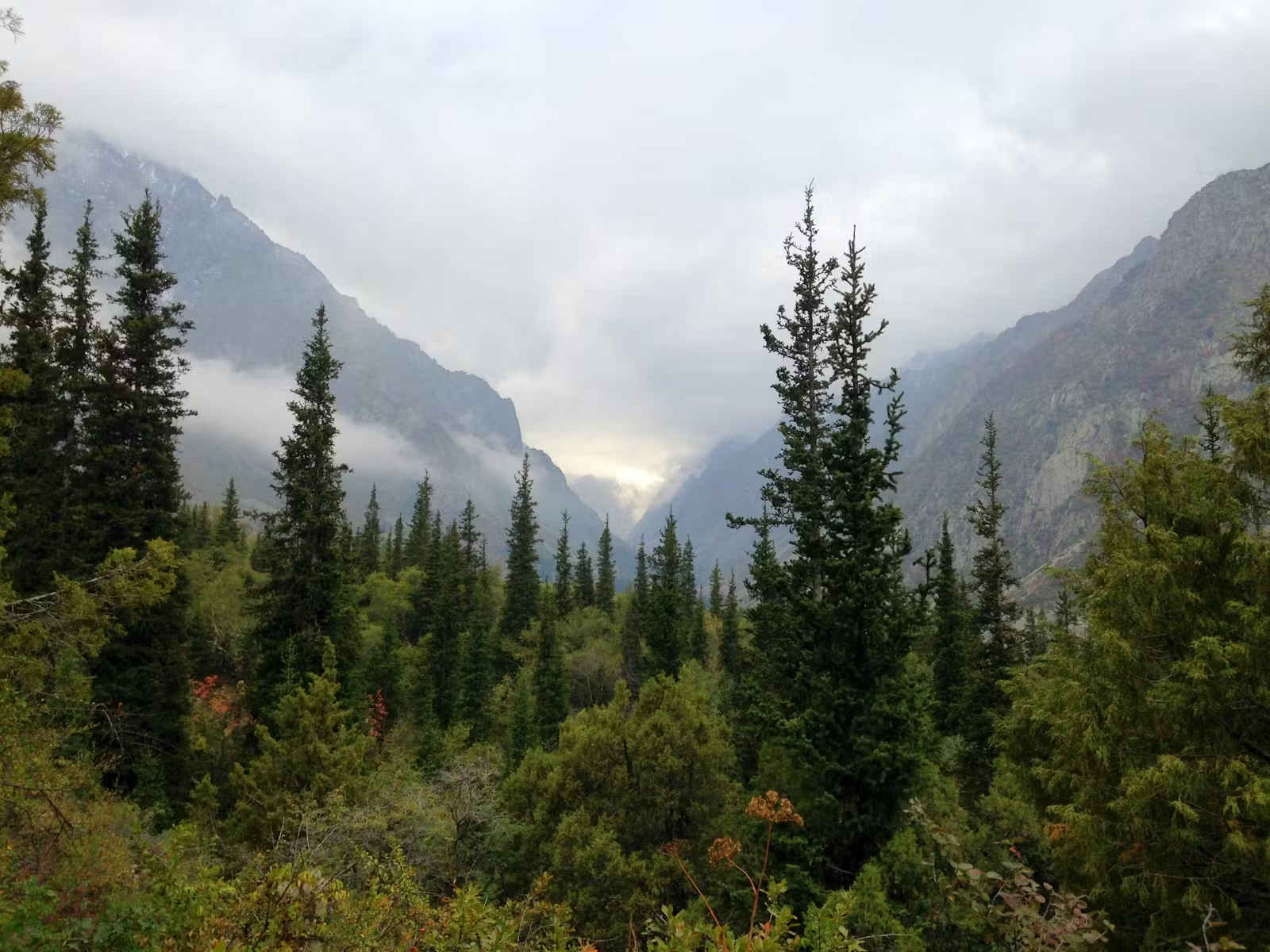
Hike 6 kilometers into Kok-Jayik at 2,800 meters, where alpine meadows erupt with poppies, tulips, and edelweiss from May through June. The 20-meter Maiden's Tears waterfall cascades in braided rivulets across a wide rock face 1.5 kilometers into Schrenk's spruce forest.
Seven Bulls & Broken Heart Geology Walk
Tertiary red conglomerates colored by iron oxide form seven cliff faces reaching 400 meters. A viewpoint trail reveals the full formation, and the Broken Heart — a cleft rock at the gorge entrance — carries its own legend of rival suitors. Protected as a nature monument since 1975.
Nomadic Jailoo Camp & Kymyz Tradition
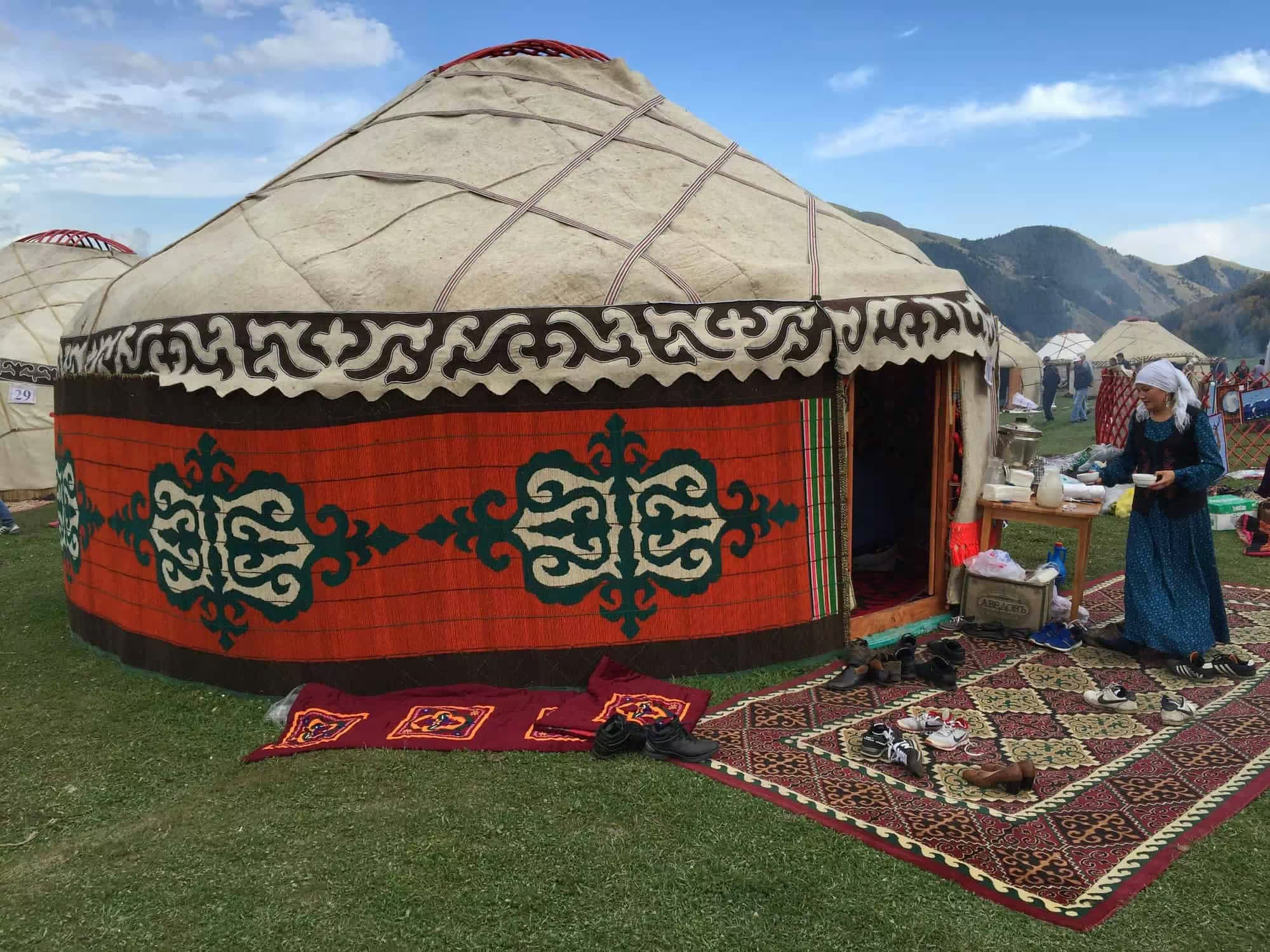
Stay with Kyrgyz herding families on the summer jailoo. Learn to prepare kymyz — fermented mare's milk central to nomadic life — taste fresh kurut cheese dried on yurt rooftops, and hear Seven Bulls legends told around the fire beneath skies undimmed by light pollution.

Horseback Expedition to Remote Alpine Lakes
Journey on horseback through the Chelpek and Yrdyk valleys on routes Kyrgyz herders have used for generations, reaching alpine lakes above 3,000 meters inaccessible on foot. Camp in meadows with views of Oguz Bashi peak (5,168m) — the "Head of the Bull" — at the gorge's terminus.

Soviet Sanatorium & Radon Mineral Baths
Built in 1932, this 200-bed sanatorium drew thousands from across the USSR for radon and hydrogen sulfide springs. Soviet cosmonauts recovered here after missions. Original treatment rooms still operate — a time capsule where Presidents Akaev and Yeltsin held their first summit in 1991.

Telety Pass Trek to the Karakol Valley
Cross the 3,820-meter Telety Pass on a multi-day traverse connecting Jeti-Oguz to the Karakol Valley and Ala-Kul Lake. The route climbs through Schrenk's spruce forests above the treeline into scree and snowfields, with views of the Terskey Ala-Too's highest peaks in every direction.

Stories from Jeti-Oguz
Where Mountains Turn to Legend
Jeti-Oguz announces itself with a wall of blood-red sandstone cliffs erupting from emerald alpine slopes, their color so vivid against the green that legend inevitably filled the silence. The Kyrgyz name means “Seven Bulls,” and the formations do resemble massive bovines lying in repose, their flanks turned crimson by iron oxide deposits accumulated over millions of years. The most enduring legend speaks of a khan whose wife was stolen by a rival. In vengeance, he held a seven-day feast, slaughtering a bull each day, and on the final night murdered the captive woman. Her blood swept the bulls down the valley, and where they came to rest, they turned to stone. Kyrgyz families still share this story with their children beneath the very cliffs it describes.
Just before the Seven Bulls stands another formation equally steeped in tragedy—the Broken Heart, a cleft red rock said to mark the spot where a woman died of grief after two suitors killed each other fighting for her love. These are not simply geological curiosities but living mythology woven into Kyrgyz painting, poetry, and music for centuries. The formations were protected as a nature monument in 1975, recognizing both their geological significance—the cliffs are Tertiary red conglomerates, some reaching 400 meters in height—and their cultural importance as national symbols. Burial mounds called kurgans near the village, dating from the 7th to 5th centuries BCE and measuring up to 28 meters in diameter, confirm that humans have considered this valley significant for at least 2,500 years.
Getting to Jeti-Oguz
Drive from Karakol
Day Trip from Bishkek
Telety Pass Trek from Karakol Valley
Travel with EcoVoyager
Jeti-Oguz sits 28 kilometers southwest of Karakol on a paved road, where the Terskey Ala-Too's most famous red sandstone formations guard a 37-kilometer gorge leading toward 5,000-meter peaks. EcoVoyager connects you with historian-guides who bring the Seven Bulls legends and 2,500 years of kurgan burial history to life, naturalists who identify alpine wildflower species in the Kok-Jayik meadows, and horseback expedition leaders who navigate routes to remote lakes inaccessible by foot. Our local partners arrange nomadic yurt stays on the summer jailoo, Soviet-era sanatorium treatments, and multi-day treks crossing the 3,820-meter Telety Pass to connect with the Ala-Kul circuit.

Explore More
Other Kyrgyzstan Destinations

Jyrgalan Valley
At 2,200 meters in the eastern Tien Shan, Jyrgalan has transformed from a dying Soviet coal town into Kyrgyzstan's most...
Explore
Sary-Chelek Biosphere Reserve
At 1,880 meters in Kyrgyzstan's western Tien Shan, Sary-Chelek Lake lies cradled by ancient walnut forests in one of Central...
Explore
Peak Lenin Base Camp
At 3,600 meters in the Achik-Tash Valley, Base Camp sits beneath 7,134-meter Peak Lenin, the most frequently summited 7,000-meter peak...
Explore
Ala-Kul Lake
First documented by Russian explorer Putimtsoff in 1811, Ala-Kul earned its Kyrgyz name — "Motley Lake" — from surface waters...
Explore
Arslanbob
Named for a revered 11th-century Sufi leader who reportedly founded the settlement around 1120 CE, Arslanbob sits at 1,500 meters...
Explore
Tash Rabat
At 3,200 meters in the remote Kara-Koyun gorge of Kyrgyzstan’s Inner Tien Shan, Tash Rabat emerges from a mountainside like...
Explore
Skazka Canyon
On the southern shore of Issyk-Kul, Central Asia’s largest alpine lake, wind and water have sculpted Neogene-era sediments into a...
Explore
Burana Tower
Rising from the Chuy Valley 80 kilometers east of Bishkek, the 11th-century Burana Tower is the sole surviving monument of...
Explore
Osh
At 1,000 meters where the Fergana Valley meets the Pamir-Alay foothills, Osh has anchored Silk Road trade for over 3,000...
Explore
Karakol
At 1,770 meters near Issyk-Kul’s eastern tip, Karakol has evolved from an 1869 Russian military outpost into Kyrgyzstan’s adventure capital...
Explore
Song-Kul Lake
At 3,016 meters in the Inner Tian Shan, Song-Kul is Kyrgyzstan's second-largest lake and its largest freshwater body, a 270-square-kilometer...
Explore
Ala Archa National Park
Rising from 1,500 to 4,895 meters just 40 kilometers south of Bishkek, Ala Archa National Park compresses the full drama...
Explore
Bishkek
Sprawling at 800 meters across the Chuy Valley beneath the snow-capped Kyrgyz Ala-Too range, Bishkek is Central Asia's greenest capital—a...
Explore
Issyk-Kul Lake
Mentioned by Chinese envoy Zhang Qian in 138 BCE and crossed by Buddhist monk Xuanzang in 629 CE, Issyk-Kul has...
ExploreSwipe to explore more