

Pakistan
Taxila Pakistan
Taxila Pakistan
Location
Taxila Pakistan
33.7400° / 72.7800°

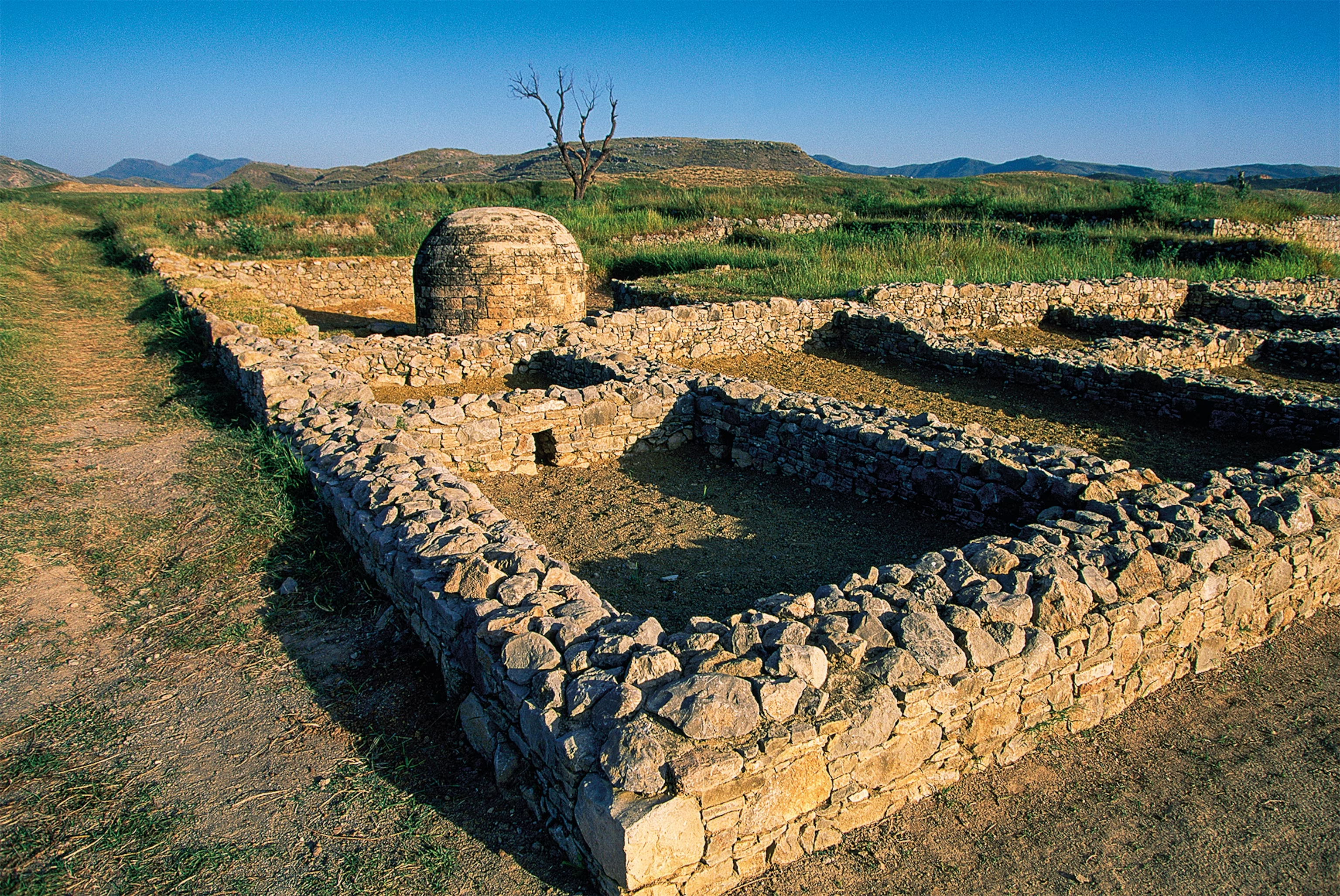


Experience Taxila Pakistan, Your Way
Skip the standard itineraries. We'll design a journey around your interests, timeline, and travel style — with exclusive access you won't find elsewhere.

Things to Do in Taxila Pakistan
Starting points for your perfect trip
Bhir Mound & the World's First University
The oldest settlement dates to the 6th century BCE, where over 10,500 students studied 68 subjects under the gurukula system. Chanakya taught statecraft, Charaka developed Ayurvedic medicine, and Panini codified Sanskrit grammar. Alexander received King Ambhi's surrender here in 326 BCE.
Taxila Museum & Gandharan Art Collection
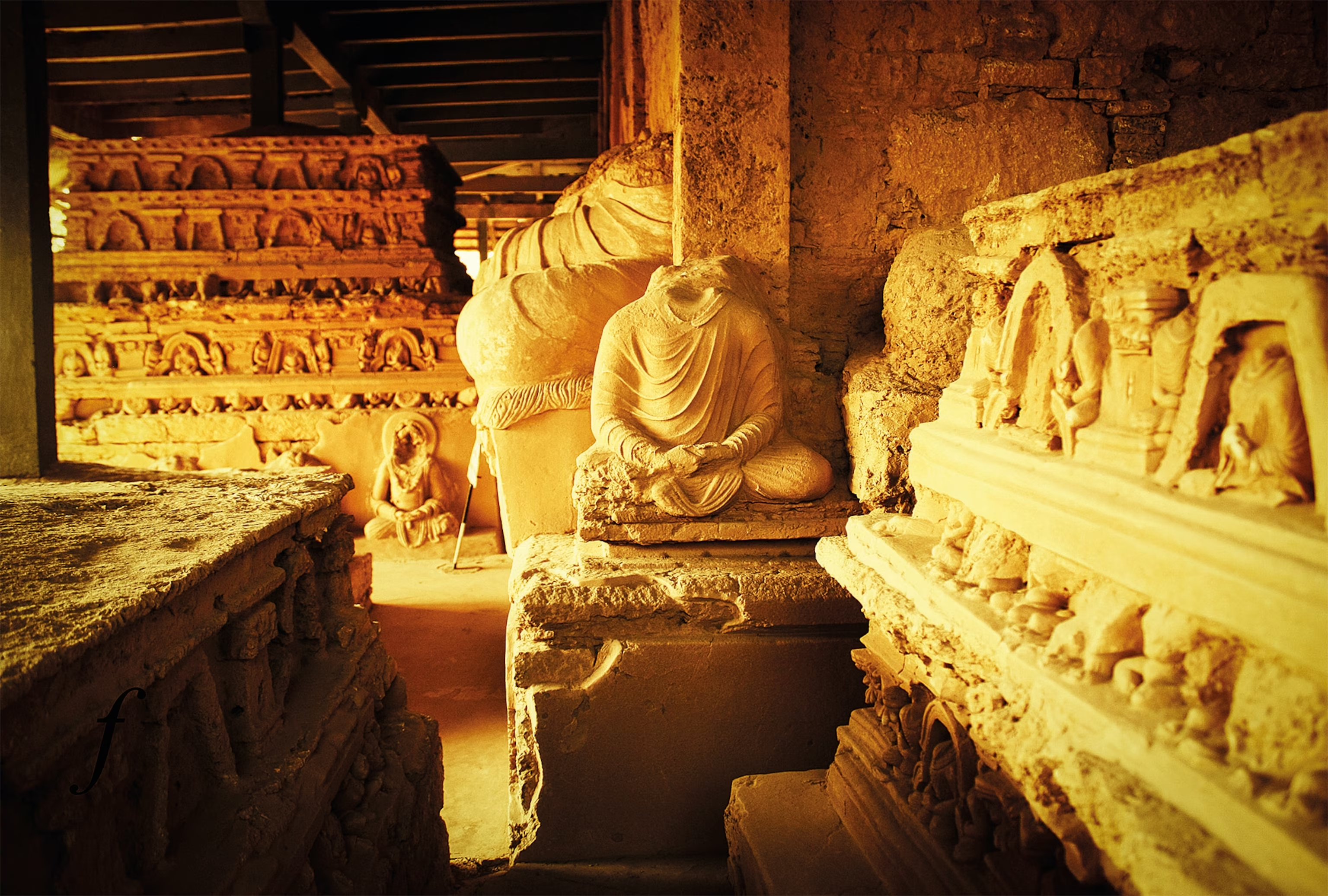
Sir John Marshall founded this museum in 1918 to house finds from his 1913–1934 excavations across the valley. Its 7,000 displayed artifacts include Gandharan sculptures where Greek artisans first gave Buddha a human face, blending Hellenistic realism with Buddhist devotion.
Dharmarajika Stupa & Ashoka's Relics
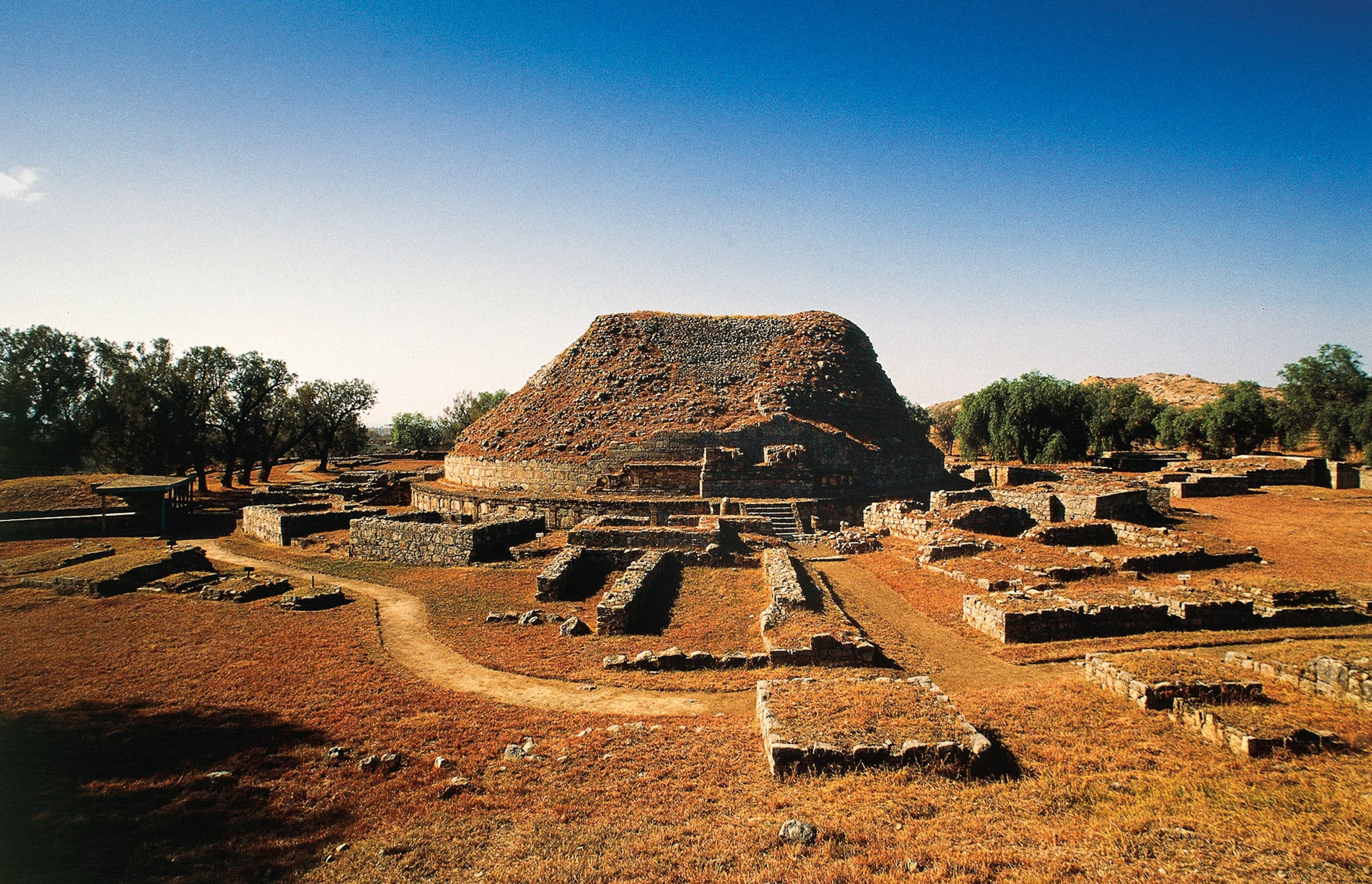
Emperor Ashoka built this stupa in the 3rd century BCE to enshrine relics of the Buddha himself. The complex spans stupas, monasteries, and chapels from the 3rd century BCE through the 7th century CE, with the ancient circumambulation path still intact around the central monument.
Sirkap & the Double-Headed Eagle Stupa
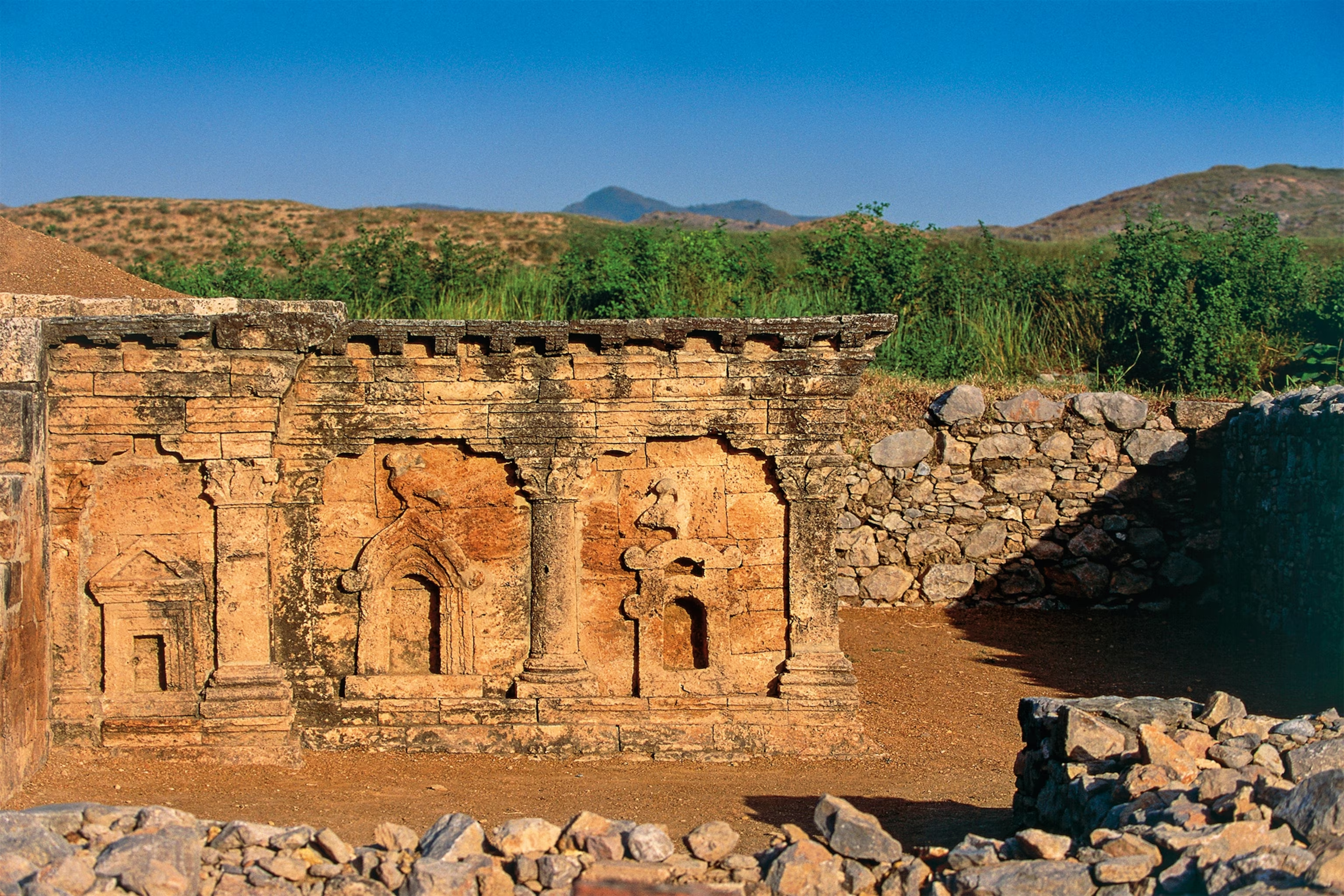
The Greco-Bactrian king Demetrius built this city around 180 BCE on a Hippodamian grid with streets at right angles. The Double-Headed Eagle Stupa fuses Greek, Hindu, and Buddhist temple facades into one structure, a stone testament to the religious coexistence that defined ancient Gandhara.
Jaulian Monastery & the Healing Buddha
The 2nd-century-CE hilltop monastery called the Seat of Saints preserves 28 student rooms on each of two floors, a central stupa ringed by 21 votive stupas, and the Healing Buddha with a hole in its navel where pilgrims placed fingers and prayed for cures of ailments.
Mohra Moradu & Stucco Masterworks
This 2nd-century-CE monastery one kilometer from Jaulian preserves some of Taxila's finest original stucco decorations, with rows of seated Buddhas, Greek Atlantes figures, and elephant friezes on the stupa base. Its courtyard, kitchen, refectory, and rainwater tank reveal daily monastic life.
Stories from Taxila Pakistan
The World's First University
Long before European universities existed, Taxila drew students from across Asia to what many consider the world’s first center of higher learning. From around the 5th century BCE to the 5th century CE, over 10,500 students gathered here to study more than 68 subjects: the Vedas, philosophy, mathematics, medicine, surgery, astronomy, politics, warfare, music, and languages. The great Sanskrit grammarian Panini codified the language here around the 4th century BCE. Charaka, the father of Ayurvedic medicine, studied and practiced at Taxila. Chanakya, the brilliant strategist who advised Emperor Chandragupta Maurya, taught economics and political science in these halls before helping topple the Nanda dynasty around 321 BCE.
Unlike modern universities, Taxila operated under the gurukula system: students lived with their teachers, often for twelve years, in an intimate educational relationship where knowledge passed through direct oral transmission. There were no formal examinations or degrees—a teacher’s endorsement served as the sole credential. Students came from kingdoms across the subcontinent and beyond, from Babylon, Greece, China, and Central Asia. The strategic location at the junction of three major trade routes—connecting Central Asia to the northwest, the Indian plains to the southeast, and China via Kashmir to the northeast—made Taxila a natural crossroads of cultures and ideas that fueled its intellectual preeminence for a millennium.
Getting to Taxila Pakistan
Private Car from Islamabad
Public Transport from Rawalpindi
Guided Day Tour from Islamabad
Travel with EcoVoyager
Taxila lies just 35 kilometers northwest of Islamabad on the Grand Trunk Road, making it one of Pakistan's most accessible UNESCO World Heritage Sites. The 18 archaeological sites scatter across a valley at the foot of the Margalla Hills, with the main clusters at Bhir Mound, Sirkap, Dharmarajika, Jaulian, and Mohra Moradu spread three to seven kilometers apart. EcoVoyager pairs you with archaeologist-trained guides who sequence the sites chronologically from the 6th-century-BCE Bhir Mound through the 2nd-century-CE monasteries, coordinates comfortable transport between the scattered ruins, and times museum visits for when afternoon light illuminates the Gandharan sculptures at their best.

Explore More
Other Pakistan Destinations

Deosai National Park
Rising above 4,000 meters in the western Himalayas lies Deosai—the second-highest plateau on Earth and one of Pakistan’s last truly...
Explore
Makli Necropolis
When the Sufi saint Sheikh Hamad Jamali established his khanqah on this limestone plateau in the 14th century, he set...
Explore
Harappa
Before Egypt’s pyramids reached their golden age, before classical Greece was imagined, the people of Harappa had already mastered urban...
Explore
Peshawar
Where empires carved their path through the Khyber Pass, Peshawar stands as one of South Asia’s oldest continuously inhabited cities—2,500...
Explore
Karachi
Pakistan's largest city sprawls along the Arabian Sea where Baloch fishermen built the village of Kolachi and Alexander's admiral Nearchus...
Explore
Mohenjo-daro
Five thousand years ago, when Stonehenge was just beginning and the Egyptian pyramids were newly built, a city of 40,000...
Explore
Khunjerab Pass
At 4,693 meters, Khunjerab Pass is the world’s highest paved international border crossing—the dramatic culmination of the Karakoram Highway where...
Explore
Islamabad
This is the threshold of the high places. Islamabad rises where the Pothohar Plateau meets the Margalla Hills—a planned capital...
Explore
Passu
The Passu Cones pierce the sky like Gothic spires—a row of impossibly sharp peaks that locals call Tupopdan, ‘the sun-gulping...
Explore
Nanga Parbat
At 8,126 meters, Nanga Parbat claimed 31 lives before Hermann Buhl reached its summit alone and without supplemental oxygen on...
Explore
K2 Base Camp
Stand at the foot of the world's second-highest mountain—and by many measures its most dangerous. K2 rises 8,611 meters above...
Explore
Karakoram Highway
They called it impossible—a road through the highest mountains on Earth. For 20 years, 24,000 Pakistani and Chinese workers carved...
Explore
Swat Valley
German mountaineers called it the Switzerland of the East, but Swat Valley's story runs far deeper than alpine beauty. This...
Explore
Fairy Meadows
German mountaineers searching for a route to Nanga Parbat's summit named this alpine grassland Märchenwiese—'Fairy Tale Meadows'—struck by its otherworldly...
Explore
Lahore
Where the Ravi River flows past marble palaces and minarets that have witnessed six centuries of empire, Lahore preserves the...
Explore
Skardu
Where the Indus and Shigar rivers converge beneath the world's greatest concentration of 8,000-meter peaks, Skardu commands the gateway to...
Explore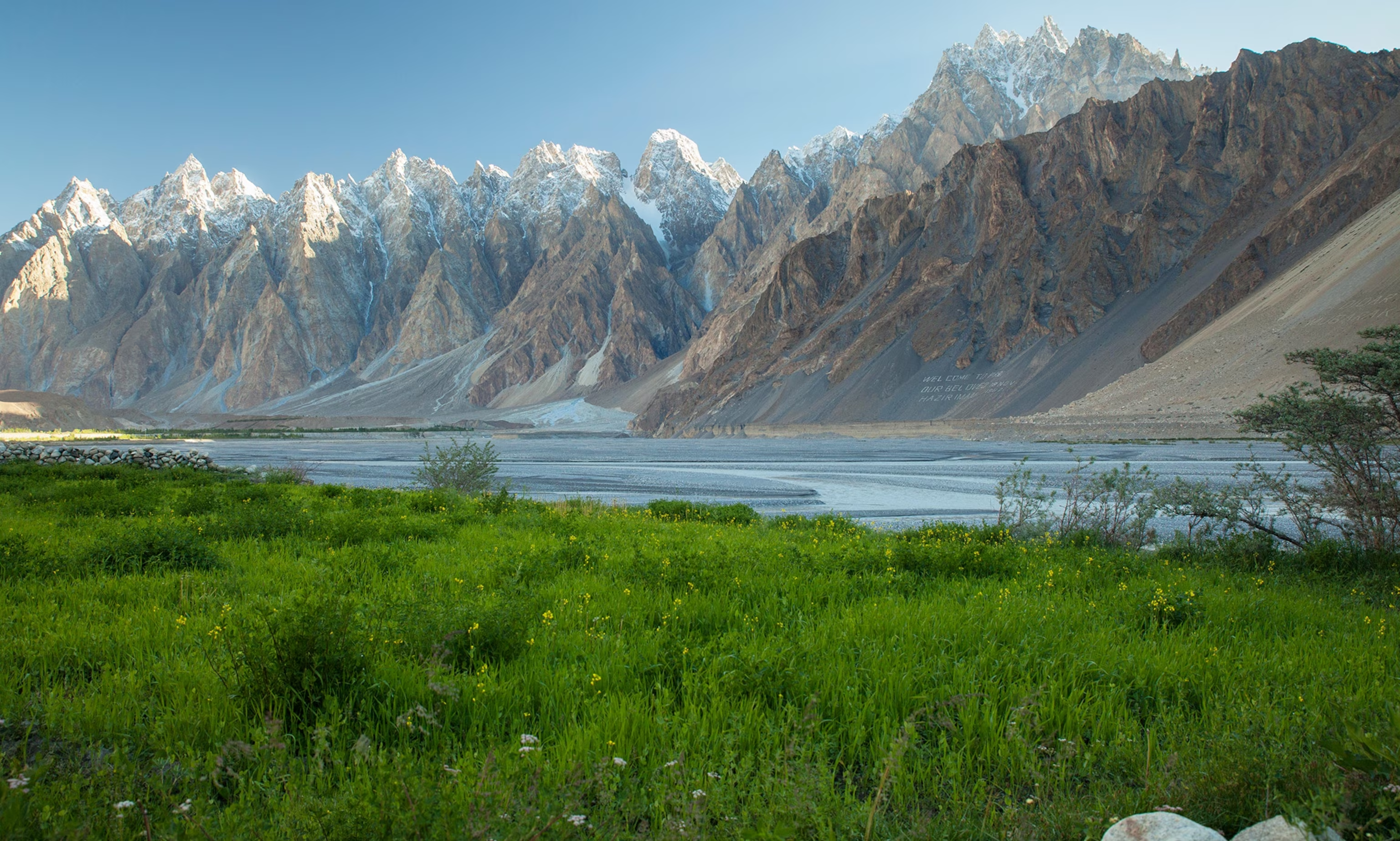
Hunza Valley
Where three of Earth's mightiest mountain ranges converge—the Karakoram, Himalayas, and Hindu Kush—lies a valley that inspired the legend of...
ExploreSwipe to explore more