
Experience Potosí, Your Way
Skip the standard itineraries. We design journeys around your interests, timeline, and curiosity with exclusive access you won't find on any platform.


Things to Do in Potosí
Starting points for your perfect trip
Cerro Rico: Into the Mountain That Eats Men
Descend into active mining tunnels where cooperative miners still extract tin and zinc using centuries-old methods, navigating narrow passages past ore carts and mineral dust. Encounter shrines to El Tío, the devil-like lord of the underworld, with offerings of coca, cigarettes, and pure alcohol.
Casa de la Moneda: The Royal Mint of the Americas
Explore the fortress-like colonial mint occupying a full city block, built to turn Cerro Rico's silver into Spanish coin. See the mule-powered cog machines, colonial paintings by the master Melchor Pérez de Holguín, and the enigmatic mascarón, a grinning stone face no historian has explained.
San Lorenzo & the Mestizo Baroque Trail
Walk cobblestone streets to San Lorenzo de Carangas, where indigenous artisans carved mermaids, pumas, and celestial symbols alongside Christian imagery on an elaborate stone portal. Explore mansions blending European and Andean design, then climb the Cathedral tower for sunset views of Cerro Rico.

Sacred Waters of Tarapaya: The Inca's Eye
Journey northwest to a volcanic crater lake where the Inca emperor Huayna Capac is said to have bathed. The near-perfectly circular Ojo del Inca lies at around 3,600 meters, sacred since pre-Columbian times and believed to hold curative powers, though hidden whirlpools mean swimming in the crater is no longer allowed. The safe, restorative warmth is found in the thermal pools alongside it.

Kari Kari Lagoons
Hike to a system of colonial reservoirs built by thousands of laborers to drive the water-powered mills that ground Potosí's silver ore. The lakes sit between 4,500 and 5,025 meters amid sparse Andean flora, with sweeping views to Cerro Rico. Largely abandoned now, they still reveal the immense scale of the silver operation.
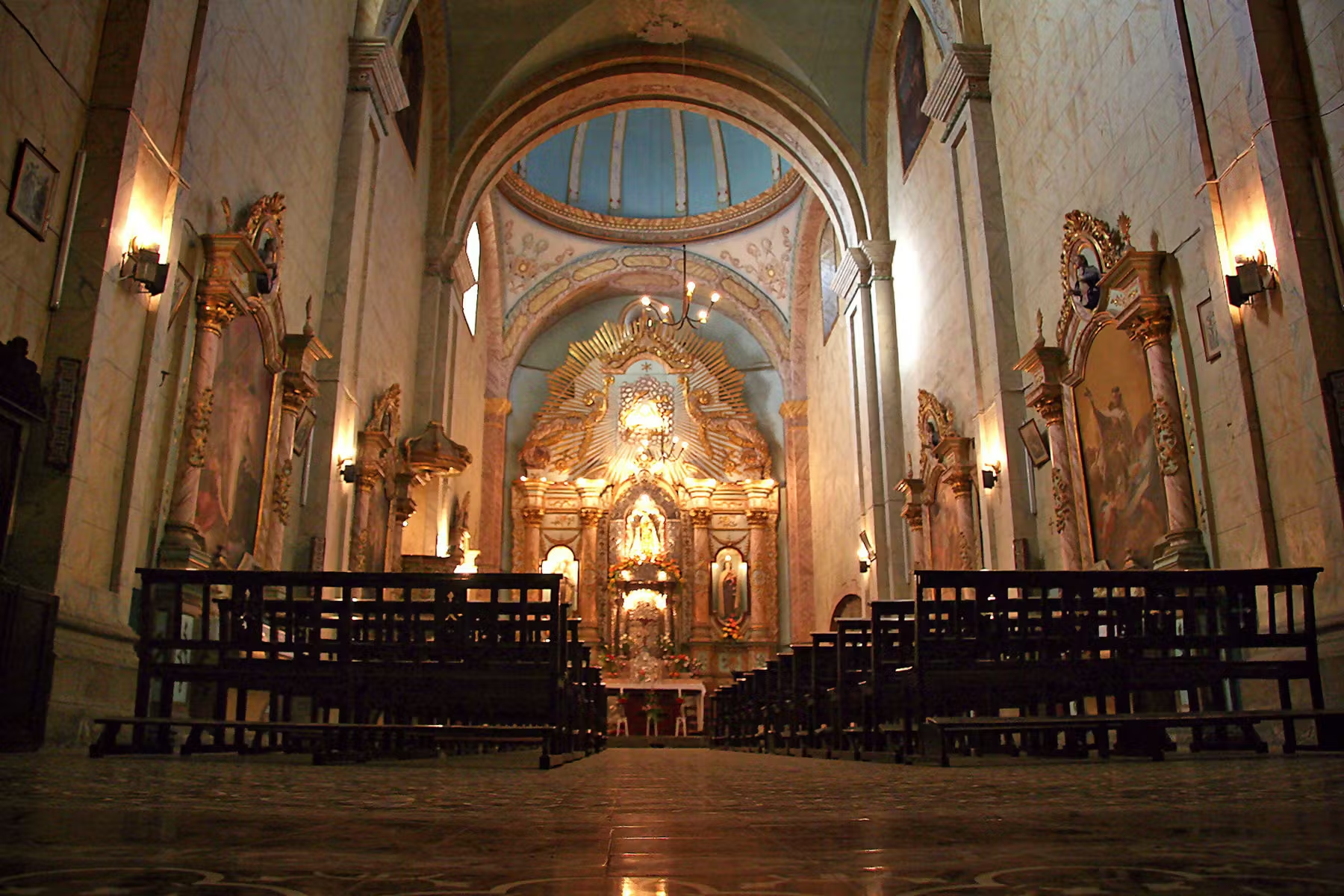
Santa Teresa Convent: Cloistered Lives Behind Colonial Walls
Enter a 1685 Carmelite convent where colonial families paid dowries to place daughters into isolation. Tours reveal chambers where nuns lived until the church reforms of the 1960s, with devotional objects and penitential instruments offering an unsettling window into three centuries of cloistered life.
Design Your Custom Trip
Tell us about your dream adventure. Our travel specialists respond within 24 hours with a personalised itinerary.
Explore More
Other Bolivia Destinations
Explore more destinations across Bolivia.
Barba Azul Nature Reserve
In the heart of Bolivia's Beni savanna, the Barba Azul Nature Reserve protects 12,200 hectares of seasonally flooded grassland, palm...
ExploreTarija Wine Country
In the far south of Bolivia, near the Argentine border, the city of Tarija and the surrounding valleys form the...
ExploreNoel Kempff Mercado
Spread across 1,523,446 hectares of remote northeastern Bolivia along the Brazilian border, Noel Kempff Mercado is one of South America's...
ExploreKaa-Iya National Park
Larger than Belgium and home to one of the largest jaguar populations in South America, Kaa-Iya del Gran Chaco is...
ExploreEduardo Avaroa Andean Fauna National Reserve
On Bolivia's altiplano above 4,200 meters, in the country's far southwestern corner where it meets Chile and Argentina, lies one...
ExploreSanta Cruz de la Sierra
In Bolivia's tropical lowlands, where the Andes tumble into the Amazon, Santa Cruz opens doors to landscapes found nowhere else...
ExploreAmboro National Park
At the Elbow of the Andes, where the mountains bend westward toward Peru, Amboró National Park sits at one of...
ExploreSamaipata
Around 300 CE, peoples of the Mojocoyas culture, later associated with the Chané, began sculpting a 220-meter sandstone monolith with...
ExploreSucre
Founded in 1538 as Ciudad de la Plata by Spanish colonists profiting from nearby Potosí's silver mines, Sucre grew into...
ExploreMadidi National Park
Identified by Wildlife Conservation Society researchers as probably the most biodiverse protected area on Earth, Madidi spans nearly 19,000 square...
ExploreNorth Yungas Road
Carved into sheer cliffs in the 1930s, the North Yungas Road, El Camino de la Muerte, is estimated to have...
ExploreLake Titicaca
At 3,812 meters, Lake Titicaca stretches across the Andean altiplano like a shimmering inland sea, the highest navigable lake in...
ExploreSalar de Uyuni
At 3,656 meters on the Bolivian Altiplano lies the world's largest salt flat, a 10,582-square-kilometer expanse of crystalline white that...
ExploreLa Paz
Perched between 3,250 and 4,100 meters above sea level, La Paz defies gravity and expectations as the world's highest administrative...
Explore