
Travel to Ile-Alatau National Park
Trans-Ili Alatau, Kazakhstan
Ile-Alatau National Park
Trans-Ili Alatau, Kazakhstan
Experience Ile-Alatau National Park, Your Way
Skip the standard itineraries. We design journeys around your interests, timeline, and curiosity with exclusive access you won't find on any platform.
Things to Do in Ile-Alatau National Park
Starting points for your perfect trip
Big Almaty Lake: The Turquoise Reservoir
Hike or drive to Big Almaty Lake—a tectonic glacial reservoir at 2,511 meters whose water shifts from pale green to vivid turquoise with the season. Surrounded by peaks above 4,000 meters, it feeds Almaty's drinking supply and prohibits swimming, but the views justify the journey entirely.
Wild Apple Forest: The Ancestor of Every Apple
Walk through forests of Malus sieversii—confirmed by DNA analysis as the primary ancestor of every cultivated apple on Earth. First documented near Almaty by Nikolai Vavilov in the early 20th century, these wild trees grow in the park's foothill gorges and bear fruit each autumn.
Turgen Gorge: Seven Waterfalls and Mossy Spruce
Explore Turgen Gorge through dense Schrenk spruce forest to seven waterfalls. The Bear Waterfall drops 30 meters and is 30 minutes from the road; the 55-meter Kairak—the largest—requires a 3-hour trek. The gorge also harbors relict mossy spruce over permafrost islands found nowhere else in the Trans-Ili Alatau.
Shymbulak & Medeu: From Soviet Records to Mountain Resort
Visit Medeu—the world's highest outdoor skating rink at 1,691 meters, where over 120 world speed skating records were set—then ride the 4.5-kilometer cable car to Shymbulak at 2,260 meters, Central Asia's largest ski area with 920 meters of vertical drop, operating since 1954.
Kok-Zhailau: The Alpine Plateau Above Almaty
Trek to Kok-Zhailau, the open alpine plateau visible from Almaty's streets, through wild apple and juniper forest transitioning to panoramic grassland above the city. The plateau became a conservation symbol after a decade-long battle against proposed resort development—it remains wild and walkable from the city's edge.
Snow Leopard Habitat Monitoring
Join Ile-Alatau rangers on wildlife monitoring in the park's high rocky terrain, where camera trap surveys have documented 35–45 snow leopards and confirmed breeding—indicating a stable, recovering population. The park also supports Tien Shan brown bear, Central Asian lynx, Siberian ibex, and golden eagle.
Design Your Custom Trip
Tell us about your dream adventure. Our travel specialists respond within 24 hours with a personalised itinerary.
Almaty's Mountain Backyard, from Foothills to Glaciers
A Closer Look at Ile-Alatau National Park
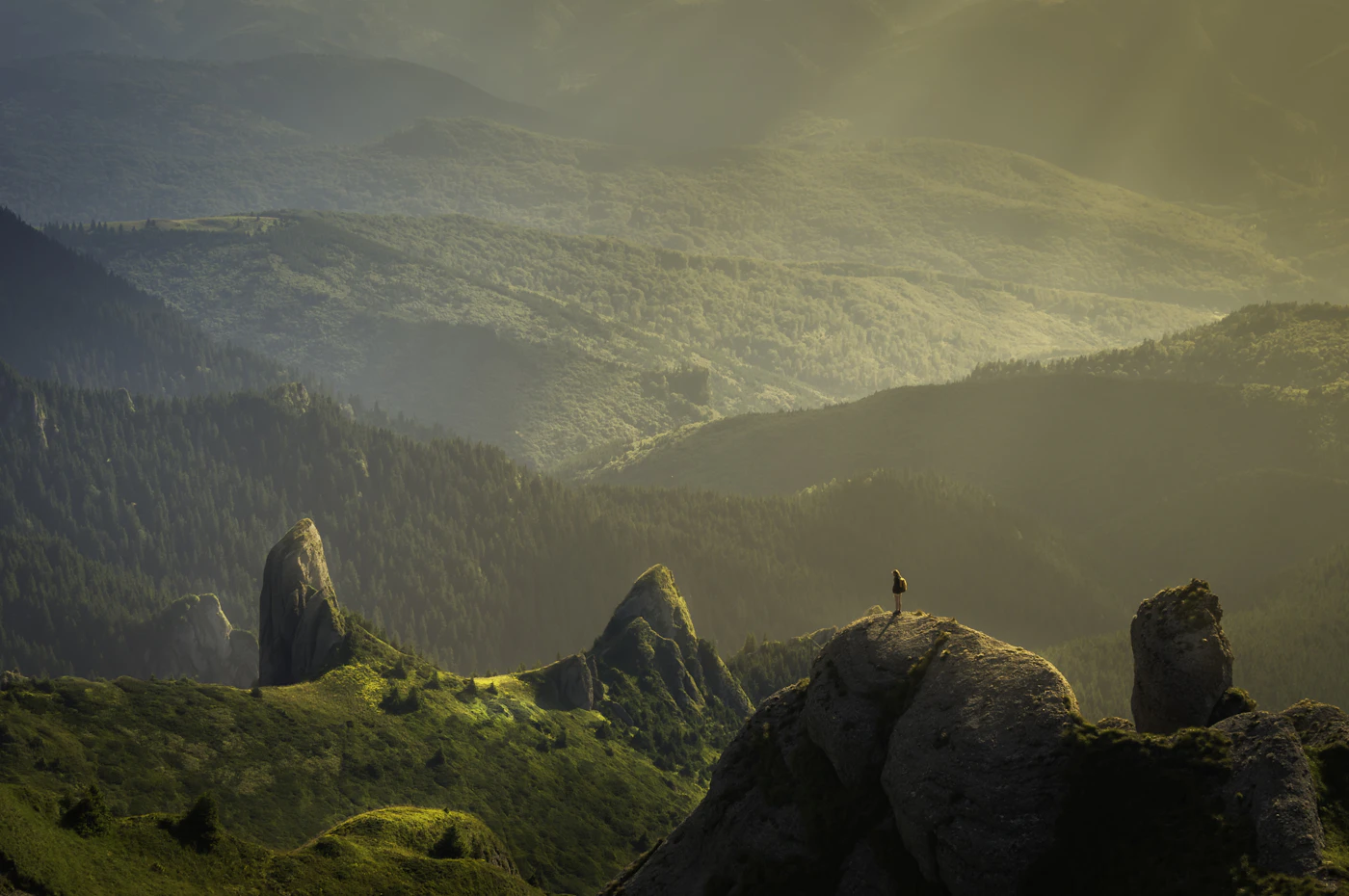
The Park on Almaty's Doorstep
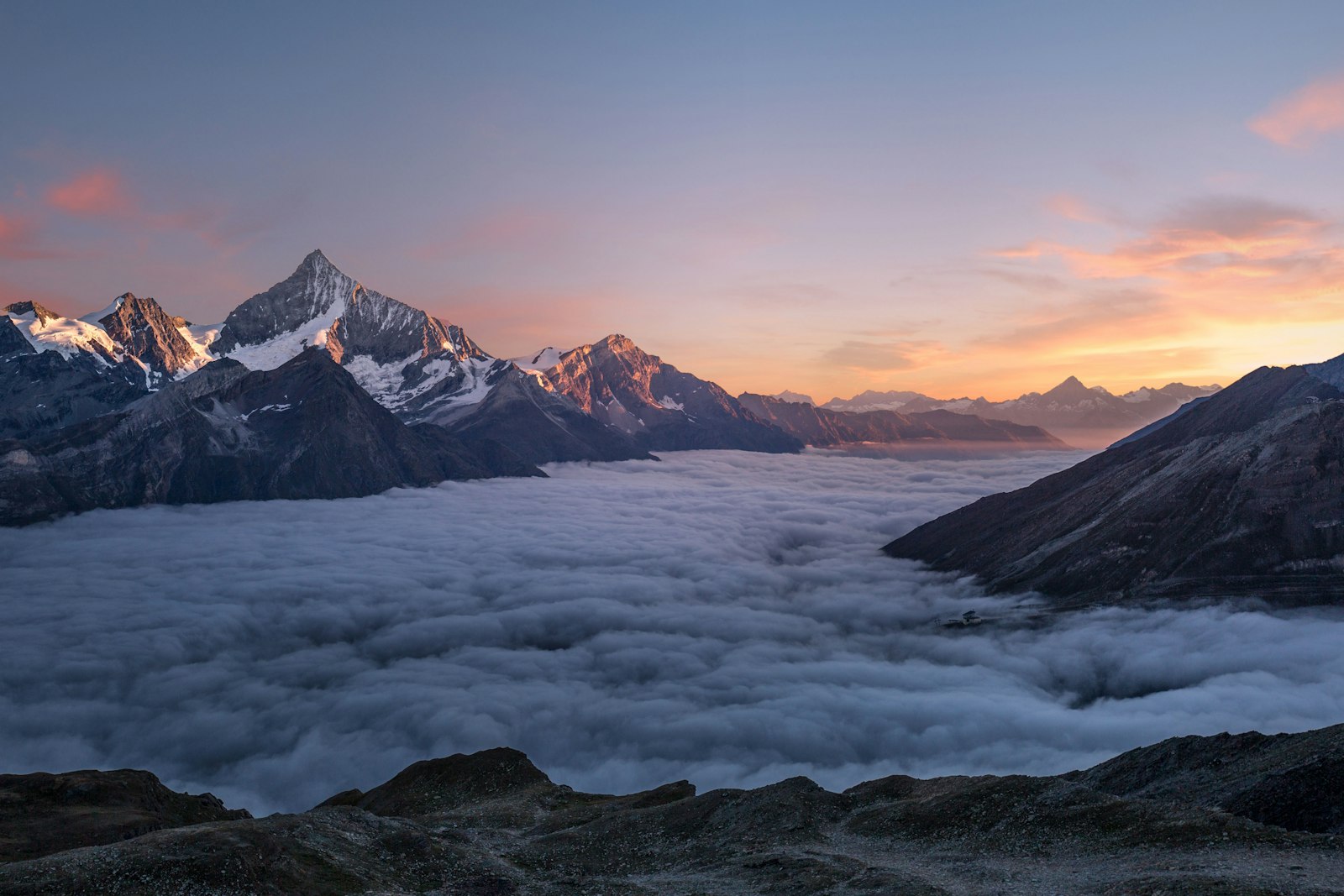
Ile-Alatau National Park occupies 202,292 hectares on the northern slopes of the Trans-Ili Alatau, the northernmost ridge of the Tian Shan mountain system, immediately south of Almaty. Established February 22, 1996, the park builds on earlier conservation history stretching back to the Almaty State Reserve of 1931. Its terrain spans altitudes from 600 meters in the foothill steppe to over 4,979 meters at its highest peak, encompassing steppe grasslands, juniper woodland, dense Schrenk’s spruce forest, alpine meadow, glaciers, and permanent snowfields. The park stretches 120 kilometers from the Chemolgan River in the west to the Turgen River in the east, and 30 to 35 kilometers north to south.
Over 300 glaciers cover more than 300 square kilometers of the park’s highest terrain, feeding rivers including the Turgen, Issyk, Talgar, Malaya and Bolshaya Almatinka, and Kaskelen. Scientists have documented more than 1,200 plant species within the park, including 36 Red Book species—among them two species of tulips, an iris, and a peony. The park’s vertebrate fauna comprises 245 species, and its invertebrate fauna exceeds 2,000 species across 8 classes.
Big Almaty Lake and the Glacial Landscape
Big Almaty Lake is the park’s most iconic landmark. The lake sits at 2,511 meters in a tectonic basin formed roughly 2,000 years ago when an earthquake triggered a landslide damming the Bolshaya Almatinka River. Its water, fed entirely by glacial meltwater, shifts from pale green to vivid turquoise depending on season, suspended glacial silt, and sunlight angle—deepest blue-green in July and August when meltwater flow peaks. The lake is 1.6 kilometers long, up to 1 kilometer wide, and 30 to 40 meters deep. It serves as the primary drinking water supply for Almaty, making shoreline access prohibited.
Above the lake at 2,700 meters sits the domed Tien Shan Astronomical Observatory, open to visitors and offering accommodation. Three peaks frame the lake’s southern horizon: Sovetov at 4,317 meters, Ozerniy at 4,110 meters, and Tourist at 3,954 meters. The park contains more than 300 glaciers, including the Dmitriev Glacier in the Left Talgar Gorge—the largest on the northern slope of the Trans-Ili Alatau at 17 square kilometers. Glacial melt feeds the park’s waterfall systems, most dramatically in the Turgen Gorge to the east.
The Wild Apple Forests: Almaty Means Father of Apples
The foothills of the Trans-Ili Alatau harbor a botanical discovery of global significance. Malus sieversii, the wild apple growing at 500 to 1,900 meters in the park’s lower gorges, was confirmed by DNA analysis in 2010 as the primary ancestor of the domesticated apple—every Fuji, Gala, and Golden Delicious on Earth traces its lineage to these trees. Russian biologist Nikolai Vavilov first documented them near Almaty in the early 20th century, writing that he had found apple trees growing densely wild in a phenomenon found nowhere else. The name Almaty itself derives from a Kazakh word meaning “father of apples.”
Today Malus sieversii is classified as vulnerable on the IUCN Red List. Soviet-era agricultural expansion destroyed an estimated 70 to 80 percent of the original wild apple forests, and urban development near Almaty continues to fragment the remaining habitat. Ile-Alatau National Park—which contains approximately 25 percent of Kazakhstan’s Malus sieversii population—is the primary protected area for their conservation. The trees fruit each autumn in the foothill gorges, attracting bears and producing apples with extraordinary genetic diversity: honey-flavored, sour, berry-noted, and near-supermarket quality fruits can grow on adjacent trees.
Wildlife of the Northern Tien Shan
Ile-Alatau’s altitude gradient from steppe to glacier creates habitat for a concentrated diversity of species. The snow leopard is the park’s apex predator, with camera trap surveys estimating 35 to 45 individuals—a stable population showing evidence of reproduction and gradual recovery. The Tien Shan brown bear forages the forest and alpine zones; the Central Asian lynx hunts through the spruce forest understory; Pallas’s cat occupies the rocky lower slopes. Siberian ibex traverse vertical cliff faces above the treeline, and maral deer—the Central Asian red deer—are common in the gorge forests.
The park’s 178 documented bird species include 11 Red Book species: the golden eagle, bearded vulture (lammergeier), Himalayan griffon vulture, black stork, saker falcon, peregrine falcon, and Himalayan snowcock among them. Eight fish species inhabit the mountain rivers, including rainbow trout in the Turgen River, and the Central Asian frog and Danatin toad—both Red Book species—inhabit the wetland margins. The proximity to Almaty creates conservation pressure: camera trap programs and anti-poaching patrols run by the park’s rangers and the WWF-affiliated Association Wildlife Without Borders maintain a buffer between the city and the wildlife corridor.
Medeu, Shymbulak, and the Human History of the Mountains
The Medeu Gorge holds two of Central Asia’s most storied mountain venues. The Medeu high-altitude skating rink, built between 1949 and 1951 at 1,691 meters, is the world’s largest open-air high-altitude ice stadium—its 10,500 square meters of ice, flooded with glacial water from the Malaya Almatinka River, produced over 120 world records in speed skating during the Soviet era. The complex also includes the Medeu mudflow-protection dam, 152 meters high and completed in 1972 using the Soviet engineering technique of directed explosions—the first application of this method for dam construction worldwide. In 2024, the Medeu complex was submitted for UNESCO World Heritage consideration.
Shymbulak ski resort, rising above Medeu at 2,260 meters, has operated since 1954 and is Central Asia’s largest ski area, with 920 meters of vertical drop and 12 kilometers of runs. Originally a Soviet athlete training ground, it was rebuilt for the 2011 Asian Winter Games and now connects to Medeu by a 4.5-kilometer cable car. The park’s human history runs deeper still: petroglyphs along the Asy River in Turgen Gorge, Bronze Age burial mounds in several gorges, and the Silk Road routes that once passed through the mountain passes connecting Almaty with China.
Conservation Challenges on an Urban Frontier
No national park in Kazakhstan faces greater conservation pressure than Ile-Alatau. Its boundary runs along the edge of Almaty—a city of over 2 million people—and that proximity creates constant tension between development and preservation. The proposed Kok-Zhailau ski resort project, contested for over a decade, became a flashpoint for Almaty’s conservation movement: citizens, scientists, and environmental organizations argued that building a resort on the park’s most iconic plateau would destroy irreplaceable alpine habitat. As of 2025, the project remains unresolved.
Climate change accelerates glacier melt across the Trans-Ili Alatau, creating proliferating moraine lakes and heightened risks of glacial lake outburst floods threatening downstream communities. Illegal logging, poaching, and overgrazing in peripheral zones reduce habitat connectivity for wide-ranging species like snow leopard. Yet the park also benefits from its location: urban proximity enables funding, research partnerships, and citizen science programs unavailable to remote parks. The wild apple forests, in particular, have drawn international scientific attention and conservation investment. Ile-Alatau represents both the most compromised and the most closely watched national park in Kazakhstan.
Explore More
Other Kazakhstan Destinations
Explore more destinations across Kazakhstan.
Semipalatinsk Nuclear Test Site
Between 1949 and 1989, the Soviet Union detonated 456 nuclear devices across 18,000 square kilometers of Kazakh steppe in a...
ExploreAksu-Zhabagly Nature Reserve
Founded in 1926, Aksu-Zhabagly is Central Asia's oldest nature reserve and one of the most biodiverse protected areas in the...
ExploreAral Sea & Aralsk
Once the fourth-largest lake on Earth, the Aral Sea lost over 90 percent of its volume in a single generation...
ExploreBaikonur Cosmodrome
On 4 October 1957, from a launch pad in the remote Kazakh steppe, a modified intercontinental ballistic missile hurled a...
ExploreKaton-Karagay National Park
At the far eastern edge of Kazakhstan, where four nations converge in the Altai Mountains, lies the country's largest national...
ExploreTurkestan
Southern Kazakhstan's ancient capital has been a pilgrimage destination for 900 years. Turkestan—called Yasi until the 16th century, when it...
ExploreMangystau & Bozzhira Valley
Western Kazakhstan’s Mangystau region covers 165,600 square kilometers of former Tethys Ocean floor where chalk cliffs, salt flats, and colored...
ExploreKorgalzhyn Nature Reserve
Established in 1968 and inscribed as Kazakhstan's first natural UNESCO World Heritage Site in 2008, Korgalzhyn protects 543,171 hectares of...
ExploreAstana
Founded in 1830 as a Russian Cossack outpost on the Ishim River, Astana became Kazakhstan's capital on December 10, 1997....
ExploreAltyn-Emel National Park
Established in 1996 in the Ili River valley 250 km northeast of Almaty, Altyn-Emel—"Golden Saddle" in Kazakh—is Kazakhstan's largest national...
ExploreKolsai Lakes
Established in 2007 on the northern slopes of the Kungei Alatau range, Kolsai Lakes National Park holds three vertically stacked...
ExploreCharyn Canyon
Charyn National Park, established in 2004 and expanded to 127,050 hectares in 2009, protects a 154-kilometer canyon carved by the...
ExploreAlmaty
Kazakhstan's largest city and former capital (1929–1997), Almaty sits at 700–900 meters in the foothills of the Trans-Ili Alatau—the northernmost...
Explore