
Travel to Korgalzhyn Nature Reserve
Central Kazakhstan, Steppe & Wetlands
Korgalzhyn Nature Reserve
Central Kazakhstan, Steppe & Wetlands
Experience Korgalzhyn Nature Reserve, Your Way
Skip the standard itineraries. We design journeys around your interests, timeline, and curiosity with exclusive access you won't find on any platform.
Things to Do in Korgalzhyn Nature Reserve
Starting points for your perfect trip
Flamingo Colony at Lake Tengiz: World’s Northernmost Nesting Site
Lake Tengiz's indented eastern shore holds a chain of low islands that have served as flamingo nesting grounds since the Paleogene period, when the basin was covered by the Tethys Sea. In peak years the colony reaches 50,000–60,000 birds. Viewing is from the northern shore with binoculars; reserve regulations prohibit approaching the islands.
Spring Migration: 15–16 Million Birds on the Central Asian Flyway
Korgalzhyn sits at the crossroads of the Afro-Eurasian and Indo-Central-Asian migratory flyways. In April and May, movement peaks—whooper swans, Dalmatian pelicans, demoiselle cranes, and waders arrive in sequence. Reserve-licensed guides position vehicles at freshwater lake margins for morning activity at the height of each wave.
Steppe Botanical Walk: Schrenk’s Tulips in Early May
Tulipa schrenkii—Schrenk's tulip, listed in Kazakhstan's Red Book—carpets the steppe for 10–14 days in early May. Botanists identify it as the ancestor of Dutch cultivated varieties bred from the 16th century. The reserve also protects Lessing feather grass, steppe sage, Ural licorice, and halophyte communities at the lake margins.
Saiga Antelope: Once-Abundant Steppe Icon Now Recovering
The critically endangered saiga antelope—a Pleistocene survivor that once ranged from Britain to Alaska—uses Korgalzhyn's steppe as summer foraging ground, visible May through July. Kazakhstan's population has recovered to approximately 1.9 million as of 2023 after near-collapse from 1990s poaching. Korgalzhyn's steppe corridor is central to that recovery.
Bird’s Paradise Visitor Center & Reserve Science
The Bird's Paradise Visitor Center (opened 2009) is mandatory for all reserve visits and one of Central Asia's most detailed natural history centers. Five halls cover flamingo biology, steppe ecology, wetland hydrology, and reserve history. The reserve also conducts permanent scientific research and hosts Kazakh university ecology students year-round.
Boat Trip on Lake Korgalzhyn: Freshwater Reed World
Lake Tengiz is hypersaline and fishless; adjacent Lake Korgalzhyn is freshwater, its surface divided by dense reed beds into basins: Kokai, Isey, Sultankeldy, and Zhamankol. A slow boat through the reed channels reveals bitterns, white-headed ducks, and herons at close range. The contrast between salt and freshwater lake systems underpins the reserve's bird diversity.
Design Your Custom Trip
Tell us about your dream adventure. Our travel specialists respond within 24 hours with a personalised itinerary.
The World's Northernmost Flamingo Colony
A Closer Look at Korgalzhyn Nature Reserve
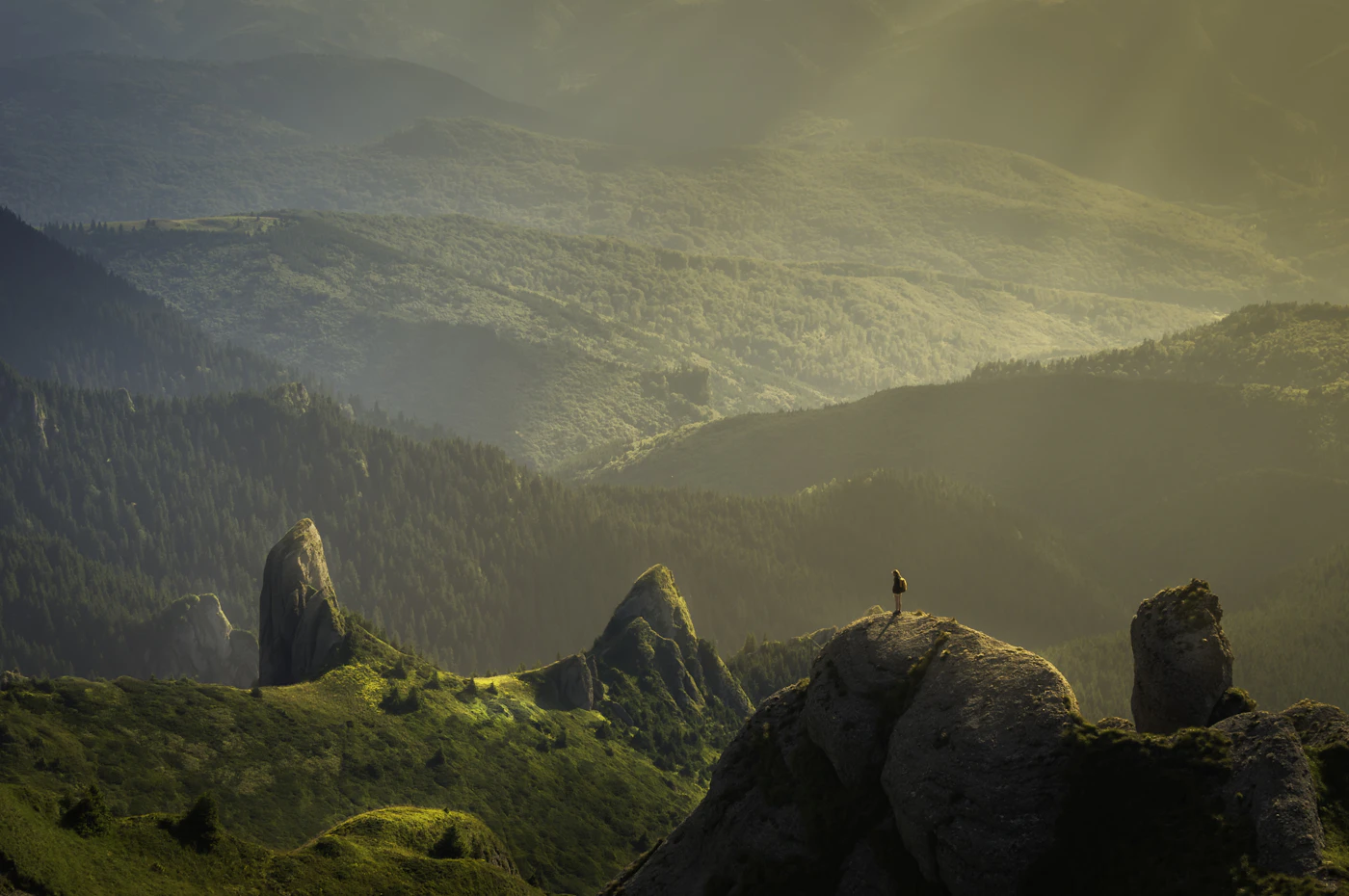
Korgalzhyn & Saryarka: Kazakhstan’s First UNESCO Natural Heritage Site
Korgalzhyn State Nature Reserve was established in 1968 to protect the Tengiz-Korgalzhyn depression—a complex of fresh and saline lakes embedded in the dry steppe of central Kazakhstan. In 1976, the lake system was added to the Ramsar List of Wetlands of International Importance. In 2008, the reserve was inscribed as part of the UNESCO World Heritage Site “Saryarka – Steppe and Lakes of Northern Kazakhstan”—Kazakhstan’s first natural World Heritage Site—alongside the Naurzum State Nature Reserve.
In 2008, the reserve’s area was expanded to 543,171 hectares through the addition of the Karaganda Region section. In 2012, UNESCO designated Korgalzhyn as Kazakhstan’s first Biosphere Reserve under the Man and the Biosphere Programme. The reserve spans parts of Akmola and Karaganda regions, approximately 130 km southwest of Astana in the delta of the Nura River, and requires an entry permit from the administration office in Korgalzhyn village.
Lake Tengiz: Hypersaline Sea of the Kazakh Steppe
Lake Tengiz—”sea” in Kazakh—covers up to 1,590 km² and reaches a maximum depth of 6–7 meters. It is an endorheic lake with no outflow; water enters via the Nura and Kulanotpes rivers and exits only through evaporation. As a result, the lake is hypersaline, with mineral concentration typically ranging from 40–55 g/L and exceeding 150 g/L in drought years. The dominant mineral is mirabilite (Glauber’s salt). No fish survive in the saline water; fish are confined to the adjacent freshwater Korgalzhyn lakes.
The lake’s indented eastern shore is lined with the Tengizi Islands—entirely undisturbed nesting grounds for the flamingo colony. Lake Tengiz fluctuates between 1,136 and 1,590 km² over multi-year flood and drought cycles. These cycles maintain a range of salinity gradients across the system, partly responsible for the extraordinary breadth of bird species the reserve attracts. In 1976, the Soviet spacecraft Soyuz-23 made an emergency splashdown into the frozen lake during a snowstorm.
The Flamingos: World’s Northernmost Nesting Colony
Greater flamingos (Phoenicopterus roseus) have nested at Lake Tengiz since the Paleogene period, when the basin was covered by the Tethys Sea. The Tengizi Islands provide the northernmost flamingo breeding colony in the world. Flamingos arrive from late April and remain through October. In peak years the colony reaches 50,000–60,000 birds; population estimates between 2006 and 2011 consistently recorded approximately 45,000 individuals. By 2015, numbers had declined to under 15,000, driven by drought-related changes in water depth and salinity.
Flamingos feed on brine shrimp, algae, and invertebrates in Tengiz’s saline water—the carotenoid-rich diet that produces their pink colouration. Viewing is from the northern shore of Lake Maliy Tengiz, 70 km from Korgalzhyn village, using binoculars. Reserve regulations prohibit approaching the islands. UNESCO biosphere documentation notes that the fodder resources of Lake Tengiz could theoretically support 15 million birds at peak migration.
Bird Diversity: 87% of Kazakhstan’s Waterfowl in One Reserve
The Tengiz-Korgalzhyn system sits at the intersection of the Afro-Eurasian flyway (connecting northern Scandinavia with East Africa) and the Indo-Central-Asian flyway (linking Siberian breeding grounds with South Asian wintering areas). This dual-flyway position makes the reserve a mandatory stopover for an extraordinary range of species. During migration, up to 15–16 million birds pass through, including flocks of 2.5 million geese in autumn. The reserve records 350+ species, including 112 water bird species—87% of Kazakhstan’s entire water bird fauna.
Key species include the Dalmatian pelican (Korgalzhyn holds 10% of the global population), the Siberian white crane (fewer than 4,000 remaining globally), Pallas’s fish eagle, the sociable lapwing, great bustard, demoiselle crane, steppe eagle, and pallid harrier. Specific autumn counts include 25,000 black-necked grebes, 240,000 shelducks, and 200,000 white-fronted geese passing through in a single season.
Steppe Ecology: Plants, Mammals & Geology of the Kazakh Uplands
The Korgalzhyn reserve protects approximately 200,000 ha of undisturbed Central Asian steppe—one of the world’s most threatened ecosystems. The reserve’s steppe flora counts 500+ plant species, representing a quarter of the entire flora of the Kazakh Uplands. Five are listed in Kazakhstan’s Red Book, including Tulipa schrenkii (Schrenk’s tulip)—identified as the ancestor of Dutch cultivated varieties bred from the 16th century onward. The tulips bloom for 10–14 days in early May. Characteristic steppe plants include Lessing feather grass, steppe sage, and halophyte communities around the lake margins.
The reserve’s 43–45 mammal species include saiga antelope, grey wolf, steppe fox, corsac fox, badger, steppe marmot, and ground squirrel. Bronze Age petroglyphs and burial mounds dating to approximately 2000 BCE have been documented near Lake Tengiz, indicating 4,000 years of continuous human use. The Botai culture—associated with some of the earliest evidence of horse domestication—left remains approximately 100 km northwest of the reserve.
Visiting Korgalzhyn: Permits, Routes & the Bird’s Paradise Center
All visits require a permit from the reserve administration office in Korgalzhyn village, 200 m from the bus station. The official visitor season runs from late April through mid-September. The reserve offers two guided eco-routes: the first covers 90 km (7 hours) with stops at Lake Sholak, Lake Zharsuat, and the Nura River delta; the second covers 150 km (8 hours) and reaches the shore of Lake Maliy Tengiz, the primary flamingo viewing point. All routes use 4WD vehicles—roads become impassable after heavy rain.
The Bird’s Paradise Visitor Center (opened 2009) is the mandatory starting point. From Astana, daily buses run to Korgalzhyn village (130 km, 2–2.5 hours, departures at 11:50, 13:00, 17:00, and 18:40 from Astana Bus Station). Private vehicles offer more flexibility. Accommodation in Korgalzhyn village includes homestays, guesthouses, and the reserve’s own overnight facility for those on the two-day bird tour.
Explore More
Other Kazakhstan Destinations
Explore more destinations across Kazakhstan.
Semipalatinsk Nuclear Test Site
Between 1949 and 1989, the Soviet Union detonated 456 nuclear devices across 18,000 square kilometers of Kazakh steppe in a...
ExploreAksu-Zhabagly Nature Reserve
Founded in 1926, Aksu-Zhabagly is Central Asia's oldest nature reserve and one of the most biodiverse protected areas in the...
ExploreAral Sea & Aralsk
Once the fourth-largest lake on Earth, the Aral Sea lost over 90 percent of its volume in a single generation...
ExploreBaikonur Cosmodrome
On 4 October 1957, from a launch pad in the remote Kazakh steppe, a modified intercontinental ballistic missile hurled a...
ExploreKaton-Karagay National Park
At the far eastern edge of Kazakhstan, where four nations converge in the Altai Mountains, lies the country's largest national...
ExploreIle-Alatau National Park
Minutes from Kazakhstan's largest city, yet worlds away from it. Ile-Alatau National Park wraps around Almaty's southern edge, rising from...
ExploreTurkestan
Southern Kazakhstan's ancient capital has been a pilgrimage destination for 900 years. Turkestan—called Yasi until the 16th century, when it...
ExploreMangystau & Bozzhira Valley
Western Kazakhstan’s Mangystau region covers 165,600 square kilometers of former Tethys Ocean floor where chalk cliffs, salt flats, and colored...
ExploreAstana
Founded in 1830 as a Russian Cossack outpost on the Ishim River, Astana became Kazakhstan's capital on December 10, 1997....
ExploreAltyn-Emel National Park
Established in 1996 in the Ili River valley 250 km northeast of Almaty, Altyn-Emel—"Golden Saddle" in Kazakh—is Kazakhstan's largest national...
ExploreKolsai Lakes
Established in 2007 on the northern slopes of the Kungei Alatau range, Kolsai Lakes National Park holds three vertically stacked...
ExploreCharyn Canyon
Charyn National Park, established in 2004 and expanded to 127,050 hectares in 2009, protects a 154-kilometer canyon carved by the...
ExploreAlmaty
Kazakhstan's largest city and former capital (1929–1997), Almaty sits at 700–900 meters in the foothills of the Trans-Ili Alatau—the northernmost...
Explore