
Travel to Semipalatinsk Nuclear Test Site
Semipalatinsk, Kazakhstan
Semipalatinsk Nuclear Test Site
Semipalatinsk, Kazakhstan
Experience Semipalatinsk Nuclear Test Site, Your Way
Skip the standard itineraries. We design journeys around your interests, timeline, and curiosity with exclusive access you won't find on any platform.
Things to Do in Semipalatinsk Nuclear Test Site
Starting points for your perfect trip
Ground Zero: The Experimental Field
Stand at the exact coordinates where the Soviet Union detonated its first atomic bomb on 29 August 1949, launching the Cold War arms race. Rows of concrete measuring towers still line the Opytnoe Pole at calibrated distances from the blast epicenter, their surfaces bubbled and charred where temperatures melted reinforced concrete. Examine bunkers built to house monitoring equipment, bridges and houses constructed specifically to measure nuclear blast effects, and the craters left by over 100 atmospheric detonations conducted between 1949 and 1963.
Atomic Lake Expedition
Drive 150 kilometers across the steppe to the Balapan complex and stand at the rim of the 400-meter crater blasted 100 meters deep by a 140-kiloton detonation on 15 January 1965. The Chagan test, the largest in the Soviet peaceful nuclear explosions program, displaced over 10 million tons of soil and created a radioactive lake that remains 100 times above permitted radionuclide levels. Visit the concrete bunker control center on the hillside above, pockmarked by rocks from the blast, and walk the crater lip in full protective gear with dosimeter monitoring.
Chagan Ghost Town & Cold War Airbase
Explore the completely abandoned garrison town that once housed over 10,000 military personnel and their families, its Soviet apartment blocks gutted and reclaimed by steppe winds and flocks of rooks. Continue to the Chagan airbase where Tu-95 Bear strategic bombers once stood on 24-hour nuclear alert, walking the four-kilometer runway built to handle the Soviet Union’s heaviest aircraft. Bomb storage shelters, a terminal building still bearing the Soviet red star, and over 50 aircraft revetments remain as Cold War relics in an otherwise empty landscape.
Kurchatov: The Secret City
Walk the streets of the formerly closed city that served as the scientific headquarters for 40 years of nuclear weapons testing, where Igor Kurchatov’s team developed the Soviet arsenal under the iron supervision of Lavrentiy Beria and the KGB. Visit the abandoned KGB building that was the largest intelligence office in all of Kazakhstan, the statue of Kurchatov with his iconic untrimmed beard, Beria’s former residence now converted to a Russian Orthodox church, and the Nuclear Peace monument advocating for a world free of atomic weapons.
Museum of the Semipalatinsk Test Site
Enter the oldest building in Kurchatov, established in 1972 within the Institute of Radiation Safety and Ecology, for a guided tour through the history of Soviet nuclear testing. Exhibits include a replica of the RDS-1 detonation control machine with working lights, scale models of the Polygon’s layout before and after testing, fragments of atomic bombs and monitoring equipment, a high-speed industrial camera that documented blast effects, and preserved specimens showing radiation’s impact on biological tissue. Sit at the recreation of Kurchatov’s personal office where the program’s lead scientist directed the most destructive weapons program in history.
Semey: Stronger Than Death Memorial & City Heritage
Cross the Irtysh River to Polkovnichy Island in Semey where the 25-meter Stronger Than Death monument rises in the silhouette of a mushroom cloud, its marble centerpiece depicting a mother sheltering her child beneath a suspended atomic model. Explore the surrounding peace park with its Mayors for Peace pyramid, Kazakhstan nuclear testing map, and the Peace Monument topped with dove sculptures. In the city, visit the alley of Soviet-era statues including a towering Lenin, the Dostoevsky Literary Museum in the house where the writer lived during his 1850s exile, and the Abai Museum honoring Kazakhstan’s national poet who was born in this region.
Design Your Custom Trip
Tell us about your dream adventure. Our travel specialists respond within 24 hours with a personalised itinerary.
The World’s Only Open Nuclear Test Site
A Closer Look at Semipalatinsk Nuclear Test Site
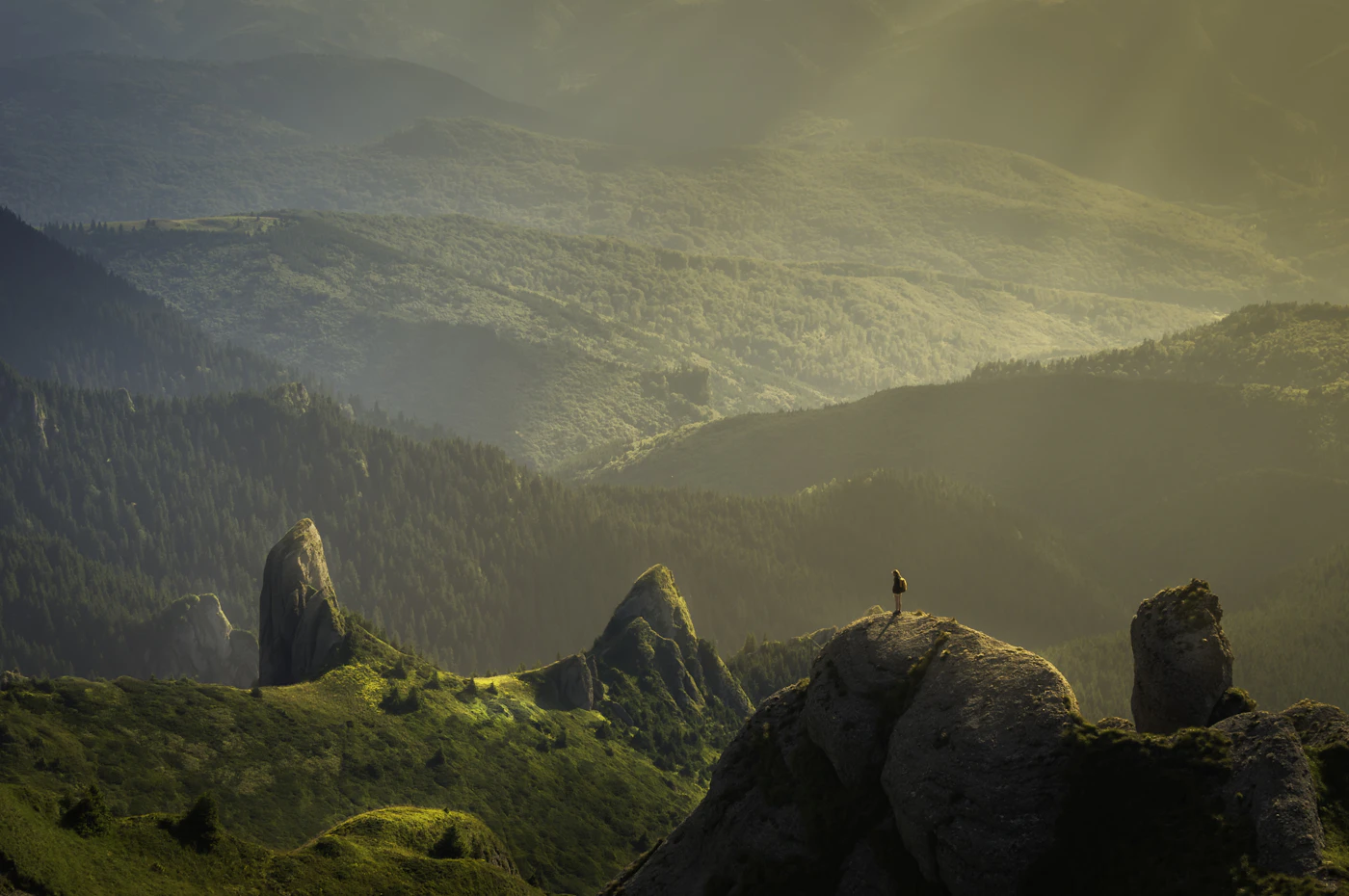
Cold War’s Ground Zero
On 29 August 1949, a 22-kiloton plutonium device codenamed First Lightning detonated from a tower on the Kazakh steppe, ending the American nuclear monopoly and dividing the world into two armed camps. The blast was modeled on the Fat Man bomb dropped on Nagasaki, its design informed by Soviet espionage within the Manhattan Project and the work of physicist Igor Kurchatov, who had vowed not to shave until the test succeeded and wore his iconic beard for the rest of his life. The site had been selected in 1947 by Lavrentiy Beria, head of the NKVD and overseer of the nuclear program, who declared the 18,000-square-kilometer steppe uninhabited. He was wrong: an estimated 500,000 people lived within fallout range, and the city of Semipalatinsk with 150,000 residents sat just 150 kilometers to the east.
Over the next four decades, 456 nuclear explosions were conducted at the Semipalatinsk Test Site, releasing combined energy equivalent to 2,500 Hiroshima bombs. Of these, 116 were atmospheric detonations at the Opytnoe Pole, the Experimental Field where the first test took place, conducted from towers, ground level, or dropped from aircraft between 1949 and 1963. After the Limited Test Ban Treaty prohibited atmospheric testing, 340 underground detonations continued in boreholes and tunnel systems at the Degelen mountain complex and the Balapan area until the final explosion on 19 October 1989. The Polygon was the Soviet equivalent of Nevada, but unlike its American counterpart, it operated with deliberate disregard for civilian populations downwind of the blasts.
Atomic Lake & the Balapan Complex
On 15 January 1965, a 140-kiloton device was placed 178 meters beneath the dry bed of the Chagan River and detonated in the first and largest test of the Soviet peaceful nuclear explosions program. The blast displaced over 10 million tons of soil, creating a crater 400 meters across and 100 meters deep with a raised lip 20 to 38 meters high. Spring meltwater from the Chagan River filled the crater through a channel cut in the rim, creating what became known as Atomic Lake, a body of water that remains approximately 100 times above permitted radionuclide levels. The test was designed to demonstrate that nuclear explosions could build reservoirs for Central Asia’s arid regions, modeled after the American Sedan test at the Nevada Test Site in 1962.
An estimated 20 percent of the blast’s radioactive fission products escaped into the atmosphere and were detected over Japan, provoking international outrage over violations of the 1963 Limited Test Ban Treaty. The Soviet government dismissed complaints, claiming the underground detonation released insignificant atmospheric contamination. Locals still fish for meter-long carp in the radioactive water, and herders graze cattle in the contaminated watershed despite official warnings. The concrete bunker control center on the hillside above the crater remains intact, its surface pockmarked by rocks hurled from the explosion. Visiting the Atomic Lake requires a 150-kilometer drive from Kurchatov across rough steppe tracks, a journey of approximately two and a half hours each way that rewards with one of the most striking and unsettling landscapes on Earth.
Kurchatov: The Secret City
Founded alongside the test site in 1947, the city was known only by its postal code, Semipalatinsk-21, and deliberately given multiple names over the decades to confuse foreign intelligence. At its peak, Kurchatov housed over 20,000 people including the Soviet Union’s leading nuclear physicists, military commanders, KGB officers, and support staff in a closed city that appeared on no public maps. Lavrentiy Beria oversaw the project with characteristic brutality, extracting rapid progress from all participants while Gulag labor built the primitive test facilities. The KGB maintained its largest office in all of Kazakhstan here, monitoring scientists and military personnel with a surveillance apparatus matched only by the program’s secrecy.
When the test site closed in 1991 and Soviet funding vanished, Kurchatov’s population collapsed to roughly a quarter of its peak. Today it functions as a semi-abandoned town where the Institute of Radiation Safety and Ecology, a branch of Kazakhstan’s National Nuclear Centre, continues to study the long-term effects of four decades of detonations and operates two scientific research reactors. The abandoned KGB building, Beria’s former residence converted to a Russian Orthodox church, a statue of Kurchatov, a miniature Bayterek tower, and the Nuclear Peace monument are scattered through streets where Soviet-era apartment blocks stand alongside the handful of occupied residences. The Museum of the Semipalatinsk Test Site, established in 1972 within the institute, houses fragments of atomic bombs, the detonation control equipment, and a scale model of the Polygon’s layout before the first blast.
Chagan: Ghost Town & Bomber Base
Roughly halfway between Semey and Kurchatov along the R-174 highway, a turnoff leads to one of the most atmospheric abandoned places in Central Asia. The garrison town of Chagan once housed over 10,000 military personnel and their families who served at the adjacent strategic bomber base, a facility built in the early 1950s for the Soviet Union’s most formidable long-range aircraft. Tupolev Tu-95 Bear bombers, the same aircraft that delivered the Tsar Bomba, and Myasishchev M-4 Bison heavy bombers operated from Chagan on permanent nuclear alert. In 1990, 40 Tu-95s were stationed here before being eliminated by 1994 under disarmament agreements.
The town was abandoned systematically by the military rather than gradually by residents, with stairways demolished and window frames removed during departure. Soviet apartment blocks stand gutted and open to the steppe winds, their facades crumbling as looters extract the last rebar and copper. The airbase’s four-kilometer runway, hardened for the heaviest aircraft in the Soviet fleet, stretches into the grassland alongside a terminal building still bearing the Soviet red star. Over 50 aircraft revetments and bomb storage shelters remain as Cold War relics. A granite memorial stone at the turnoff bears an image of a Tu-95 in flight, placed by veterans who once served at a base that entire teams of American intelligence analysts studied from satellite imagery.
Kazakhstan’s Nuclear Disarmament
The story of the Semipalatinsk Test Site is inseparable from Kazakhstan’s extraordinary decision to voluntarily surrender its nuclear arsenal, a choice that remains one of the most significant acts of disarmament in history. In 1989, the poet and activist Olzhas Suleimenov founded the Nevada-Semipalatinsk movement, one of the first major anti-nuclear campaigns in the Soviet Union, uniting victims of testing across continents and organizing mass rallies that forced Moscow to announce a testing moratorium. On 29 August 1991, exactly 42 years after the first atomic test, President Nursultan Nazarbayev permanently closed the Polygon and declared an end to all nuclear testing on Kazakh soil.
Kazakhstan then went further: it surrendered 1,410 nuclear warheads, over 110 intercontinental ballistic missiles capable of reaching any point on Earth, and tactical nuclear weapons, dismantling the world’s fourth-largest nuclear stockpile. Between 2005 and 2012, a secret trilateral operation between Kazakhstan, Russia, and the United States secured enough weapons-grade plutonium for over a dozen bombs that remained buried in the Polygon’s tunnel systems. The effort cost 150 million dollars and rendered all nuclear material on the site inaccessible except through large-scale mining. In 2012, Kazakhstan established the ATOM Project, Abolish Testing Our Mission, whose honorary ambassador is Karipbek Kuyukov, an artist born without arms due to radiation exposure who paints with his feet and mouth. The United Nations subsequently declared 29 August the International Day against Nuclear Tests.
The Human Cost
The Soviet government recognized no victims of Semipalatinsk. For four decades, military scientists dismissed health complaints as the result of poor sanitation, conducting covert radiation studies on the very populations they refused to acknowledge as affected. Women suffered miscarriages, complicated pregnancies, and stillbirths at rates far exceeding national averages. Children were born with physical and neurological defects. Cancer rates in settlements near the Polygon climbed steadily while Moscow maintained official silence. The full scope of the damage only emerged publicly during the Glasnost era, when journalists and activists forced the issue into national consciousness.
Since independence, Kazakhstan has officially recognized more than one million citizens as negatively affected by nuclear testing, entitling them to social benefits that many describe as inadequate. Studies by scientists from Berlin and Kurchatov found that individuals exposed to fallout between 1949 and 1956 showed an 80 percent increase in DNA mutations, with their children inheriting 50 percent more mutations than control populations. The effects continue into the fourth generation: in villages near the former test site, children are still born with missing limbs and childhood cancers occur at elevated rates. The Semey Medical University’s anatomical museum, though no longer accessible to tourists, preserves specimens documenting the physical consequences of radiation exposure in some of the most harrowing medical exhibits in Central Asia.
Explore More
Other Kazakhstan Destinations
Explore more destinations across Kazakhstan.
Aksu-Zhabagly Nature Reserve
Founded in 1926, Aksu-Zhabagly is Central Asia's oldest nature reserve and one of the most biodiverse protected areas in the...
ExploreAral Sea & Aralsk
Once the fourth-largest lake on Earth, the Aral Sea lost over 90 percent of its volume in a single generation...
ExploreBaikonur Cosmodrome
On 4 October 1957, from a launch pad in the remote Kazakh steppe, a modified intercontinental ballistic missile hurled a...
ExploreKaton-Karagay National Park
At the far eastern edge of Kazakhstan, where four nations converge in the Altai Mountains, lies the country's largest national...
ExploreIle-Alatau National Park
Minutes from Kazakhstan's largest city, yet worlds away from it. Ile-Alatau National Park wraps around Almaty's southern edge, rising from...
ExploreTurkestan
Southern Kazakhstan's ancient capital has been a pilgrimage destination for 900 years. Turkestan—called Yasi until the 16th century, when it...
ExploreMangystau & Bozzhira Valley
Western Kazakhstan’s Mangystau region covers 165,600 square kilometers of former Tethys Ocean floor where chalk cliffs, salt flats, and colored...
ExploreKorgalzhyn Nature Reserve
Established in 1968 and inscribed as Kazakhstan's first natural UNESCO World Heritage Site in 2008, Korgalzhyn protects 543,171 hectares of...
ExploreAstana
Founded in 1830 as a Russian Cossack outpost on the Ishim River, Astana became Kazakhstan's capital on December 10, 1997....
ExploreAltyn-Emel National Park
Established in 1996 in the Ili River valley 250 km northeast of Almaty, Altyn-Emel—"Golden Saddle" in Kazakh—is Kazakhstan's largest national...
ExploreKolsai Lakes
Established in 2007 on the northern slopes of the Kungei Alatau range, Kolsai Lakes National Park holds three vertically stacked...
ExploreCharyn Canyon
Charyn National Park, established in 2004 and expanded to 127,050 hectares in 2009, protects a 154-kilometer canyon carved by the...
ExploreAlmaty
Kazakhstan's largest city and former capital (1929–1997), Almaty sits at 700–900 meters in the foothills of the Trans-Ili Alatau—the northernmost...
Explore