




Travel to Chiloé Island
Chiloé Island, Chile
Chiloé Island
Chiloé Island, Chile
Experience Chiloé Island, Your Way
Skip the standard itineraries. We design journeys around your interests, timeline, and curiosity with exclusive access you won't find on any platform.


Things to Do in Chiloé Island
Starting points for your perfect trip
Penguin Colony Boat Expedition at Puñihuil
Board a small boat from Puñihuil to three volcanic islets—the only shared breeding site of Humboldt and Magellanic penguins. A protected monument, it also shelters otters, cormorants, sea lions, and seasonal sightings of pygmy blue whales.
Kayaking Through Chepu’s Sunken Forest
Paddle at dawn through a ghost forest of dead tree trunks rising from still water. The 1960 9.5-magnitude Chilean earthquake sank the land, flooding the valley with saltwater. Today it’s a misty wetland alive with birds and rare river otters.
UNESCO Wooden Churches
Explore 16 UNESCO-listed wooden churches built with boat-building joinery, many without nails. Dating to the 1730s, these Chiloé churches blend Jesuit design with Huilliche craftsmanship in native cypress and larch, a tradition found nowhere else.
Darwin’s Fox & Valdivian Rainforest Trek
Track the endangered Darwin’s fox in Chiloé’s Valdivian rainforest at Tepuhueico Reserve. With just 200–450 remaining worldwide, guided dawn and dusk walks also seek pudú, the world’s smallest deer, and the elusive kodkod wild cat.
Curanto Earth-Oven Feast with a Chilote Family
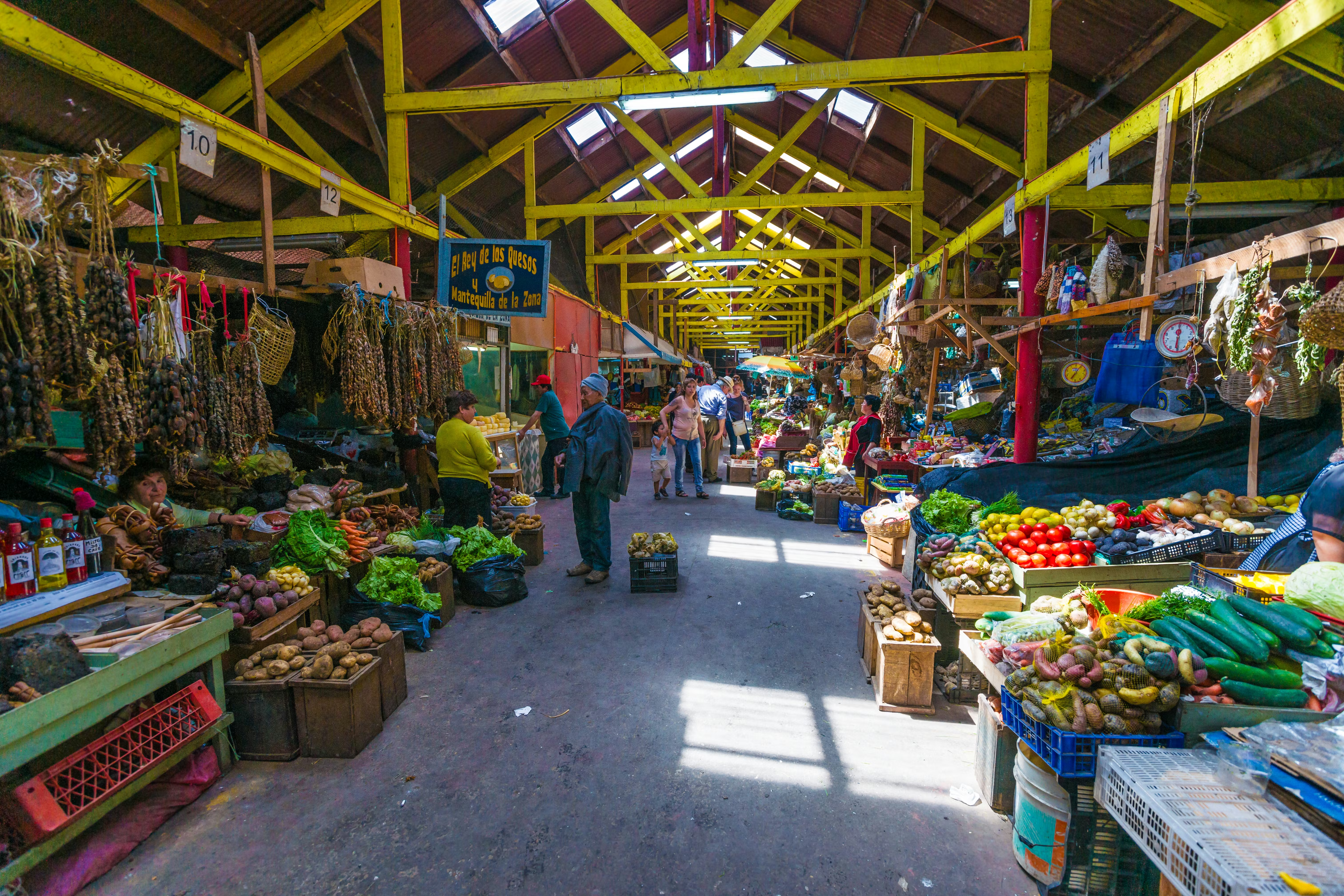
Join a Chilote family to prepare curanto, an ancestral feast from Chiloé’s Chono roots. Mussels, meats, and potato dumplings from native varieties steam over hot stones beneath nalca leaves, linking 5,000 years of food culture to today.
Blue Whale Watching in the Corcovado Gulf
Venture into the Corcovado Gulf, a vital blue whale nursery off southern Chiloé. In summer, blue and humpback whales surface alongside endemic Chilean dolphins, while black-browed albatross glide above these nutrient-rich waters.
Design Your Custom Trip
Tell us about your dream adventure. Our travel specialists respond within 24 hours with a personalised itinerary.

Stories from Chiloé Island
Where the Sea Shaped a Culture
Chiloé exists because of its separation. When retreating glaciers carved the Chacao Channel roughly 10,000 years ago, they created South America’s fifth-largest island and set in motion centuries of cultural isolation that would produce one of the continent’s most distinctive civilizations. The Chono, a nomadic seafaring people, navigated these waters in dalcas (sewn-plank canoes) for millennia, developing the curanto earth-oven cooking tradition still practiced today. The Huilliche followed, cultivating over 286 native potato varieties in the island’s volcanic soils.
When Spanish conquistadors founded Castro in 1567, making it one of Chile’s oldest cities, they found an island already deeply shaped by its relationship with the sea. Jesuit missionaries followed in 1608, launching the Circular Mission system that produced the archipelago’s most visible legacy: more than 150 wooden churches built collaboratively by European priests and indigenous carpenters. Chiloé remained Spain’s last colonial holdout in South America, not joining independent Chile until 1826.
Explore More
Other Chile Destinations
Explore more destinations across Chile.
Juan Fernández Islands
Discovered by Spanish navigator Juan Fernández in 1574, this remote volcanic archipelago 670 kilometers off the Chilean coast has captivated...
ExploreEaster Island
Settled by Polynesian navigators around the 12th century, Rapa Nui, also known as Easter Island, sits 3,700 kilometers from the...
ExploreCape Horn
Discovered in 1616 by Dutch navigators and named after the town of Hoorn in the Netherlands, Cape Horn is a...
ExploreTorres del Paine
Twelve million years of tectonic force thrust granite spires through older sedimentary rock, then Patagonian glaciers carved valleys, lakes, and...
ExploreCarretera Austral & Aysén
Chile’s Route 7 stretches 1,240 kilometers through some of the last truly wild landscapes on Earth, from Puerto Montt to...
ExploreLake District
Stretching from the Mapuche heartland south to Puerto Montt, Chile’s Lake District holds seven national parks, a dozen glacial lakes,...
ExploreChile Wine Country
Chile is the only major wine-producing country never touched by phylloxera, the root louse that devastated vineyards worldwide. Protected by...
ExploreValparaíso
Named by Spanish explorer Juan de Saavedra in 1536 after his hometown, Valparaíso rose to become the premier port on...
ExploreSantiago
Founded by Pedro de Valdivia in 1541 at the foot of a volcanic hill the indigenous Mapuche called Huelén, Santiago...
ExploreElqui Valley
Tucked between the Andes and the southern Atacama Desert, the Elqui Valley is a ribbon of green vineyards and ancient...
ExploreAtacama Desert
In the driest non-polar desert on Earth, salt flats stretch toward snow-capped volcanoes, geysers erupt at 4,320 meters, and three...
Explore