
Torres del Paine granite towers at sunrise reflected in turquoise glacial lake, Patagonia eco-adventure destination Glacier Grey Torres del Paine dramatic blue ice formations towering mountains Patagonia eco-tourism adventure Torres del Paine granite peaks glowing golden at sunrise over pristine lake in Chilean Patagonia wilderness Wild guanaco grazing by pristine turquoise lake with snow-capped Torres del Paine mountains reflected in water Herd of guanacos grazing on mountain slope with dramatic Torres del Paine granite spires in Patagonia Chile Gaucho horseback riding across Patagonian grasslands with snow-capped Torres del Paine mountains in background Blue glacier ice formations with Torres del Paine mountain peaks in Patagonia Chile Two pumas bonding in Torres del Paine grasslands during wildlife photography tour with EcoVoyager Adventures Ancient lenga forest with moss-covered fallen logs in Torres del Paine National Park, Patagonia hiking destination
Ecovoyager Adventures

Travel to Torres del Paine

Torres del Paine, Chile

Scroll
Location Overview

Torres del Paine

Torres del Paine, Chile

Twelve million years of tectonic force thrust granite spires through older sedimentary rock, then Patagonian glaciers carved valleys, lakes, and ice fields around them. Torres del Paine National Park protects 227,298 hectares of this geological drama at the southern tip of the Andes. A UNESCO Biosphere Reserve since 1978, the park shelters the highest density of wild pumas on Earth alongside guanaco herds, endangered huemul deer, and soaring Andean condors. From the granite towers to the face of Grey Glacier, every trail reveals a landscape still being shaped by ice, wind, and time.

Tours coming soon

Plan a Custom Trip
Bespoke Travel

Experience Torres del Paine, Your Way

Skip the standard itineraries. We design journeys around your interests, timeline, and curiosity with exclusive access you won't find on any platform.

100%
Customizable
24hr
Response Time
1:1
Expert Planning
Custom Experience
Bespoke Adventure
Personalised Journey
Experiences

Things to Do in Torres del Paine

Starting points for your perfect trip

Ready to create something unique?
Tell us your vision and we'll make it happen
Bespoke Experience

Design Your Custom Trip

Tell us about your dream adventure. Our travel specialists respond within 24 hours with a personalised itinerary.
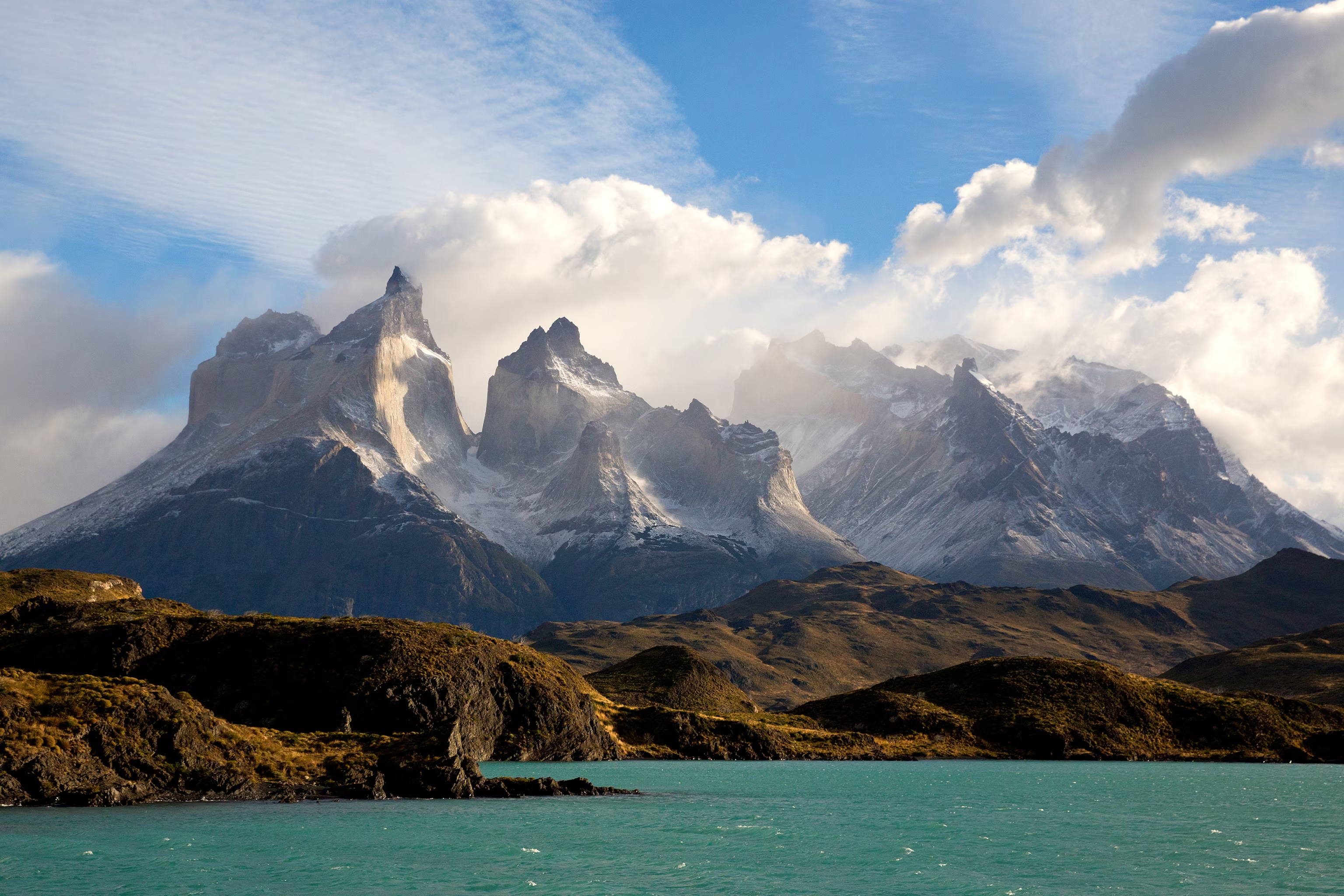
Where Granite Towers Rise Above the Last Wilderness

Stories from Torres del Paine

Explore Chapters
Climate Overview
Torres del Paine has a sub-Antarctic climate with fierce winds, rapid weather changes, and the possibility of experiencing all four seasons in a single day.
Plan Your Journey

Best Time to Visit Torres del Paine

Patagonian Summer
December – February
41–64°F Moderate (40–50mm)
Peak
The prime window for Torres del Paine. Long days with up to 17 hours of sunlight open all trails and park activities. Temperatures reach their warmest, though wind can sharply drop the perceived temperature. Peak tourism means refugio and hotel bookings should be secured three months in advance. Summer offers the best conditions for combining hiking, glacier, and wildlife experiences.
Spring Awakening
October – November
37–59°F Moderate (30–45mm)
Great
Snow retreats from lower trails and wildflowers emerge across the steppe. October still sees snow at higher elevations and requires a licensed guide. By November, crowds thin and rates drop. Strong winds are common but the landscape is dramatic, with snow-dusted peaks against clear skies. Glacier kayaking and ice hiking begin operating, and puma tracking benefits from fewer visitors.
Golden Autumn
March – April
36–55°F Low-Moderate (30–40mm)
Great
Lenga forests blaze red and gold as autumn settles over Torres del Paine. Crowds thin after March and softer light creates ideal photography conditions. Temperatures cool but remain comfortable for hiking, and winds ease compared to summer. Most services stay open through April. Puma tracking excels as shorter days push the cats into more active hunting patterns across the steppe.
Patagonian Winter
May – September
27–46°F Low (15–30mm plus snow)
Shoulder
Torres del Paine at its most raw and empty. Snow blankets the peaks and temperatures drop below freezing, but winter offers solitude impossible in summer. The O Circuit back section closes and most hotels reduce operations, though some lodges run winter programs. Puma tracking is arguably best now as snow reveals tracks and fewer visitors mean less competition for sightings.
Annual Overview
Jan
57°
Feb
57°
Mar
52°
Apr
46°
May
41°
Jun
37°
Jul
36°
Aug
38°
Sep
42°
Oct
47°
Nov
52°
Dec
55°
Peak
Great
Good
Shoulder
Off-Season
Travel Logistics

Getting to Torres del Paine

Choose your route. Every option arrives at the same destination.

Flight to Punta Arenas + Ground Transfer

6-8 hours total
Journey Time
From $150-400 USD flights
Approximate Cost
Direct flights from Santiago to Punta Arenas take approximately 3.5 hours with LATAM and SKY Airlines. From Punta Arenas, a 3-hour drive reaches Puerto Natales, then a 2-hour transfer to the park.
Insider Tip
Book flights 2-3 months ahead for peak season as prices spike December through February. Morning flights allow same-day arrival in Puerto Natales. Arrange ground transfers in advance as airport services are limited.

Bus from Puerto Natales

2-2.5 hours
Journey Time
From $15-20 USD one way
Approximate Cost
Multiple bus companies operate daily from Puerto Natales to the park, stopping at Laguna Amarga and continuing to Pudeto pier. A catamaran crosses Lago Pehoe to Refugio Paine Grande, connecting to the W Trek.
Insider Tip
Buses fill quickly December through January, so book a day ahead. The first departure connects with the morning catamaran. Bring park entrance confirmation from pasesparques.cl and your passport. Return buses leave Laguna Amarga around 14:30.

Private Vehicle or Rental Car

2 hours from Puerto Natales
Journey Time
From $80-180 USD per day rental
Approximate Cost
A private vehicle offers flexibility to access Lago Grey, Laguna Azul, and viewpoints that bus routes skip. The road from Puerto Natales is partially paved. Rentals are available in Punta Arenas and Puerto Natales.
Insider Tip
Reserve automatic transmission vehicles well in advance as most rentals are manual. Fill up in Puerto Natales as there are no fuel stations in the park. Roads are unpaved and dusty. Carry chains in shoulder season.
6-8 hours total

Flight to Punta Arenas + Ground Transfer

Flight to Punta Arenas + Ground Transfer

Direct flights from Santiago to Punta Arenas take approximately 3.5 hours with LATAM and SKY Airlines. From Punta Arenas, a 3-hour drive reaches Puerto Natales, then a 2-hour transfer to the park.

Journey Time
6-8 hours total
Approx. Cost
From $150-400 USD flights
Insider Tip
Book flights 2-3 months ahead for peak season as prices spike December through February. Morning flights allow same-day arrival in Puerto Natales. Arrange ground transfers in advance as airport services are limited.
2-2.5 hours

Bus from Puerto Natales

Bus from Puerto Natales

Multiple bus companies operate daily from Puerto Natales to the park, stopping at Laguna Amarga and continuing to Pudeto pier. A catamaran crosses Lago Pehoe to Refugio Paine Grande, connecting to the W Trek.

Journey Time
2-2.5 hours
Approx. Cost
From $15-20 USD one way
Insider Tip
Buses fill quickly December through January, so book a day ahead. The first departure connects with the morning catamaran. Bring park entrance confirmation from pasesparques.cl and your passport. Return buses leave Laguna Amarga around 14:30.
2 hours from Puerto Natales

Private Vehicle or Rental Car

Private Vehicle or Rental Car

A private vehicle offers flexibility to access Lago Grey, Laguna Azul, and viewpoints that bus routes skip. The road from Puerto Natales is partially paved. Rentals are available in Punta Arenas and Puerto Natales.

Journey Time
2 hours from Puerto Natales
Approx. Cost
From $80-180 USD per day rental
Insider Tip
Reserve automatic transmission vehicles well in advance as most rentals are manual. Fill up in Puerto Natales as there are no fuel stations in the park. Roads are unpaved and dusty. Carry chains in shoulder season.
Why Travel with Us

Travel with EcoVoyager

Torres del Paine sits 112 kilometers north of Puerto Natales, connected by a scenic two-hour drive across the Patagonian steppe. EcoVoyager transforms the journey into part of the adventure. Our guides arrange private puma tracking safaris on conservation estancias, exclusive glacier experiences with certified operators, and gaucho-led horseback expeditions across terrain most visitors never see. We handle permits, refugio reservations, and seasonal timing so you can focus on the wild.

Expert naturalist-guided puma tracking safaris
Private glacier experiences with certified operators
Gaucho-led horseback expeditions on working estancias
Permit coordination for W Trek and O Circuit logistics

Plan Your Torres del Paine Trip

Custom Travel Inquiry

Tell us about your plans and our specialists will craft a personalised itinerary within 24 hours.

Explore More

Other Chile Destinations

Explore more destinations across Chile.

Juan Fernández Islands

Discovered by Spanish navigator Juan Fernández in 1574, this remote volcanic archipelago 670 kilometers off the Chilean coast has captivated...

Explore

Easter Island

Settled by Polynesian navigators around the 12th century, Rapa Nui, also known as Easter Island, sits 3,700 kilometers from the...

Explore

Cape Horn

Discovered in 1616 by Dutch navigators and named after the town of Hoorn in the Netherlands, Cape Horn is a...

Explore

Carretera Austral & Aysén

Chile’s Route 7 stretches 1,240 kilometers through some of the last truly wild landscapes on Earth, from Puerto Montt to...

Explore

Chiloé Island

South America’s fifth-largest island sits separated from the Chilean mainland by the Chacao Channel, a narrow passage that created centuries...

Explore

Lake District

Stretching from the Mapuche heartland south to Puerto Montt, Chile’s Lake District holds seven national parks, a dozen glacial lakes,...

Explore

Chile Wine Country

Chile is the only major wine-producing country never touched by phylloxera, the root louse that devastated vineyards worldwide. Protected by...

Explore

Valparaíso

Named by Spanish explorer Juan de Saavedra in 1536 after his hometown, Valparaíso rose to become the premier port on...

Explore

Santiago

Founded by Pedro de Valdivia in 1541 at the foot of a volcanic hill the indigenous Mapuche called Huelén, Santiago...

Explore

Elqui Valley

Tucked between the Andes and the southern Atacama Desert, the Elqui Valley is a ribbon of green vineyards and ancient...

Explore

Atacama Desert

In the driest non-polar desert on Earth, salt flats stretch toward snow-capped volcanoes, geysers erupt at 4,320 meters, and three...

Explore
Scroll to Top