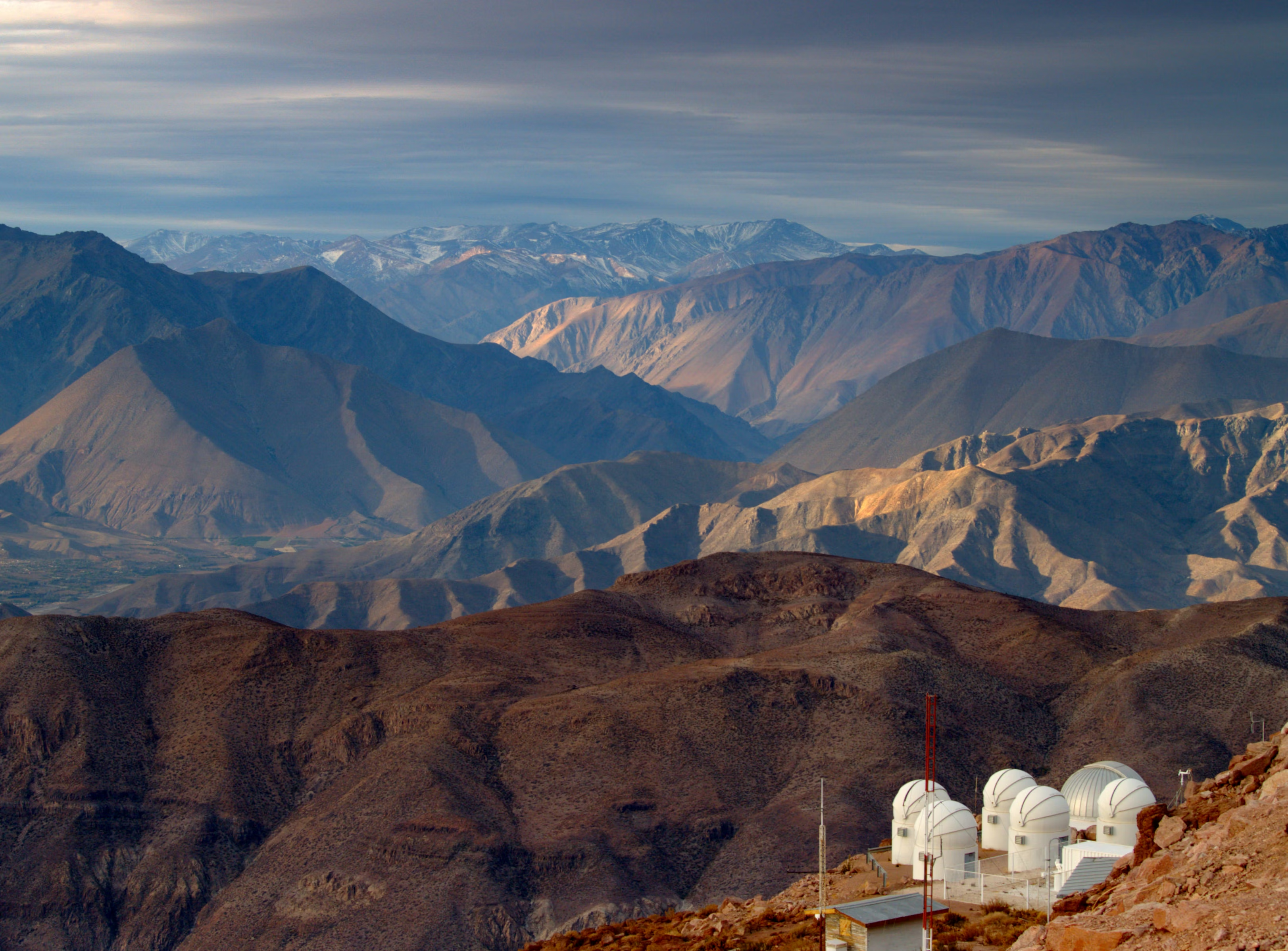
Milky Way galaxy stretching across starry night sky above astronomical observatory dome in Elqui Valley Chile Sustainable vineyard terraces in Chile's Elqui Valley with mountain backdrop for eco-wine tourism Elqui Valley astronomical observatory domes nestled in Andes mountains with snow-capped peaks for sustainable stargazing tourism Colorful traditional adobe houses in Elqui Valley village with dramatic Andes mountains backdrop, sustainable tourism destination Puclaro Reservoir turquoise waters surrounded by Andean mountains in Chile's Elqui Valley desert landscape Sustainable vineyard in Chile's Elqui Valley with terraced grapevines, mountain backdrop, and eco-friendly farming practices Gabriela Mistral monument statue in Monte Grande village Elqui Valley Chile with desert mountains backdrop Lush green Elqui Valley oasis surrounded by dramatic Andes mountains in Chile, showcasing sustainable vineyard tourism Ancient petroglyphs carved into red sandstone boulder in Chile's Elqui Valley desert landscape
Ecovoyager Adventures

Travel to Elqui Valley

Elqui Valley, Chile

Scroll
Location Overview

Elqui Valley

Elqui Valley, Chile

Tucked between the Andes and the southern Atacama Desert, the Elqui Valley is a ribbon of green vineyards and ancient villages beneath some of the clearest skies on Earth. In 2015, a 36,000-hectare stretch became the world’s first International Dark Sky Sanctuary. By day, the valley reveals pisco distilleries dating to 1868, the birthplace of Nobel laureate Gabriela Mistral, and Diaguita petroglyphs carved long before the Spanish arrived. Over 300 cloudless nights per year reward travelers who slow down and look up.

Tours coming soon

Plan a Custom Trip
Bespoke Travel

Experience Elqui Valley, Your Way

Skip the standard itineraries. We design journeys around your interests, timeline, and curiosity with exclusive access you won't find on any platform.

100%
Customizable
24hr
Response Time
1:1
Expert Planning
Custom Experience
Bespoke Adventure
Personalised Journey
Experiences

Things to Do in Elqui Valley

Starting points for your perfect trip

Ready to create something unique?
Tell us your vision and we'll make it happen
Bespoke Experience

Design Your Custom Trip

Tell us about your dream adventure. Our travel specialists respond within 24 hours with a personalised itinerary.

Where the Stars Touch the Desert

Stories from Elqui Valley

Explore Chapters
Climate Overview
The Elqui Valley enjoys a semi-arid climate with over 300 sunny days per year, warm summers reaching 77°F, and mild winters rarely dipping below 44°F.
Plan Your Journey

Best Time to Visit Elqui Valley

Autumn Harvest
March – May
53–75°F Very Low (0–5mm)
Peak
The optimal window for the Elqui Valley. Warm days give way to cool nights ideal for stargazing, and the pisco grape harvest brings distilleries to life. Domestic crowds thin after March, meaning easier access to observatories and restaurants. Night skies are superb as autumn lengthens darkness and atmospheric transparency remains high.
Desert Spring
September – November
57–73°F Very Low (0–5mm)
Great
Warming temperatures and lengthening days make spring excellent for hiking, horseback riding, and vineyard visits. The valley greens up with irrigation flows, and tourist numbers stay low, giving intimate access to cultural sites and distilleries. Nights are cool but comfortable for stargazing, with the Southern Cross well-positioned overhead.
Summer Solstice
December – February
59–77°F None (0mm)
Warm Season
The warmest season draws Chileans escaping Santiago’s heat, making this the busiest period. Longer daylight hours shorten stargazing windows, but the night sky remains spectacular. Book observatory tours and accommodation well in advance. Morning hours are best for hiking and horseback riding before afternoon heat peaks.
Winter Skies
June – August
44–63°F Low (15–50mm)
Good
The coldest months bring the most transparent skies and longest nights, making winter the best season for serious stargazers. Expect cool days and cold nights dipping to 44°F, requiring warm layers for observatory visits. June sees the only notable rainfall. Fewer tourists mean personal experiences at cultural sites and distilleries.
Annual Overview
Jan
69°
Feb
69°
Mar
67°
Apr
62°
May
58°
Jun
54°
Jul
53°
Aug
55°
Sep
57°
Oct
61°
Nov
64°
Dec
68°
Peak
Great
Good
Shoulder
Off-Season
Travel Logistics

Getting to Elqui Valley

Choose your route. Every option arrives at the same destination.

Flight to La Serena + Valley Transfer

1 hour flight + 1 hour transfer
Journey Time
From $80-150 USD flight + $40-60 USD transfer
Approximate Cost
LATAM operates daily flights from Santiago to La Florida Airport in La Serena (LSC). From the airport, Route 41 leads into the Elqui Valley, reaching Vicuna in 45 minutes and Pisco Elqui in 90 minutes.
Insider Tip
Book flights early as La Serena fills during Chilean summer (Dec-Feb). Arrange transfers in advance as airport car rental is limited. Fill your tank in La Serena or Vicuna as fuel stations are scarce beyond.

Scenic Drive from Santiago

6-7 hours
Journey Time
From $60-100 USD rental car per day
Approximate Cost
Route 5 (Pan-American Highway) runs north from Santiago to La Serena (470km), then Route 41 heads east into the valley. The drive passes through agricultural heartland and semi-arid Norte Chico landscape.
Insider Tip
Plan fuel stops using Copec station signs that indicate distances ahead. Vicuna has the last pharmacy, hospital, and supermarket. Only two fuel stations exist beyond, in Vicuna and Rivadavia, and they can run dry.

Bus from Santiago or La Serena

6-7 hours from Santiago, 1-2 hours from La Serena
Journey Time
From $15-30 USD from Santiago, $3-5 USD from La Serena
Approximate Cost
Tur Bus and Expreso Norte run daily from Santiago to Vicuna. Sol de Elqui microbuses depart La Serena every 30 minutes for Vicuna and continue to Pisco Elqui along Route 41 and D-485.
Insider Tip
Santiago buses depart from San Borja terminal. Last buses from Vicuna to La Serena leave around 8:30pm. La Serena to Pisco Elqui takes 3.5 hours. Carry Chilean pesos as rural shops rarely accept cards.
1 hour flight + 1 hour transfer

Flight to La Serena + Valley Transfer

Flight to La Serena + Valley Transfer

LATAM operates daily flights from Santiago to La Florida Airport in La Serena (LSC). From the airport, Route 41 leads into the Elqui Valley, reaching Vicuna in 45 minutes and Pisco Elqui in 90 minutes.

Journey Time
1 hour flight + 1 hour transfer
Approx. Cost
From $80-150 USD flight + $40-60 USD transfer
Insider Tip
Book flights early as La Serena fills during Chilean summer (Dec-Feb). Arrange transfers in advance as airport car rental is limited. Fill your tank in La Serena or Vicuna as fuel stations are scarce beyond.
6-7 hours

Scenic Drive from Santiago

Scenic Drive from Santiago

Route 5 (Pan-American Highway) runs north from Santiago to La Serena (470km), then Route 41 heads east into the valley. The drive passes through agricultural heartland and semi-arid Norte Chico landscape.

Journey Time
6-7 hours
Approx. Cost
From $60-100 USD rental car per day
Insider Tip
Plan fuel stops using Copec station signs that indicate distances ahead. Vicuna has the last pharmacy, hospital, and supermarket. Only two fuel stations exist beyond, in Vicuna and Rivadavia, and they can run dry.
6-7 hours from Santiago, 1-2 hours from La Serena

Bus from Santiago or La Serena

Bus from Santiago or La Serena

Tur Bus and Expreso Norte run daily from Santiago to Vicuna. Sol de Elqui microbuses depart La Serena every 30 minutes for Vicuna and continue to Pisco Elqui along Route 41 and D-485.

Journey Time
6-7 hours from Santiago, 1-2 hours from La Serena
Approx. Cost
From $15-30 USD from Santiago, $3-5 USD from La Serena
Insider Tip
Santiago buses depart from San Borja terminal. Last buses from Vicuna to La Serena leave around 8:30pm. La Serena to Pisco Elqui takes 3.5 hours. Carry Chilean pesos as rural shops rarely accept cards.
Why Travel with Us

Travel with EcoVoyager

The Elqui Valley sits 470 kilometers north of Santiago, accessed through La Serena. EcoVoyager transforms the approach into the first chapter of your story. Our local guides meet you at La Florida Airport and drive Route 41 into the valley, pausing at the Puclaro Reservoir where green valley floor meets barren desert slopes. We open doors to private observatory sessions, artisanal pisco tastings with multi-generational distillers, and astronomer-led stargazing under the world’s first Dark Sky Sanctuary.

Private astronomer-guided stargazing at professional observatories
Artisanal pisco tastings with multi-generational distillers
Gabriela Mistral literary trail with local cultural guides
Horseback expeditions into the remote Cochiguaz Valley

Plan Your Elqui Valley Trip

Custom Travel Inquiry

Tell us about your plans and our specialists will craft a personalised itinerary within 24 hours.

Explore More

Other Chile Destinations

Explore more destinations across Chile.

Juan Fernández Islands

Discovered by Spanish navigator Juan Fernández in 1574, this remote volcanic archipelago 670 kilometers off the Chilean coast has captivated...

Explore

Easter Island

Settled by Polynesian navigators around the 12th century, Rapa Nui, also known as Easter Island, sits 3,700 kilometers from the...

Explore

Cape Horn

Discovered in 1616 by Dutch navigators and named after the town of Hoorn in the Netherlands, Cape Horn is a...

Explore

Torres del Paine

Twelve million years of tectonic force thrust granite spires through older sedimentary rock, then Patagonian glaciers carved valleys, lakes, and...

Explore

Carretera Austral & Aysén

Chile’s Route 7 stretches 1,240 kilometers through some of the last truly wild landscapes on Earth, from Puerto Montt to...

Explore

Chiloé Island

South America’s fifth-largest island sits separated from the Chilean mainland by the Chacao Channel, a narrow passage that created centuries...

Explore

Lake District

Stretching from the Mapuche heartland south to Puerto Montt, Chile’s Lake District holds seven national parks, a dozen glacial lakes,...

Explore

Chile Wine Country

Chile is the only major wine-producing country never touched by phylloxera, the root louse that devastated vineyards worldwide. Protected by...

Explore

Valparaíso

Named by Spanish explorer Juan de Saavedra in 1536 after his hometown, Valparaíso rose to become the premier port on...

Explore

Santiago

Founded by Pedro de Valdivia in 1541 at the foot of a volcanic hill the indigenous Mapuche called Huelén, Santiago...

Explore

Atacama Desert

In the driest non-polar desert on Earth, salt flats stretch toward snow-capped volcanoes, geysers erupt at 4,320 meters, and three...

Explore
Scroll to Top