


Travel to Avenue of the Baobabs
Avenue of the Baobabs, Madagascar
Avenue of the Baobabs
Avenue of the Baobabs, Madagascar
Experience Avenue of the Baobabs, Your Way
Skip the standard itineraries. We design journeys around your interests, timeline, and curiosity with exclusive access you won't find on any platform.

Things to Do in Avenue of the Baobabs
Starting points for your perfect trip
Sunrise & Sunset Photography Sessions
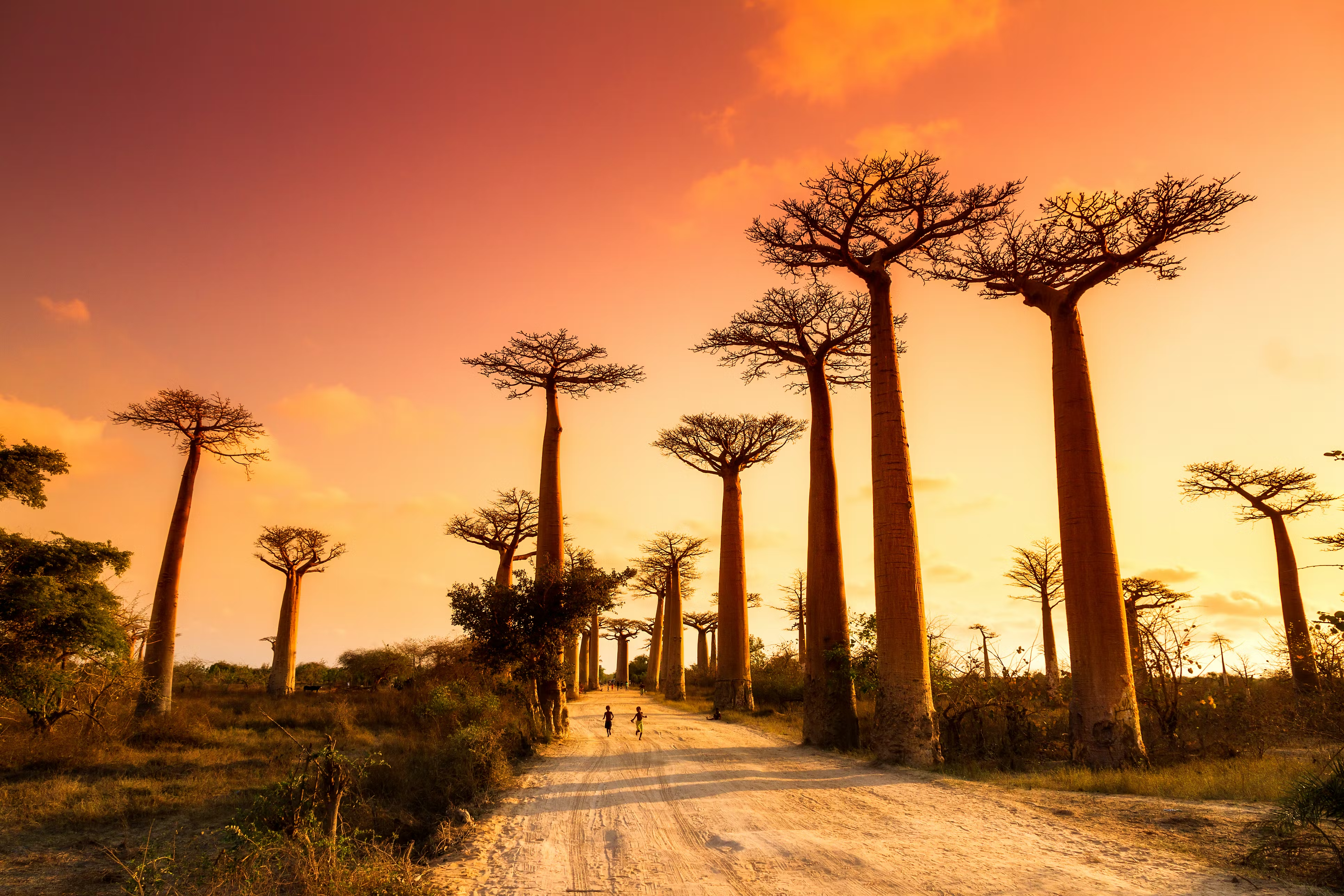
Witness the Avenue transform as golden light silhouettes 800-year-old giants against painted skies. Arrive before dawn to capture mist rising from rice paddies, then return for sunset when the baobabs glow amber and local zebu carts create timeless silhouettes.
Fossa & Nocturnal Lemur Tracking
Join expert guides in Kirindy Forest for Madagascar's ultimate wildlife encounter. Track the elusive fossa—the island's largest predator—by day, then embark on night walks to spot Madame Berthe's mouse lemur, the world's smallest primate, and the giant jumping rat found nowhere else on Earth.
Vezo Fishing Village Immersion
Glide by traditional pirogue through mangroves to Betania, where the Vezo fishing community lives as they have for centuries. Watch morning boats return with fresh catches, learn traditional fishing and boat-building techniques, and share a meal of the day's harvest prepared over open fires.

Stone Forest Tsingy Expedition
Navigate the razor-sharp limestone pinnacles of Tsingy de Bemaraha, a UNESCO World Heritage Site unlike anywhere on Earth. Cross suspension bridges 200 meters above canyons, descend into hidden forests where lemurs leap between karst spires, and explore sacred caves by traditional pirogue.
Design Your Custom Trip
Tell us about your dream adventure. Our travel specialists respond within 24 hours with a personalised itinerary.
Where Ancient Giants Guard the Road to Wonder
A Closer Look at Avenue of the Baobabs
Mother of the Forest
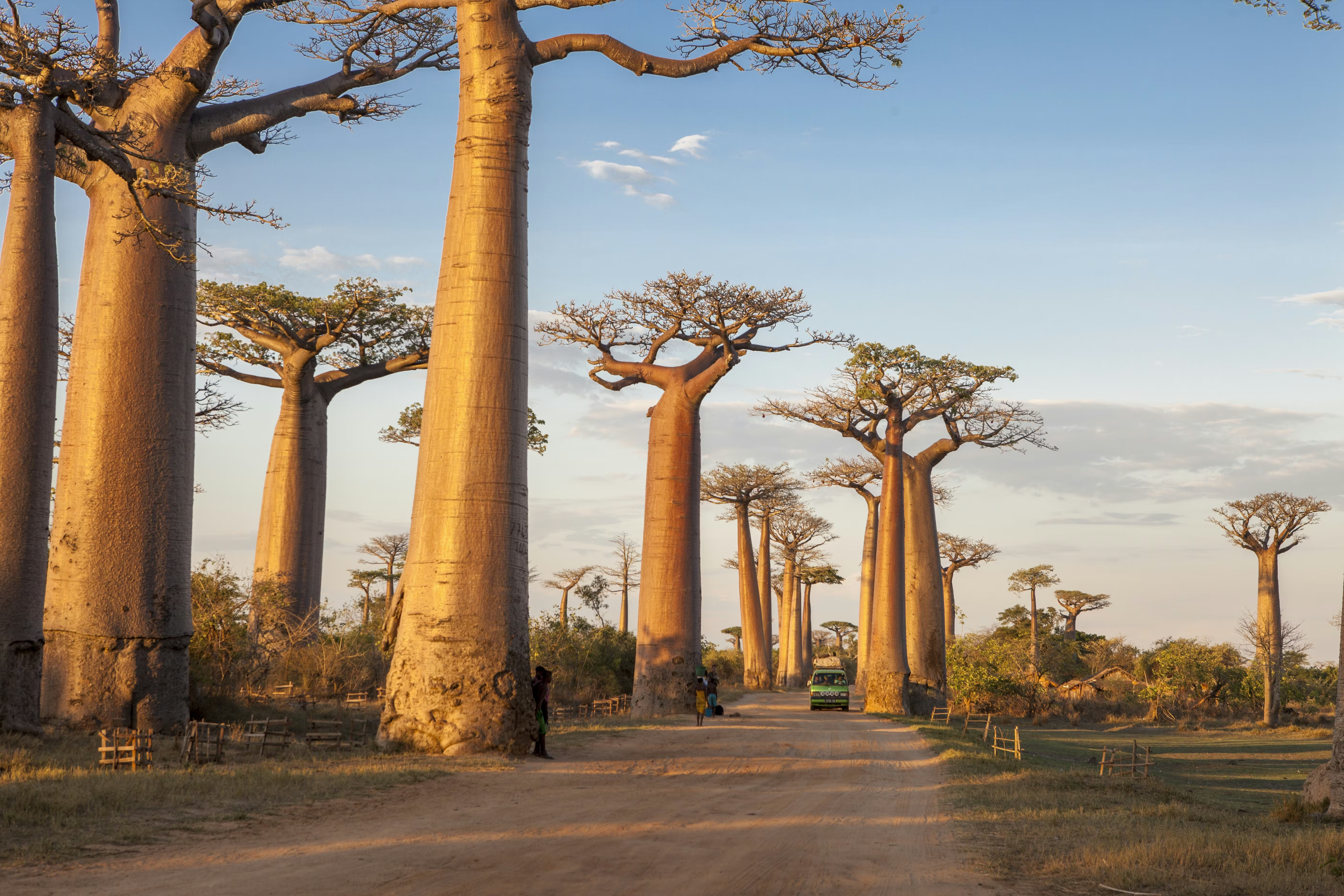
The Grandidier’s baobab (Adansonia grandidieri) is the largest and most magnificent of Madagascar’s six endemic baobab species—and the only place on Earth you’ll find them. These botanical marvels can reach 30 meters in height and live for over 800 years, their massive cylindrical trunks storing thousands of liters of water to survive the eight-month dry season. The smooth, reddish-grey bark feels almost warm to the touch, and locals say the trees ‘breathe’—their trunks visibly expanding and contracting with the rains.
Known locally as ‘renala’—mother of the forest in Malagasy—these trees once formed part of dense tropical forests that covered western Madagascar. As populations grew and land was cleared for rice paddies, the baobabs remained, preserved by communities who recognized their sacred significance and practical value. The fruit pulp is rich in vitamin C, seeds yield cooking oil, and the fibrous bark provides rope and thatch. In 2015, the Avenue became Madagascar’s first designated natural monument—a recognition centuries overdue for these ancient guardians.
A Wilderness of Stone and Forest
Two hours north of Morondava lies one of Earth’s most extraordinary landscapes: the Tsingy de Bemaraha. This UNESCO World Heritage Site comprises 1,575 square kilometers of razor-sharp limestone pinnacles—a ‘stone forest’ that has been sculpted over 200 million years by dissolving rains. The Malagasy word ‘tsingy’ means ‘where one cannot walk barefoot,’ and standing atop these jagged formations, you understand why. Some pinnacles soar over 100 meters, separated by canyons where isolated pockets of forest shelter lemurs and endemic birds.
Equally rewarding is Kirindy Forest, a dry deciduous reserve that offers perhaps Madagascar’s best chance to see the fossa—the island’s largest carnivore, resembling a small cougar. Night walks reveal an even stranger world: the giant jumping rat (found only here), Madame Berthe’s mouse lemur (the world’s smallest primate at just 30 grams), and flat-tailed geckos so perfectly camouflaged they disappear against bark. Eight lemur species inhabit these forests, including the charismatic Verreaux’s sifaka, famous for ‘dancing’ sideways across open ground.
The Vezo Way of Life
The waters around Morondava have sustained the Vezo people for countless generations. Their name means ‘those who fish,’ and watching them navigate outrigger pirogues through open ocean—sometimes venturing 50 kilometers offshore using only stars and currents—you witness seamanship unchanged since their ancestors first settled these shores. The village of Betania, accessible only by boat through mangrove channels, offers a window into this maritime culture: boat-builders crafting pirogues from single tree trunks, women smoking fish over palm-frond fires, children learning to mend nets.
A pirogue journey to Betania is more than excursion—it’s immersion in Madagascar’s coastal heritage. You’ll glide past traditional dhow shipyards where wooden sailing vessels take shape, through mangrove forests teeming with herons and kingfishers, to a village where the day’s rhythm follows the tides. When the morning boats return, entire families gather to sort the catch—tuna, mackerel, shrimp, even small sharks—bargaining and preparing fish that will travel by zebu cart to markets across the region. The warmth of Vezo hospitality matches the tropical sun.
Explore More
Other Madagascar Destinations
Explore more destinations across Madagascar.
Ifaty-Mangily
Along Madagascar's sun-drenched southwest coast lies Ifaty-Mangily—where the world's fifth-largest coral reef meets one of Earth's strangest forests. Here, 1,200-year-old...
ExploreRanomafana National Park
Deep in Madagascar's southeastern highlands lies Ranomafana—a steaming rainforest where hot springs bubble beneath misty canopies and scientific breakthroughs still...
ExploreAntananarivo
Perched 1,300 meters above sea level on the sacred hills of Imerina, Antananarivo is no ordinary capital—it is the threshold...
ExploreAnkarafantsika National Park
In northwestern Madagascar lies a realm where the extraordinary is ordinary—where lemurs dance across the forest floor on two legs,...
ExploreNosy Be
Rising from the turquoise waters of the Mozambique Channel lies Nosy Be—Madagascar's island jewel and gateway to one of earth's...
ExploreIsalo National Park
Rising from the grasslands of southern Madagascar, the Isalo Massif is a sandstone labyrinth carved by 180 million years of...
ExploreTsingy de Bemaraha
Rising from Madagascar's remote western plateau lies one of Earth's most alien landscapes—a 200-million-year-old labyrinth of razor-sharp limestone pinnacles that...
ExploreMasoala National Park
On Madagascar's remote northeastern coast lies Masoala—the island's largest national park and one of Earth's most biodiverse places. Here, primary...
ExploreAndasibe-Mantadia National Park
In the mist-shrouded rainforests of eastern Madagascar, a haunting melody echoes through ancient trees each morning—the song of the indri,...
Explore