
Ecovoyager Adventures

Discover Andasibe-Mantadia National Park

Andasibe-Mantadia, Madagascar

Scroll
Location Overview

Andasibe-Mantadia National Park

Andasibe-Mantadia, Madagascar

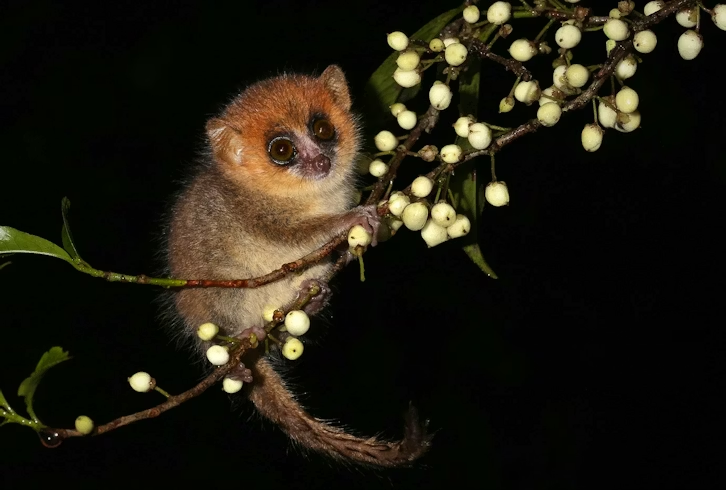
In the mist-shrouded rainforests of eastern Madagascar, a haunting melody echoes through ancient trees each morning—the song of the indri, the world's largest lemur. This is Andasibe-Mantadia National Park, where 155 square kilometers of primordial rainforest harbor species found nowhere else on Earth. Here, 90 million years of isolation have created an evolutionary wonderland: teddy-bear-faced indris that mate for life and sing in rhythms only humans share, jewel-toned chameleons smaller than your thumbnail, and orchids so rare scientists are still cataloging them. The Malagasy call the indri 'Babakoto'—ancestor of man—and when you hear their whale-like calls reverberating through the canopy, you understand why.

Tours coming soon

Plan a Custom Trip
Bespoke Travel

Experience Andasibe-Mantadia National Park, Your Way

Skip the standard itineraries. We design journeys around your interests, timeline, and curiosity with exclusive access you won't find on any platform.
100%
Customizable
24hr
Response Time
1:1
Expert Planning
Custom Experience
Bespoke Adventure
Personalised Journey
Experiences

Things to Do in Andasibe-Mantadia National Park

Starting points for your perfect trip

Ready to create something unique?
Tell us your vision and we'll make it happen
Bespoke Experience

Design Your Custom Trip

Tell us about your dream adventure. Our travel specialists respond within 24 hours with a personalised itinerary.

Where the Forest Sings at Dawn

Stories from Andasibe-Mantadia National Park

Explore Chapters
Plan Your Journey

Best Time to Visit Andasibe-Mantadia National Park

Wildlife Season
October – November
55–81°F Low-Moderate (40–100mm)
Peak
Madagascar's optimal wildlife window. Warming temperatures wake reptiles from dormancy while baby lemurs appear on mothers' backs. Over 100 orchid species bloom throughout the forest. Comfortable days with occasional showers, excellent trail conditions, and lighter crowds than July-August peak. Book forest-edge lodges in advance.
Green Season
April – May
57–79°F Moderate (50–100mm)
Great
Rains subside revealing emerald landscapes alive with wildlife. All 11 lemur species active after wet season, trails firm enough for comfortable hiking, and fewer visitors than peak months. Temperatures pleasant (14–27°C) with cool evenings. An excellent balance of accessibility, wildlife activity, and value.
Dry Season
June – September
48–75°F Low (10–60mm)
Good
Madagascar's winter brings the driest months and easiest trail conditions. Indri and sifaka remain reliably visible, but cold nights (9–12°C) mean reptiles and some dwarf lemurs become dormant. July-August draws peak tourist crowds—book well ahead. Pack layers for chilly pre-dawn forest walks.
Early Wet Season
December
59–82°F High (200–300mm)
Shoulder
Rains return but haven't yet reached full intensity. Wildlife remains active with orchids still in bloom. Afternoon downpours become common; trails muddier and leeches emerge. Cyclone season officially begins mid-month. For prepared travelers seeking lower prices and fewer crowds, December remains viable.
Monsoon Season
January – March
59–82°F Very High (300–400mm)
Offseason
Heavy daily rains and cyclone risk make this challenging. Trails become muddy and slippery, some roads impassable, and a few lodges close entirely. While wildlife is active, conditions are difficult. Only recommended for dedicated travelers with flexible schedules and full waterproof gear.
Annual Overview
Jan
82°
Feb
82°
Mar
81°
Apr
79°
May
77°
Jun
72°
Jul
70°
Aug
72°
Sep
75°
Oct
79°
Nov
81°
Dec
82°
Peak
Great
Good
Shoulder
Off-Season
Travel Logistics

Getting to Andasibe-Mantadia National Park

Choose your route. Every option arrives at the same destination.

Private Transfer from Antananarivo

3-4 hours by road
Journey Time
From $80-150 USD per vehicle
Approximate Cost
The most comfortable option follows Route Nationale 2 (RN2) east through the highlands. The paved road winds through terraced rice paddies, traditional villages, and gradually descends into rainforest. Most tour operators include this scenic drive as part of Madagascar itineraries.
Insider Tip
Depart early morning to arrive in time for afternoon forest walks. The road can be slow due to truck traffic and potholes—embrace the 'mora mora' (slowly, slowly) pace. Stop at Marozevo to see the Peyrieras Reptile Reserve en route. Build in flexibility for unexpected delays.

Shuttle or Taxi-Brousse

4-5 hours
Journey Time
From $10-30 USD per person
Approximate Cost
MTT Madabus operates a daily shuttle service from Antananarivo. Local taxi-brousses (shared minibuses) run frequently from Ampasampito station in Antananarivo to Moramanga, with connections to Andasibe. Budget travelers can reach the park affordably, though comfort varies.
Insider Tip
Book shuttle services in advance during peak season. Taxi-brousses can be crowded—bring water and snacks. The final leg from Moramanga to Andasibe (25 kilometers) requires a local taxi or tuk-tuk. Not recommended for tight schedules due to variable timing.

Park Internal Transfers

15-45 minutes between sites
Journey Time
From $20-40 USD per vehicle
Approximate Cost
Analamazaotra Reserve headquarters is walkable from most Andasibe lodges. Mantadia National Park lies 20 kilometers north via a rough dirt road requiring 4WD, especially during rainy season. Community reserves like Mitsinjo and VOIMMA are within walking distance of the village.
Insider Tip
Arrange Mantadia transport through your lodge the day before—morning departures offer best wildlife activity. The Mantadia road can be challenging after rain; dry season (June-October) provides easier access. Allow a full day for Mantadia exploration including travel time.
3-4 hours by road

Private Transfer from Antananarivo

Private Transfer from Antananarivo

The most comfortable option follows Route Nationale 2 (RN2) east through the highlands. The paved road winds through terraced rice paddies, traditional villages, and gradually descends into rainforest. Most tour operators include this scenic drive as part of Madagascar itineraries.

Journey Time
3-4 hours by road
Approx. Cost
From $80-150 USD per vehicle
Insider Tip
Depart early morning to arrive in time for afternoon forest walks. The road can be slow due to truck traffic and potholes—embrace the 'mora mora' (slowly, slowly) pace. Stop at Marozevo to see the Peyrieras Reptile Reserve en route. Build in flexibility for unexpected delays.
4-5 hours

Shuttle or Taxi-Brousse

Shuttle or Taxi-Brousse

MTT Madabus operates a daily shuttle service from Antananarivo. Local taxi-brousses (shared minibuses) run frequently from Ampasampito station in Antananarivo to Moramanga, with connections to Andasibe. Budget travelers can reach the park affordably, though comfort varies.

Journey Time
4-5 hours
Approx. Cost
From $10-30 USD per person
Insider Tip
Book shuttle services in advance during peak season. Taxi-brousses can be crowded—bring water and snacks. The final leg from Moramanga to Andasibe (25 kilometers) requires a local taxi or tuk-tuk. Not recommended for tight schedules due to variable timing.
15-45 minutes between sites

Park Internal Transfers

Park Internal Transfers

Analamazaotra Reserve headquarters is walkable from most Andasibe lodges. Mantadia National Park lies 20 kilometers north via a rough dirt road requiring 4WD, especially during rainy season. Community reserves like Mitsinjo and VOIMMA are within walking distance of the village.

Journey Time
15-45 minutes between sites
Approx. Cost
From $20-40 USD per vehicle
Insider Tip
Arrange Mantadia transport through your lodge the day before—morning departures offer best wildlife activity. The Mantadia road can be challenging after rain; dry season (June-October) provides easier access. Allow a full day for Mantadia exploration including travel time.
Why Travel with Us

Travel with EcoVoyager

As Madagascar's most accessible rainforest park, Andasibe-Mantadia lies just three to four hours east of the capital along Route Nationale 2. EcoVoyager arranges comfortable private transfers through terraced rice paddies and highland villages, coordinates stays at forest-edge lodges where indri calls serve as your morning alarm, and provides expert naturalist guides who know precisely where to find the park's shyest inhabitants.

Expert naturalist guides for lemur and wildlife tracking
Both day and night forest walks included
Community reserve visits supporting local conservation
Forest-edge lodge accommodations with indri wake-up calls

Plan Your Andasibe-Mantadia National Park Trip

Custom Travel Inquiry

Tell us about your plans and our specialists will craft a personalised itinerary within 24 hours.

Explore More

Other Madagascar Destinations

Explore more destinations across Madagascar.

Ifaty-Mangily

Along Madagascar's sun-drenched southwest coast lies Ifaty-Mangily—where the world's fifth-largest coral reef meets one of Earth's strangest forests. Here, 1,200-year-old...

Explore

Ranomafana National Park

Deep in Madagascar's southeastern highlands lies Ranomafana—a steaming rainforest where hot springs bubble beneath misty canopies and scientific breakthroughs still...

Explore

Antananarivo

Perched 1,300 meters above sea level on the sacred hills of Imerina, Antananarivo is no ordinary capital—it is the threshold...

Explore

Ankarafantsika National Park

In northwestern Madagascar lies a realm where the extraordinary is ordinary—where lemurs dance across the forest floor on two legs,...

Explore

Nosy Be

Rising from the turquoise waters of the Mozambique Channel lies Nosy Be—Madagascar's island jewel and gateway to one of earth's...

Explore

Isalo National Park

Rising from the grasslands of southern Madagascar, the Isalo Massif is a sandstone labyrinth carved by 180 million years of...

Explore

Tsingy de Bemaraha

Rising from Madagascar's remote western plateau lies one of Earth's most alien landscapes—a 200-million-year-old labyrinth of razor-sharp limestone pinnacles that...

Explore

Avenue of the Baobabs

Along a dusty red road in western Madagascar, some 25 ancient baobabs stand like sentinels from another age—survivors of forests...

Explore

Masoala National Park

On Madagascar's remote northeastern coast lies Masoala—the island's largest national park and one of Earth's most biodiverse places. Here, primary...

Explore
Scroll to Top