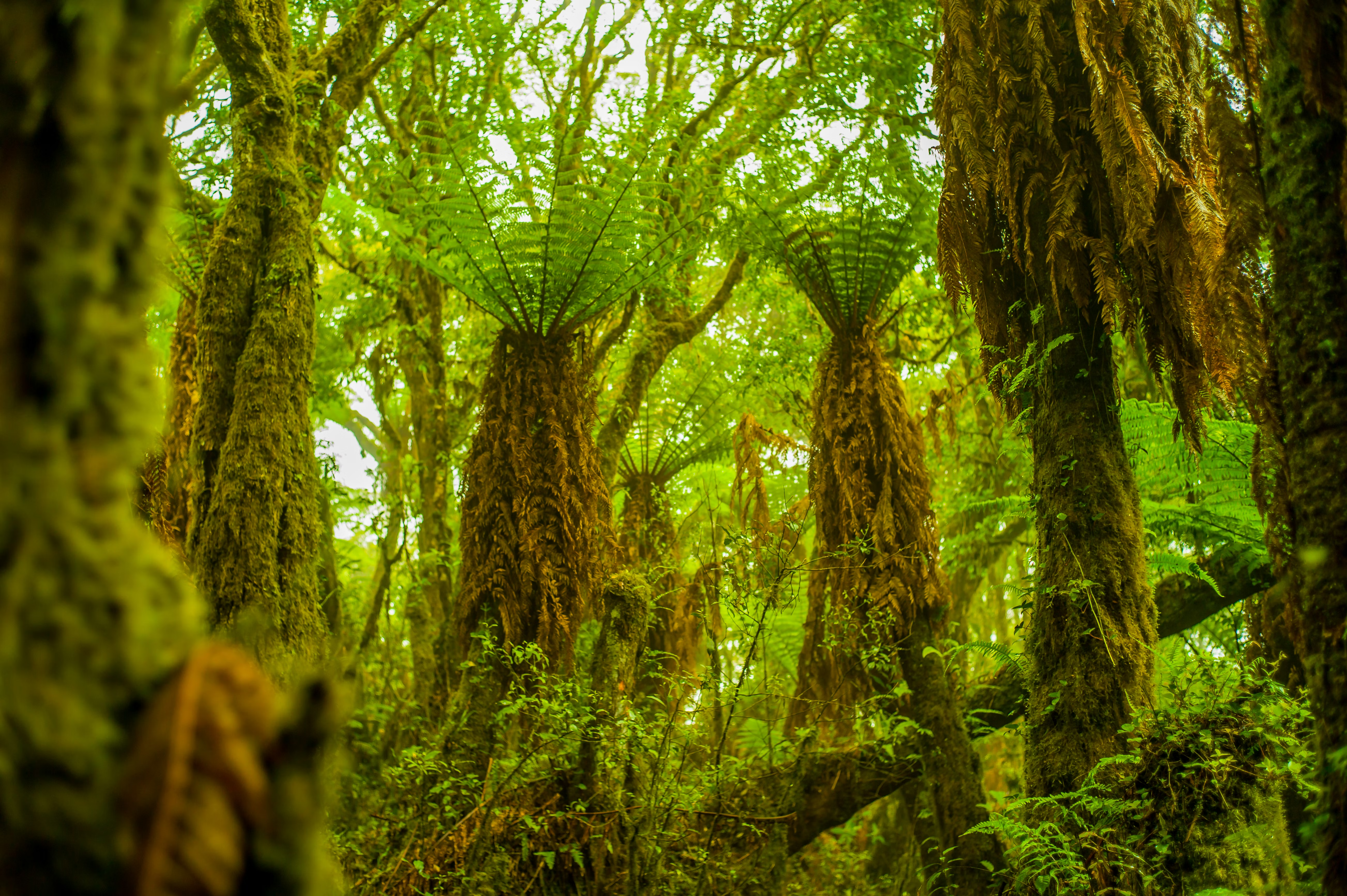
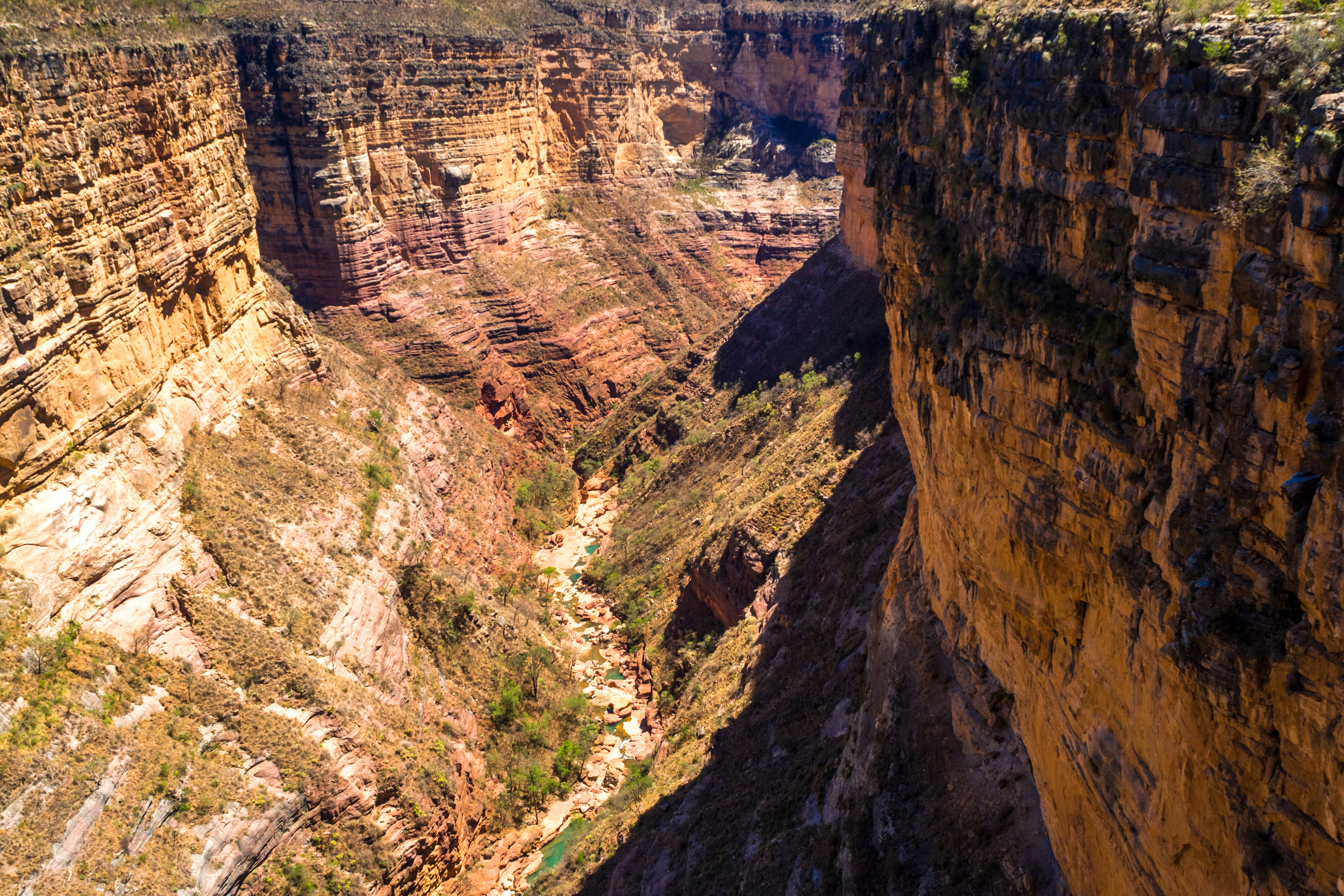
Dramatic sandstone cliffs and lush green valleys of Amboro National Park at sunset with colorful clouds Dense green forest with moss-covered tree trunks and ferns in Amboro National Park Bolivia Lush green mountains and valleys with low clouds in Amboro National Park Bolivia Aerial view of twin waterfalls cascading into muddy brown pool surrounded by lush green rainforest Dramatic canyon with layered sandstone cliffs and green vegetation in deep gorge below Andean condor soaring over dramatic mountain peaks in Bolivia's Andes near Samaipata Spectacled bear resting in tree canopy among green foliage in South American cloud forest habitat Two squirrel monkeys sitting close together on wooden planks in Amboro National Park Colorful red and blue bird perched on green leaves in Amboro National Park
Ecovoyager Adventures

Travel to Amboro National Park

From Amazon Jungle to Andean Cloud Forest in Central Bolivia

Scroll
Location Overview

Amboro National Park

From Amazon Jungle to Andean Cloud Forest in Central Bolivia

At the Elbow of the Andes, where the mountains bend westward toward Peru, Amboró National Park sits at one of the few places on Earth where three of South America's great biomes meet: the Amazon Basin, the Andean Yungas, and the Gran Chaco. Across a single day's trek the land shifts from steaming lowland jungle to misty cloud forest to dry highland scrub. The result is staggering diversity, with more than 800 bird species, around sixty percent of all the birds in Bolivia, alongside giant tree ferns, spectacled bears on the high slopes, and jaguars in forests so little explored that scientists still expect to find species new to the park. This is one of the richest protected areas anywhere in the Andes.

Ecovoyager Experiences

Amboro National Park Tours

Handcrafted expeditions into the remote corners of Amboro National Park — led by local experts, designed for the curious traveller.

Bespoke Travel

Experience Amboro National Park, Your Way

Skip the standard itineraries. We design journeys around your interests, timeline, and curiosity with exclusive access you won't find on any platform.

100%
Customizable
24hr
Response Time
1:1
Expert Planning
Custom Experience
Bespoke Adventure
Personalised Journey
Experiences

Things to Do in Amboro National Park

Starting points for your perfect trip

Ready to create something unique?
Tell us your vision and we'll make it happen
Bespoke Experience

Design Your Custom Trip

Tell us about your dream adventure. Our travel specialists respond within 24 hours with a personalised itinerary.

Where Three Worlds Converge

Stories from Amboro National Park

Explore Chapters

From the Journal

Stories from Amboro National Park

Field notes, cultural encounters, and trail dispatches from our guides and travellers in Amboro National Park.

Plan Your Journey

Best Time to Visit Amboro National Park

Dry season for trails and birding

Peak Dry Season
June – September
61–79°F Very Low (30–65mm)
Peak
The best window for visiting Amboró. Cool, dry conditions keep the trails firm and the rivers safe to cross, and the lack of rain makes the long mountain roads reliable. This is the peak birding season, with excellent activity at dawn, when Andean condors ride the thermals and specialty birds like the Bolivian recurvebill and the Andean cock-of-the-rock are most active at their forest display grounds. It is also the busiest time in the popular Los Volcanes valley, so arrange guides and lodges well ahead. Nights at higher elevations can be genuinely cold, so pack warm layers.
Early Dry Season
April – May
63–82°F Low (50–100mm)
Great
As the rainy season fades, the trails dry out while the forest is still at its greenest and most lush. April can still bring the occasional shower, but May often delivers excellent conditions with fewer visitors than the peak months that follow. It is a fine time for cloud forest and giant fern treks, when the canopy still drips with moisture and the rivers run clear. Wildlife is active and the birding is strong. Arrange guides in advance, as this shoulder of the dry season is increasingly popular with those who want the park quieter.
Late Dry Season
October – November
70–88°F Moderate (65–120mm)
Good
Temperatures climb and afternoon showers begin to return, but mornings stay excellent for birding. October marks the end of the driest stretch, while November brings rising activity among the military macaws and the arrival of migratory species from the north. The forest greens up and the lower trails grow muddier as the rains build, so a 4x4 becomes essential on all the park roads. This is still a rewarding time to visit for those who start early and stay flexible, with the bonus of fewer visitors than the peak season.
Wet Season
December – March
68–86°F High (150–250mm)
Shoulder
The wet season is challenging but possible with the right preparation. Heavy rains turn the trails to mud, swell the rivers, and can close roads, so trips may be delayed or changed at short notice, and travelers are occasionally held up for a day or two waiting for water levels to drop. In return, the waterfalls run at full force and the forest is at its most vivid and green. This window suits only flexible travelers who can absorb weather delays, and most visitors choose the drier months between April and October instead.
Annual Overview
Jan
71°
Feb
70°
Mar
68°
Apr
66°
May
63°
Jun
61°
Jul
61°
Aug
63°
Sep
66°
Oct
70°
Nov
71°
Dec
71°
Peak
Great
Good
Shoulder
Off-Season
Travel Logistics

Getting to Amboro National Park

Choose your route. Every option arrives at the same destination.

Fly to Santa Cruz

International flights + 2-3 hours to park
Journey Time
From $50-80 USD ground transfer
Approximate Cost
Santa Cruz de la Sierra's Viru Viru International Airport is Bolivia's main eastern gateway, with international flights from across the Americas and Europe and domestic connections from La Paz and Cochabamba. The park lies between roughly 40 and 150 kilometers from the city depending on the entry point. The southern Los Volcanes sector is about two hours away, while Buena Vista in the north is around two to three hours.
Insider Tip
Aim to land in Santa Cruz by early afternoon to allow a same-day transfer to the park, or plan an overnight in the city if you arrive late. Domestic flights connect from La Paz and Cochabamba. Santa Cruz is also worth a night in its own right before heading into the mountains.

Drive to Samaipata

3 hours from Santa Cruz
Journey Time
From $40-60 USD shared transport
Approximate Cost
The mountain town of Samaipata is the main southern gateway to Amboró. Shared taxis, known as colectivos, leave Santa Cruz throughout the day and climb about 120 kilometers through the foothills to this relaxed base at around 1,650 meters. Samaipata has a good range of accommodation and guides, and is the starting point for cloud forest treks, the giant ferns, and the condor viewpoints.
Insider Tip
Samaipata is a good place to settle in before cloud forest treks, with a strong food scene and the UNESCO-listed El Fuerte rock carvings nearby. Arrange giant fern and condor trips through certified local guides, and bring warm layers, as mountain temperatures drop sharply after dark.

Internal Park Transfers

30 min - 2 hours to trailheads
Journey Time
Included in tour packages
Approximate Cost
Inside Amboró, reaching the trailheads requires 4x4 vehicles on steep, unpaved mountain roads. On the southern side, the descent into the Los Volcanes valley drops down a dramatic sandstone canyon road in around twenty minutes. In the north, park entrances at La Chonta, Mataracú, and Macuñucú lie roughly one to one and a half hours from Buena Vista along rough tracks that a 4x4 handles best.
Insider Tip
By law, all visitors enter Amboró with a certified guide, and solo trekking is not permitted. Roads can become impassable during the heavy rains from December to March. The northern lowlands offer jungle immersion while the south delivers cloud forest and birding, so plan a multi-day trip to take in both.
International flights + 2-3 hours to park

Fly to Santa Cruz

Fly to Santa Cruz

Santa Cruz de la Sierra's Viru Viru International Airport is Bolivia's main eastern gateway, with international flights from across the Americas and Europe and domestic connections from La Paz and Cochabamba. The park lies between roughly 40 and 150 kilometers from the city depending on the entry point. The southern Los Volcanes sector is about two hours away, while Buena Vista in the north is around two to three hours.

Journey Time
International flights + 2-3 hours to park
Approx. Cost
From $50-80 USD ground transfer
Insider Tip
Aim to land in Santa Cruz by early afternoon to allow a same-day transfer to the park, or plan an overnight in the city if you arrive late. Domestic flights connect from La Paz and Cochabamba. Santa Cruz is also worth a night in its own right before heading into the mountains.
3 hours from Santa Cruz

Drive to Samaipata

Drive to Samaipata

The mountain town of Samaipata is the main southern gateway to Amboró. Shared taxis, known as colectivos, leave Santa Cruz throughout the day and climb about 120 kilometers through the foothills to this relaxed base at around 1,650 meters. Samaipata has a good range of accommodation and guides, and is the starting point for cloud forest treks, the giant ferns, and the condor viewpoints.

Journey Time
3 hours from Santa Cruz
Approx. Cost
From $40-60 USD shared transport
Insider Tip
Samaipata is a good place to settle in before cloud forest treks, with a strong food scene and the UNESCO-listed El Fuerte rock carvings nearby. Arrange giant fern and condor trips through certified local guides, and bring warm layers, as mountain temperatures drop sharply after dark.
30 min - 2 hours to trailheads

Internal Park Transfers

Internal Park Transfers

Inside Amboró, reaching the trailheads requires 4x4 vehicles on steep, unpaved mountain roads. On the southern side, the descent into the Los Volcanes valley drops down a dramatic sandstone canyon road in around twenty minutes. In the north, park entrances at La Chonta, Mataracú, and Macuñucú lie roughly one to one and a half hours from Buena Vista along rough tracks that a 4x4 handles best.

Journey Time
30 min - 2 hours to trailheads
Approx. Cost
Included in tour packages
Insider Tip
By law, all visitors enter Amboró with a certified guide, and solo trekking is not permitted. Roads can become impassable during the heavy rains from December to March. The northern lowlands offer jungle immersion while the south delivers cloud forest and birding, so plan a multi-day trip to take in both.
Why Travel with Us

Travel with EcoVoyager

Amboró's rugged terrain rewards expert local knowledge, with vast distances between its ecosystems and few marked trails. Ecovoyager coordinates flights into Santa Cruz, arranges the 4x4 drivers who handle the unpaved mountain roads, and works with certified guides and family-run eco-lodges in the sandstone valleys where the park's three worlds meet.

Expert naturalist guides and certified park rangers
Eco-lodge stays in dramatic sandstone valley settings
World-class birding with more than 800 species documented
Access to both cloud forest and jungle ecosystems

Plan Your Amboro National Park Trip

Custom Travel Inquiry

Tell us about your plans and our specialists will craft a personalised itinerary within 24 hours.

Explore More

Other Bolivia Destinations

Explore more destinations across Bolivia.

Barba Azul Nature Reserve

In the heart of Bolivia's Beni savanna, the Barba Azul Nature Reserve protects 12,200 hectares of seasonally flooded grassland, palm...

Explore

Tarija Wine Country

In the far south of Bolivia, near the Argentine border, the city of Tarija and the surrounding valleys form the...

Explore

Noel Kempff Mercado

Spread across 1,523,446 hectares of remote northeastern Bolivia along the Brazilian border, Noel Kempff Mercado is one of South America's...

Explore

Kaa-Iya National Park

Larger than Belgium and home to one of the largest jaguar populations in South America, Kaa-Iya del Gran Chaco is...

Explore

Eduardo Avaroa Andean Fauna National Reserve

On Bolivia's altiplano above 4,200 meters, in the country's far southwestern corner where it meets Chile and Argentina, lies one...

Explore

Santa Cruz de la Sierra

In Bolivia's tropical lowlands, where the Andes tumble into the Amazon, Santa Cruz opens doors to landscapes found nowhere else...

Explore

Samaipata

Around 300 CE, peoples of the Mojocoyas culture, later associated with the Chané, began sculpting a 220-meter sandstone monolith with...

Explore

Sucre

Founded in 1538 as Ciudad de la Plata by Spanish colonists profiting from nearby Potosí's silver mines, Sucre grew into...

Explore

Potosí

In 1545, an indigenous prospector named Diego Huallpa found silver on a mountain the Inca had long held sacred. Within...

Explore

Madidi National Park

Identified by Wildlife Conservation Society researchers as probably the most biodiverse protected area on Earth, Madidi spans nearly 19,000 square...

Explore

North Yungas Road

Carved into sheer cliffs in the 1930s, the North Yungas Road, El Camino de la Muerte, is estimated to have...

Explore

Lake Titicaca

At 3,812 meters, Lake Titicaca stretches across the Andean altiplano like a shimmering inland sea, the highest navigable lake in...

Explore

Salar de Uyuni

At 3,656 meters on the Bolivian Altiplano lies the world's largest salt flat, a 10,582-square-kilometer expanse of crystalline white that...

Explore

La Paz

Perched between 3,250 and 4,100 meters above sea level, La Paz defies gravity and expectations as the world's highest administrative...

Explore
Scroll to Top