


Travel to Lake Titicaca
The Highest Navigable Lake on Earth
Lake Titicaca
The Highest Navigable Lake on Earth


Ecovoyager Experiences
Lake Titicaca Tours
Handcrafted expeditions into the remote corners of Lake Titicaca, led by local experts, designed for the curious traveller.
 Featured
LAKE TITICACA
The Great Bolivian Traverse: Amazon to Altiplano
A 25-day expedition from the Amazon basin to the Salar de Uyuni, Lake Titicaca, and the remote Apolobamba range

Experience Lake Titicaca, Your Way
Skip the standard itineraries. We design journeys around your interests, timeline, and curiosity with exclusive access you won't find on any platform.


Things to Do in Lake Titicaca
Starting points for your perfect trip
Isla del Sol Sacred Sites Trek
Walk the ancient pilgrimage route across the Island of the Sun, from the Chincana stone labyrinth in the north to the sacred Titikala rock, the legendary birthplace of the sun.
Isla de la Luna Temple
Cross the clear waters to the Island of the Moon, home to the haunting Iñak Uyu temple, where the chosen women known as the Virgins of the Sun once lived in sacred seclusion. Only a few dozen people inhabit this quiet island, where both Tiwanaku and Inca builders left their mark.
Tiwanaku Ancient Civilization
Stand before the Gate of the Sun at UNESCO-listed Tiwanaku, heart of a civilization that flourished a thousand years before the Incas.

Aymara Cultural Immersion
Experience living Andean traditions with an Aymara family on Lake Titicaca's shores. Join a Pachamama offering ceremony, learn coca leaf reading from a local yatiri, and share an apthapi communal meal with families.

Totora Reed Boat Building & Sailing
Join local craftsmen to learn the ancient art of bundling totora reeds into the elegant curved boats that have plied Titicaca for centuries. Then sail across the sacred waters in a traditional vessel, visiting lakeside communities inaccessible by road.

Altiplano Stargazing at 3,812 Meters
After dark, the thin atmosphere above Lake Titicaca reveals one of Earth's most spectacular night skies. An Aymara astronomer guides you through the constellations the Incas used for agricultural planning, pointing out the dark cloud shapes the Andes read within the Milky Way.

Copacabana and Cerro Calvario
Spend time in Copacabana itself, the lakeside pilgrimage town whose white Moorish-Andean basilica shelters the dark Virgin of Copacabana, carved by Francisco Tito Yupanqui in 1583.
Isla del Sol Traverse and Island Overnight
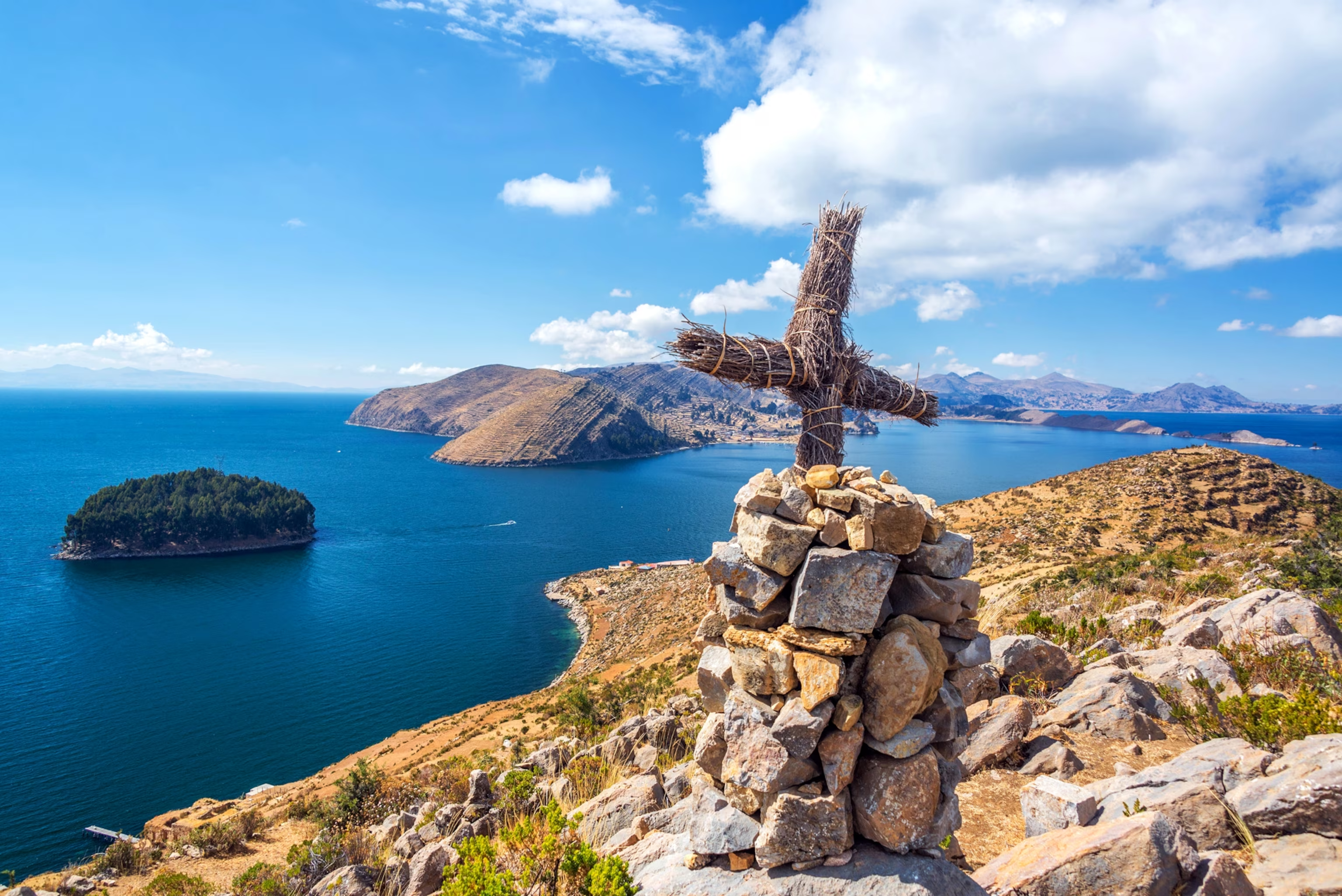
Trade the day-trip rush for a night on the Island of the Sun. Cross to the southern village of Yumani, walk the ridgeline trail past terraced hillsides and Inca ruins, and stay with a local family. Wake to sunrise over the water before continuing north to the Chincana labyrinth and the sacred rock.
Design Your Custom Trip
Tell us about your dream adventure. Our travel specialists respond within 24 hours with a personalised itinerary.
The Highest Navigable Lake on Earth
A Closer Look at Lake Titicaca

The Highest Navigable Lake on Earth
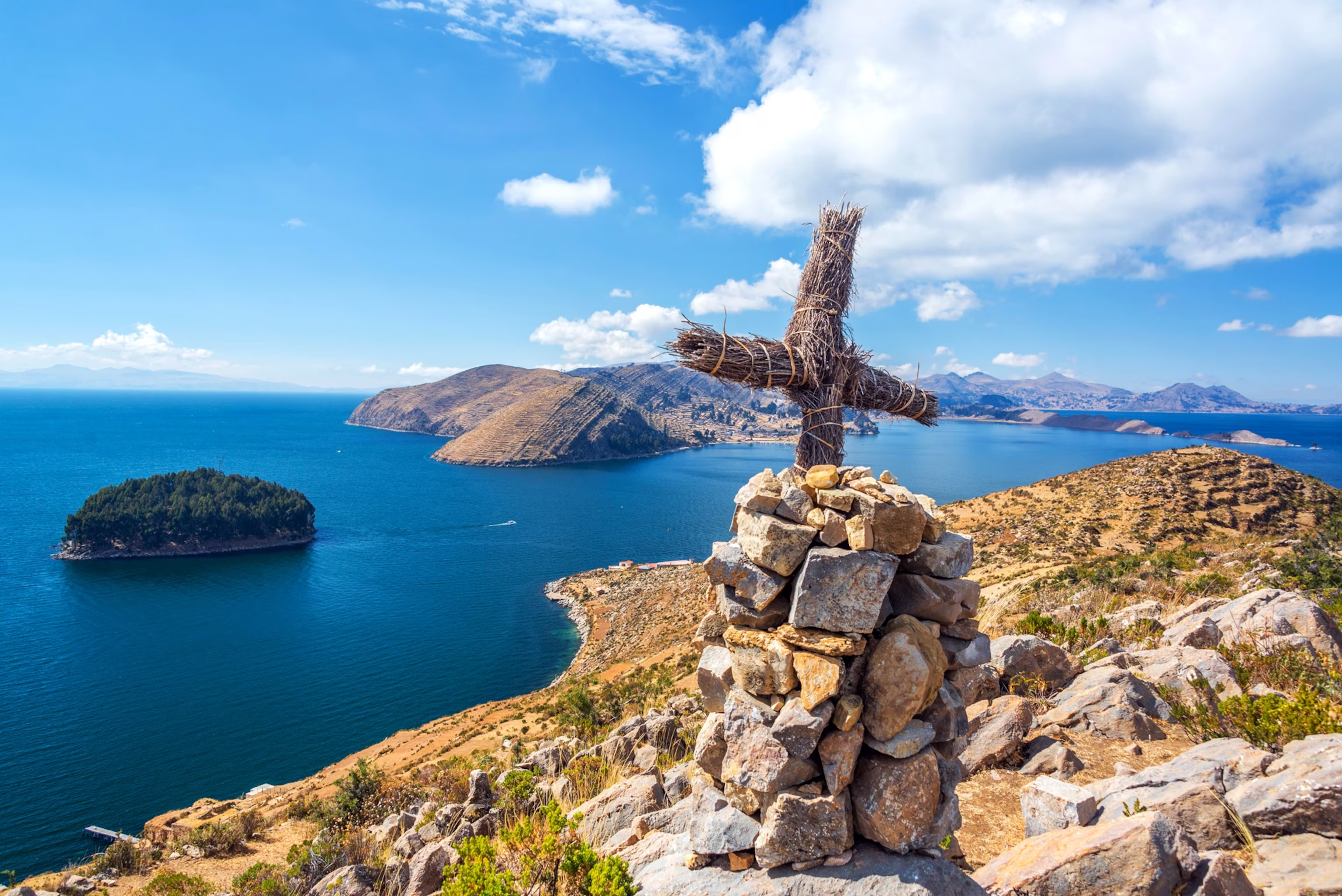
Lake Titicaca defies expectations at every turn. Stretching about 190 kilometers long and 80 kilometers wide at 3,812 meters above sea level, this inland sea covers around 8,372 square kilometers, roughly the size of Corsica, and reaches depths of about 280 meters. The lake straddles the border between Peru and Bolivia, with close to 40 percent of its waters, the eastern side, lying in Bolivia. The name is most often traced to the Aymara words for puma and rock, popularly rendered as ‘stone of the puma,’ though its true meaning is uncertain and may instead relate to the sacred rock on Isla del Sol.
But statistics barely capture what makes Titicaca extraordinary. This is the highest commercially navigable lake on Earth, where the thin air lends the water an almost surreal clarity, the deep cobalt surface appearing endless until, on the clearest days, the line between lake and sky dissolves altogether. The Aymara and Quechua peoples who have lived here for more than 2,000 years regard the lake as a living being, the spiritual heart of the altiplano. The snow-capped peaks of the Cordillera Real rise beyond 6,000 meters on the eastern horizon, while dozens of islands dot the surface, many still home to communities whose traditions reach back well before the Spanish conquest.
Birthplace of the Inca Civilization
According to Inca cosmology, Lake Titicaca is nothing less than the birthplace of existence itself. The creator god Viracocha rose from these dark waters in an age of chaos and commanded the sun, Inti, the moon, Mama Killa, and the stars to climb into the sky. He then breathed life into the first Inca rulers, Manco Cápac and Mama Ocllo, who emerged from the sacred Titikala rock on Isla del Sol to found the civilization that would one day stretch from Colombia to Chile. Even after building their capital at Cusco, Inca emperors were bound to make regular pilgrimages back to the islands of Titicaca.
But Titicaca’s sacred history predates the Incas by centuries. The Tiwanaku civilization, centered near the lake’s southern shore, flourished from roughly 300 to 1100 CE and left behind megalithic structures that still puzzle archaeologists. The famous Gate of the Sun, carved from a single block of andesite, depicts a central staff-bearing deity surrounded by rows of winged figures, evidence that the lake’s spiritual pull spanned several civilizations and at least two millennia. Underwater archaeologists working a reef near Isla del Sol have recovered ritual offerings and artifacts left by the Tiwanaku, including incense burners, the remains of young llamas, and ornaments of gold, shell, and stone, confirming the lake’s long role as a place of worship and pilgrimage.
Living Cultures and Ancient Traditions
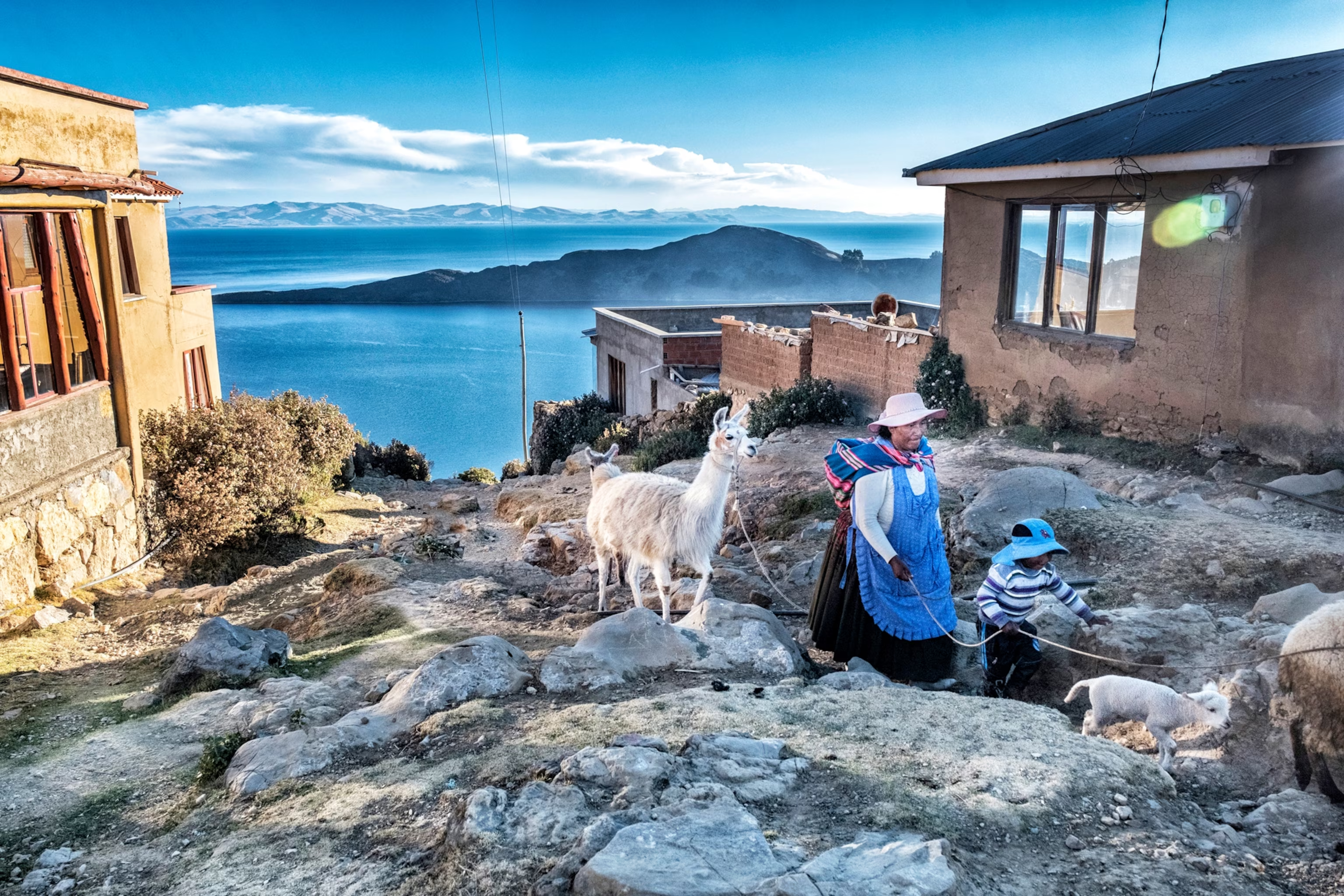
The Aymara people have lived in the Titicaca basin for more than 2,000 years, keeping traditions that predate even the Tiwanaku empire. Today around 2 million Aymara live in Bolivia, many of them concentrated around the lake. Their spiritual life centers on Pachamama, or Mother Earth, and is guided by yatiris, the community healers and diviners who are traditionally said to receive their calling after surviving a lightning strike. Far from being isolated figures, yatiris remain woven into community life, reading coca leaves to divine what lies ahead and leading ceremonies that blend pre-Columbian belief with Catholic influence.
Perhaps nothing captures Titicaca’s living heritage more than the totora reed boats that have crossed these waters for centuries. Bundled from dried reeds into elegant curved forms, the vessels carried people and goods, made fishing possible, and, according to legend, bore the Uru people to safety when the Incas advanced. On the Bolivian side, the Uru-Iruito near the Desaguadero still keep the reed-craft tradition alive, distinct from the larger Uros floating-island communities on the Peruvian shore near Puno. Trout, introduced in the late 1930s, now features heavily in local cooking, served fried or grilled alongside quinoa and potatoes grown on terraces cut into these hillsides more than a thousand years ago.
Explore More
Other Bolivia Destinations
Explore more destinations across Bolivia.
Barba Azul Nature Reserve
In the heart of Bolivia's Beni savanna, the Barba Azul Nature Reserve protects 12,200 hectares of seasonally flooded grassland, palm...
ExploreTarija Wine Country
In the far south of Bolivia, near the Argentine border, the city of Tarija and the surrounding valleys form the...
ExploreNoel Kempff Mercado
Spread across 1,523,446 hectares of remote northeastern Bolivia along the Brazilian border, Noel Kempff Mercado is one of South America's...
ExploreKaa-Iya National Park
Larger than Belgium and home to one of the largest jaguar populations in South America, Kaa-Iya del Gran Chaco is...
ExploreEduardo Avaroa Andean Fauna National Reserve
On Bolivia's altiplano above 4,200 meters, in the country's far southwestern corner where it meets Chile and Argentina, lies one...
ExploreSanta Cruz de la Sierra
In Bolivia's tropical lowlands, where the Andes tumble into the Amazon, Santa Cruz opens doors to landscapes found nowhere else...
ExploreAmboro National Park
At the Elbow of the Andes, where the mountains bend westward toward Peru, Amboró National Park sits at one of...
ExploreSamaipata
Around 300 CE, peoples of the Mojocoyas culture, later associated with the Chané, began sculpting a 220-meter sandstone monolith with...
ExploreSucre
Founded in 1538 as Ciudad de la Plata by Spanish colonists profiting from nearby Potosí's silver mines, Sucre grew into...
ExplorePotosí
In 1545, an indigenous prospector named Diego Huallpa found silver on a mountain the Inca had long held sacred. Within...
ExploreMadidi National Park
Identified by Wildlife Conservation Society researchers as probably the most biodiverse protected area on Earth, Madidi spans nearly 19,000 square...
ExploreNorth Yungas Road
Carved into sheer cliffs in the 1930s, the North Yungas Road, El Camino de la Muerte, is estimated to have...
ExploreSalar de Uyuni
At 3,656 meters on the Bolivian Altiplano lies the world's largest salt flat, a 10,582-square-kilometer expanse of crystalline white that...
ExploreLa Paz
Perched between 3,250 and 4,100 meters above sea level, La Paz defies gravity and expectations as the world's highest administrative...
Explore